Description
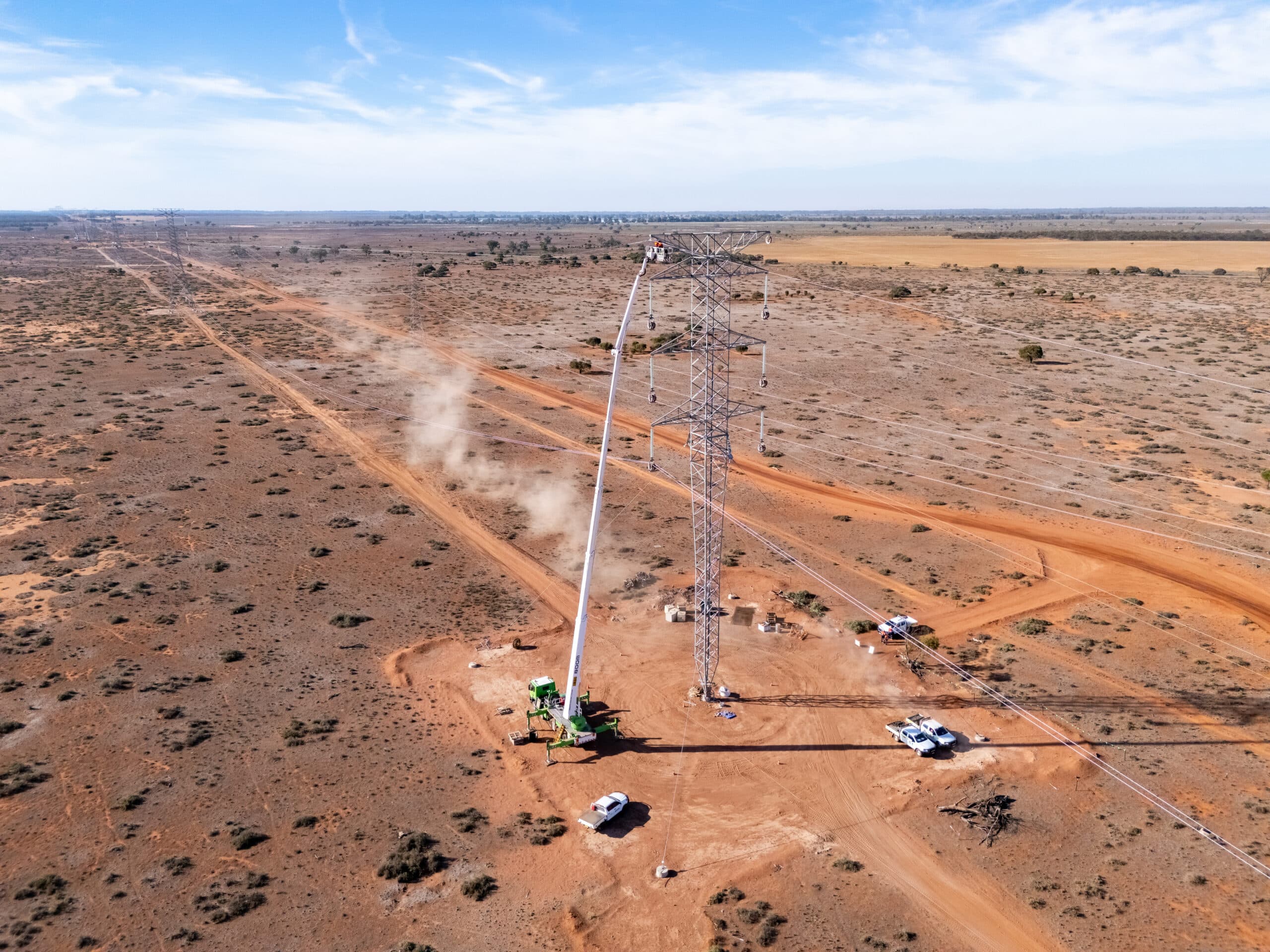
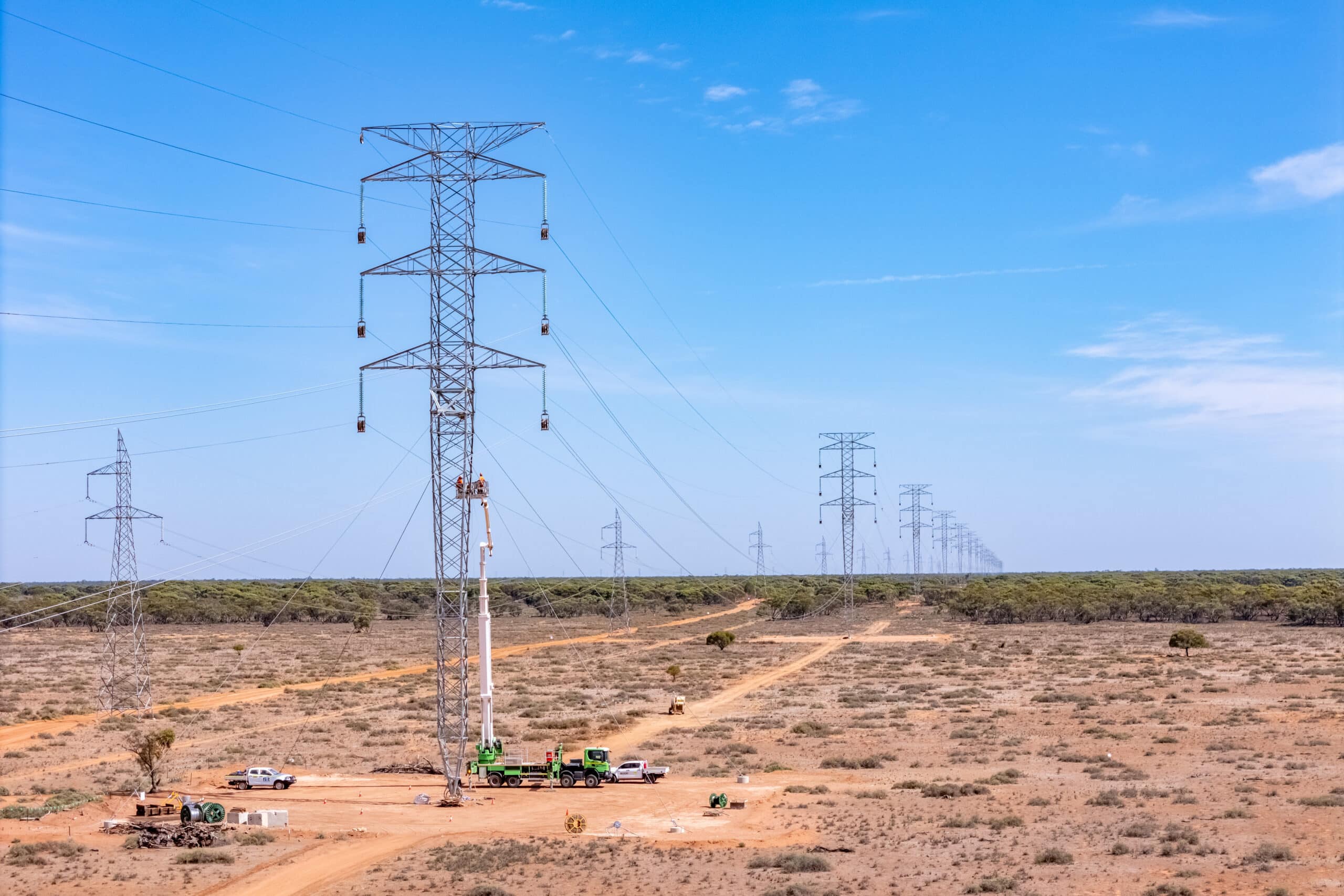
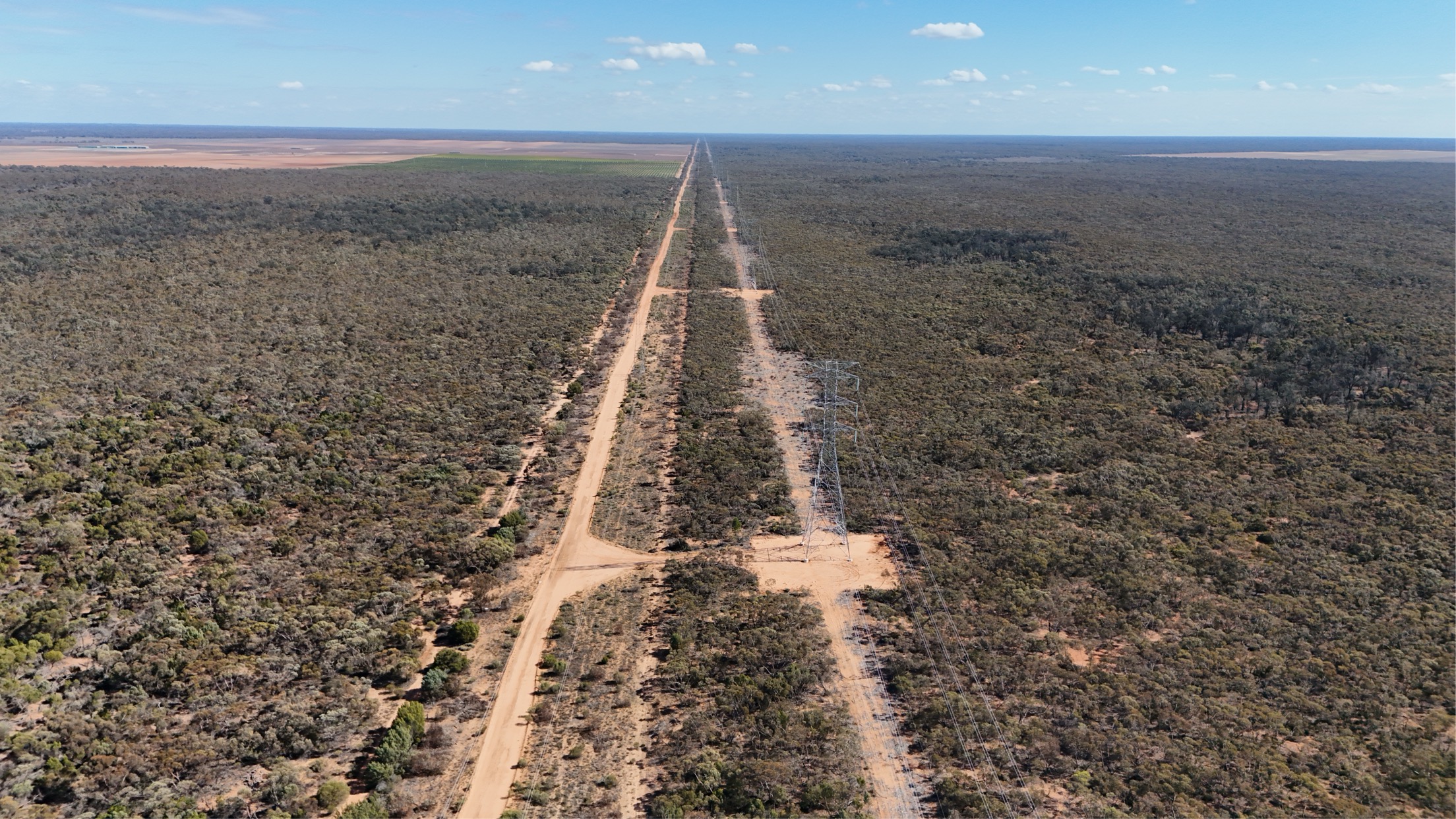
EnergyConnect is a joint project between the Transmission Network Service Providers for New South Wales (Transgrid) and South Australia (ElectraNet) to join their state power grids via a new 330kV above ground transmission line interconnector between Robertstown SA and Wagga Wagga NSW substations, a total distance of approximately 900km and 800MW transfer capacity. The NSW section of the EnergyConnect is registered for IS v1.2 Design and As-Built ratings and consists of approximately 700km of new transmission line extending from Wagga Wagga NSW to the South Australian Border.
EnergyConnect NSW includes:
- The construction of two new 330kV transmission lines and one new 500kV transmission line.
- A rebuild of an existing 220kV transmission line.
- An expansion and upgrade of the existing Buronga substation.
- A new substation known as Dinawan, located between Jerilderie and Coleambally.
- An expansion of the existing Wagga Wagga substation.
EnergyConnect, once completed, will be Australia’s largest interconnector in the Australian National Electricity Market (NEM).
Acknowledgments – People
Rebecca Walker-Edwards, Luke Fania, Jared Lipton, Victoria Norris, Ken Lunty, Jacinda Pagels, Joe Collins
Acknowledgments – Suppliers
- Mott MacDonald
- Mawsons Concrete and Quarries
- Everick Heritage Pty Ltd
- ENSPEC Environment and Risk
- Gateway Energy
Testimonial
“From the outset, sustainability was treated as an integral part of how EnergyConnect would be delivered, not simply an outcome to be measured at the end of the project.
Working alongside Transgrid, our delivery partners and regional stakeholders, we embedded sustainability into planning, design and construction decisions every day. Whether protecting biodiversity, reducing environmental impacts, supporting local communities or driving innovation on site, our focus was always on delivering better long-term outcomes alongside critical infrastructure.
Preparing our Infrastructure Sustainability 'As Built' submission has provided an opportunity to reflect on the innovation, collaboration and commitment demonstrated throughout the project. We’re proud of what has been achieved together and believe EnergyConnect demonstrates how major transmission infrastructure can be delivered more sustainably while creating lasting benefits for communities, the environment and Australia's energy future.”
- Rebecca Walker-Edwards, Environmental Manager, EnergyConnect Elecnor Australia
Rating Highlights
| Category | Credits | Achievements |
| Climate Change Adaptation | Cli-2 | Comprehensive climate change risk assessments to ensure the new infrastructure is resilient to the changing climate through the introduction of treatment and mitigation strategies in the design and operation of EnergyConnect.
Adaptation measures include:
Designed foundations to account for shrink and swell of ground conditions. |
| Energy | Ene-1 | A 32% greenhouse gas emissions reduction including reduction of land clearing and associated fuel usage, purchase of Green Power at Camp 3 and the use of solar lighting at construction camps.
A 27% reduction in land clearing on the western alignment (South Australian border to Buronga) and 41% reduction on the eastern section (Buronga to Wagga) to preserve valuable biodiversity including trees up to 1,000 years old. |
| Water | Wat-1 and Wat-2 | A 30% reduction in construction water use by captured stormwater from sediment basins.
An 80% replacement of potable water with non-potable sources including treated grey water from worker accommodation camps and captured stormwater from sediment basins. |
| Material | Mat-1 | A 11% reduction in greenhouse gas including guyed tower with reduced steel and concrete and reduction in towers.
Using guyed towers that require 21% less steel and 15% less concrete to construct compared to conventional self-supporting structures. The use of low carbon concrete in tower footings and substations. In a first for regional concrete operations, contractors are required to use concrete with 35% supplementary cementitious materials (SCMs) and 30% replacement of virgin fine aggregate with manufactured sand (where available). |
| Waste | Was-2 | 100% diversion by volume of spoil, 100% diversion by volume of inert and non-hazardous waste, 47% diversion by volume of office waste. |
| Ecology | Eco-1 | A 26% net ecological gain in the Western Section and a 39% net ecological gain in the Eastern Section with preservation of areas of biodiversity value.
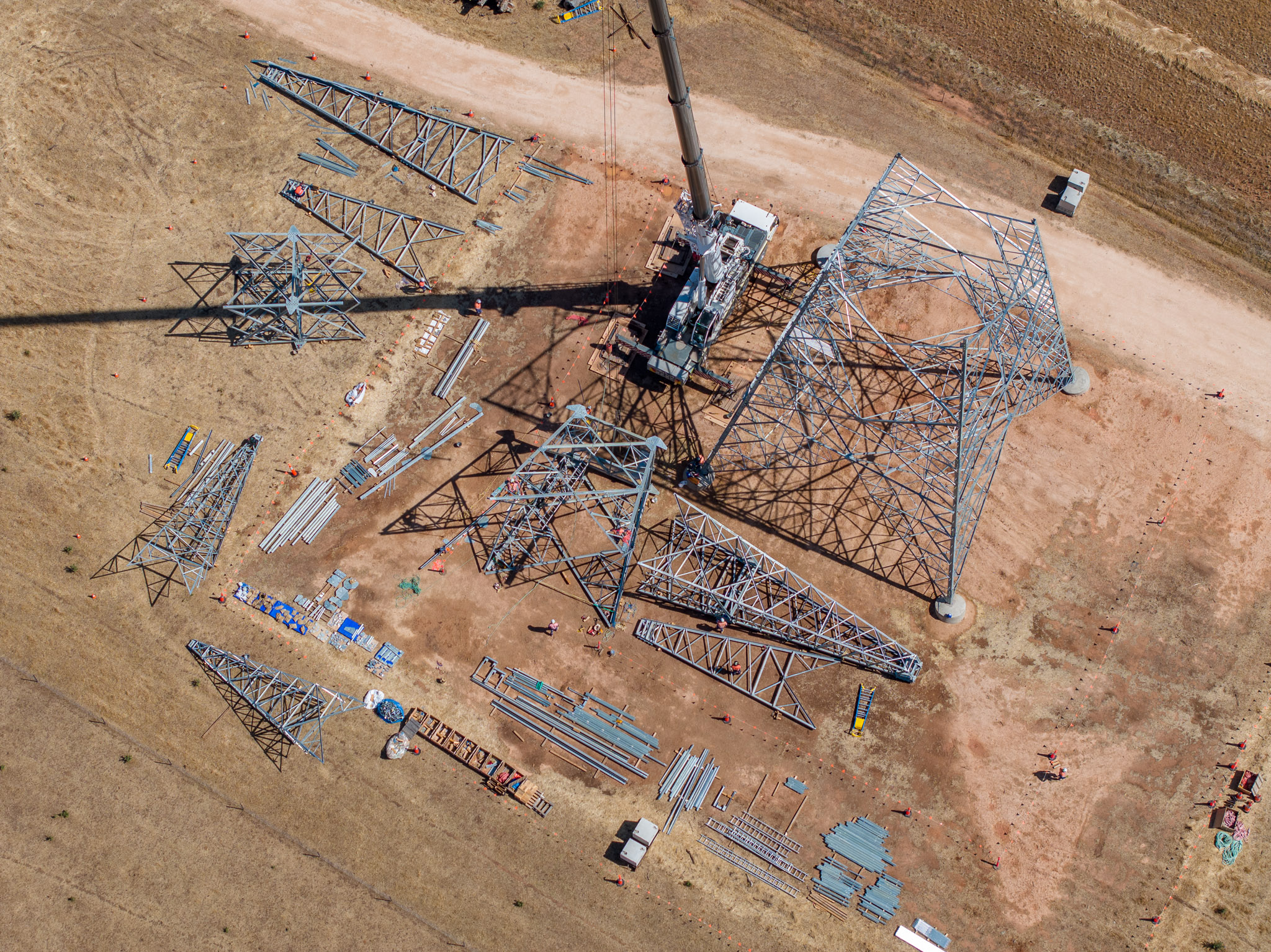
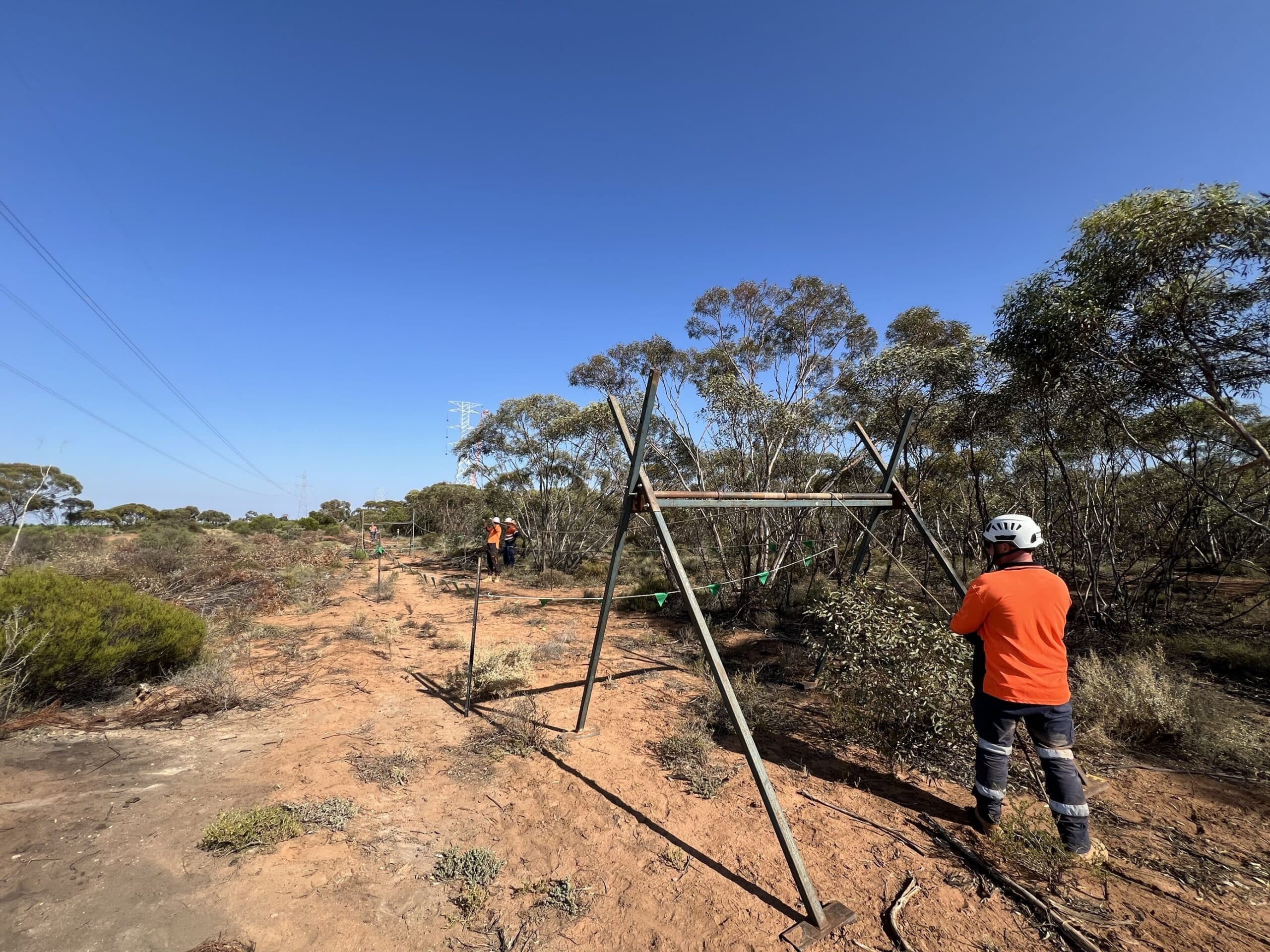
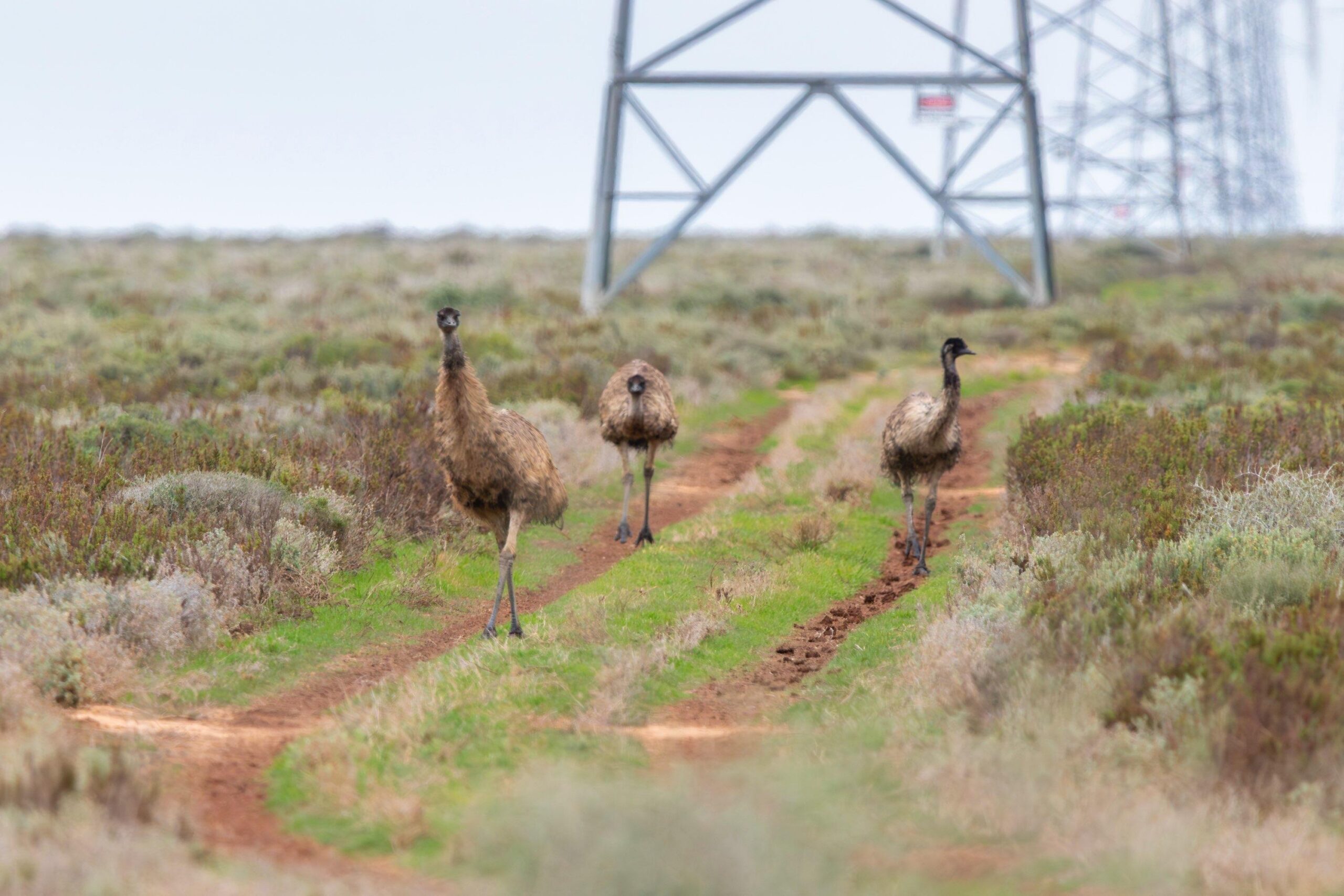
This was achieved by minimising impacts during design and construction through, for example, strategic tower relocation, relocation of access tracks, relocation of brake and winch sites, reduced access track widths, not clearing tower laydowns, a selective clearing process and reduced centreline clearing. A 27% reduction in land clearing on the western alignment (South Australian border to Buronga) and 41% reduction on the eastern section (Buronga to Wagga) to preserve valuable biodiversity including trees up to 1,000 years old. The project’s Connectivity Strategy recommended 95 connectivity corridors, however, due to the strategies to reduce clearing, 1849 connectivity corridors were retained. This, combined with the establishment of seven Biodiversity Stewardship Agreement sites totalling over 23,000 hectares that provide in-perpetuity management of land with biodiversity values, has resulted in these net ecological gains. |
Verified Innovations
| Name | Verification Date | Innovation Type | Description |
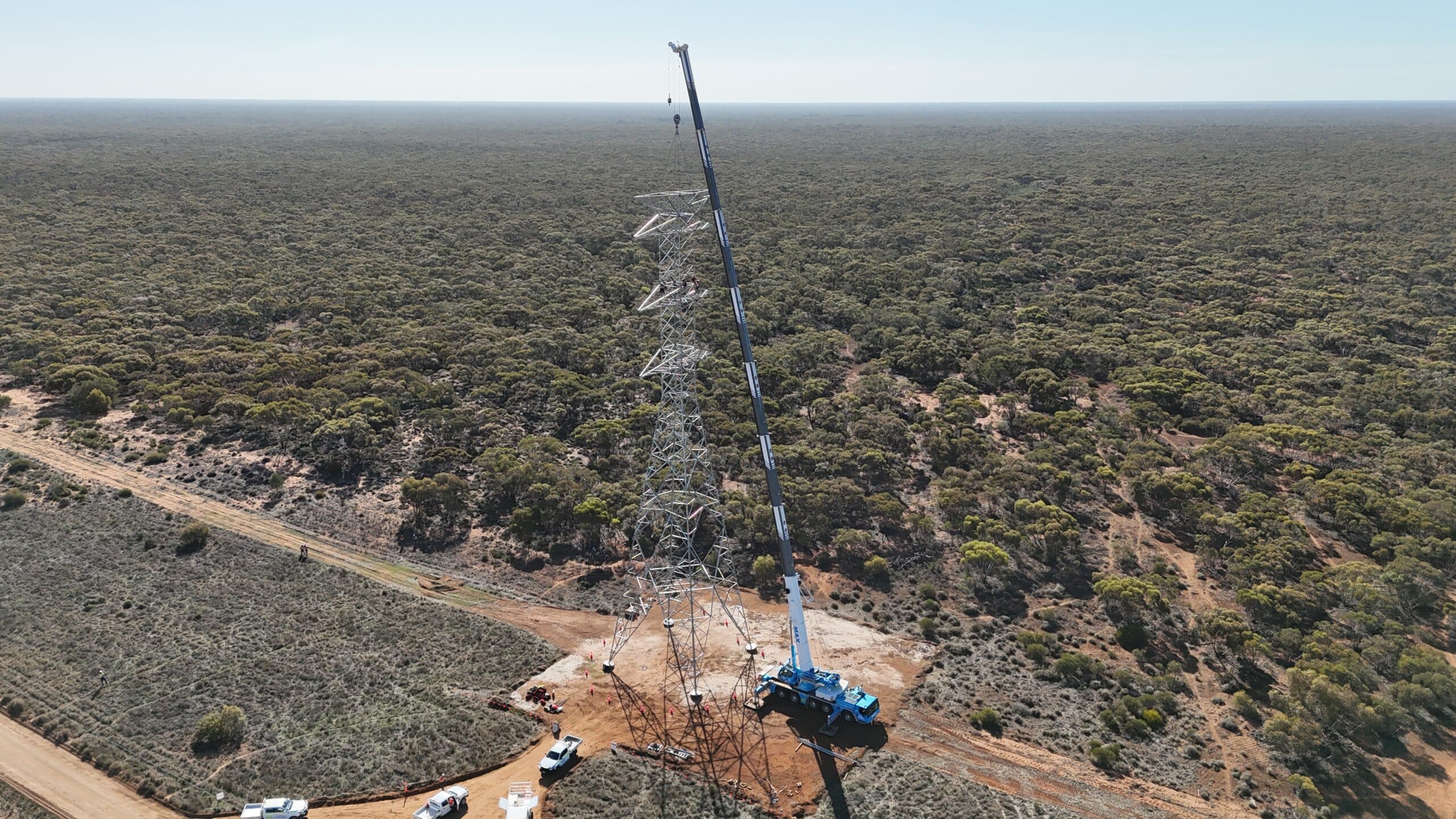
| Guyed Towers | 30/01/2024 | First Innovative technology or process – State First | EnergyConnect is the first transmission line built in NSW which utilises 330kilovolt (kV) guyed steel lattice structures (or guyed towers). Guyed towers are structures with a central steel column supported by four high-tensile steel cables (guy wires), each 35 mm thick. The guy wires are anchored to the ground providing the structure strength and stability. |
| Heritage Surveys for Biodiversity Stewardship Agreement Sites | 12/08/2026 | Market Transformation | This initiative establishes a new best-practice model for Biodiversity Stewardship Agreements (BSAs) by integrating comprehensive Aboriginal cultural heritage assessments and long-term heritage management into biodiversity conservation planning. By partnering with Traditional Owners in long-term management of the land, and embedding cultural heritage considerations into stewardship operations, Transgrid is transforming BSAs from a biodiversity-only framework into a holistic model that delivers enduring environmental, cultural, and social outcomes. |