Description
Northshore Hamilton is one of Queensland’s largest riverfront urban renewal precincts and one of the state’s most significant city‑shaping projects. Led by Economic Development Queensland (EDQ), the precinct is being transformed into a vibrant, mixed‑use urban community supporting residential, commercial and employment uses within an integrated waterfront setting.
The precinct is designed to support long‑term environmental performance, climate resilience and liveability through walkable neighbourhoods, high‑quality public realm and integrated green infrastructure. These outcomes contribute to healthier, more resilient communities and support sustainable economic growth over the long term.
Northshore Hamilton demonstrates how large‑scale urban renewal can balance infrastructure delivery with environmental stewardship, creating places that are resilient to climate impacts while delivering high‑quality environments for future residents, workers and visitors.
The Northshore Street Renewal Program is a flagship infrastructure initiative delivering best‑practice, sustainable streetscapes across the Northshore Hamilton precinct. The program sets a new benchmark for street design in Queensland and is the first project in the state to target an Infrastructure Sustainability Rating (IS v2.1).
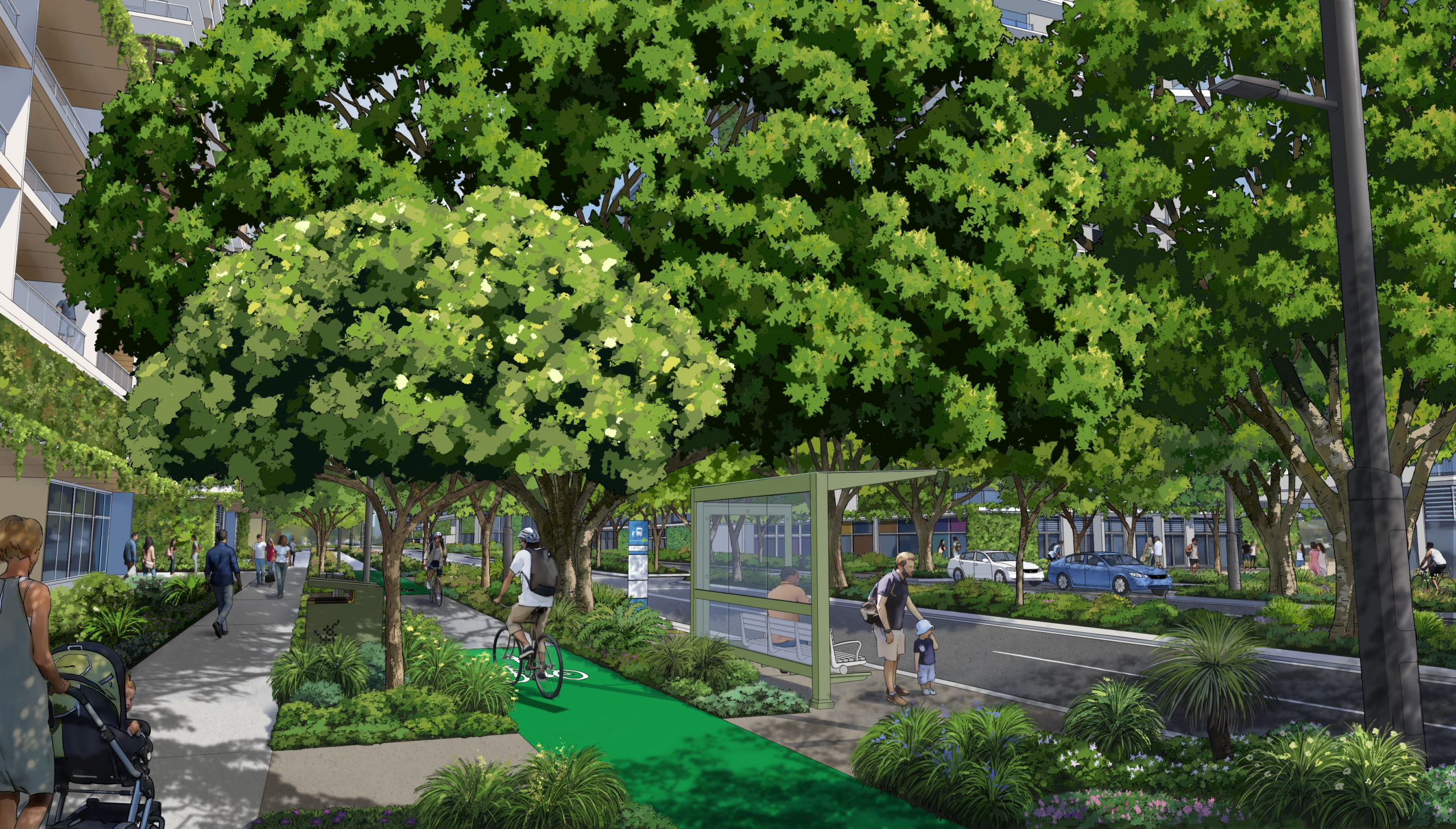
At the core of the program is an ambitious approach to urban cooling and climate resilience. Tree canopy and shade outcomes significantly exceed current industry standards, with the project targeting approximately 76 per cent shade cover on street verges. These outcomes directly reduce heat stress and improve comfort for pedestrians and cyclists.
The program integrates green infrastructure with civil and public realm works, including stormwater‑supported passive irrigation, climate‑resilient tree species, and universal access considerations beyond minimum compliance. Advanced urban heat modelling and an iterative digital design process were used to test and optimise canopy cover, materials and streetscape performance across a range of street typologies.
Through its delivery, the Northshore Street Renewal Program enhances environmental performance, improves public amenity, supports active transport and establishes a replicable model for climate‑responsive street renewal in urban renewal precincts.
Rating Highlights
| Category | Credit | Achievements/ Description |
| Resilience | Climate & Natural Hazard Risks (Res-1) & Innovation (Inn-1) | One of Northshore Street Renewal Package's key achievements is providing a precinct which celebrates and protects Queensland's active and outdoor focussed lifestyle and provides year-round comfort and safety from natural hazards and climate extremes now and into the future. The climate resilience assessment undertaken for Northshore (Res-1 credit) addressed key natural hazard risks for the precinct, including riverine flooding and stormwater from the upper catchment, coastal hazard and the Urban Heat Island Effect.
The precinct was awarded a State-First Innovation verification (Inn-1 credit) for the project's Advanced Urban Heat Modelling & Tree Canopy Analysis and the 2150 Climate Resilience Horizon. The project recognises that heatwaves claim more lives than any other natural hazard in Queensland and Australia, and that elevated urban heat impacts negatively on precinct amenity and attractiveness, economic activity, recreational uses, active transport and ecological outcomes. The Northshore Advanced Urban Heat Modelling and Tree Canopy Analysis was a key driver of the civil and landscape design for the road corridor and was instrumental in setting the high 76% canopy cover target for the precinct's verges, which seeks to achieve a large reduction in sun and heat exposure and reduce the risk of heat-stress now and under a future climate. Importantly the project modelled the tree shading and cooling effect over the full road corridor, to account for the interaction with the road pavement material, which significantly contributes to Urban Heat Island Effect and nighttime heat retention, which is a driver of heat-wave hazard. The tree canopy achieves a 12-15 degrees Celsius reduction in Mean Radiant Temperature in 2090, which is a massive reduction in heat exposure and absorption for the precinct. Reaching the tree canopy target required extensive interdisciplinary collaboration and rapid design iteration to maximise tree canopy opportunities by tree-optimising the street corridor traffic engineering, car parking, utility, cycleway and street lighting. Street and pathway lighting was extensively modelled to respond to tree canopy driven requirements, placing thermal-comfort as a key design driver and creating a fully integrated verge environment, whilst maintaining operational safety for paths, cycleways and roads. High tree canopy targets alone do not ensure success, so to provide a long-term viable shade canopy, passive irrigation street trees consisting of future-climate-compatible species are fed by stormwater and provided with enhanced soil volumes, with optimised growing media to both supply the trees with grow-boosting irrigation, but also to treat runoff quality and protect the receiving waterway and Moreton Bay. The climate change risk assessment was undertaken with an extended 2150 Climate Resilience Horizon, which is a verified State First Innovation for Queensland. Climate data to support the assessment was derived from non-standard sources to extend the timeframe available from readily available sources. Rainfall Intensification, Sea Level Rise and Storm Tide assessment was completed for the 2150 horizon and provides the necessary 100 year design life for civil infrastructure and providing +125 years of community continuity and economic resilience. |
| Stakeholder Engagement Strategy (Sta-1) & Stakeholder Engagement and Impacts (Sta-2) |
The project engaged extensively with stakeholders (credits Sta-1 & Sta-2), both in the community, industry, government and First Nations to create a collaborative, transparent and inclusive project development environment. This ensured that the project drew upon and harnessed a wide knowledge resource base and delivered a fit-for-purpose, well-rounded and sustainable street renewal program with tangible community and economic benefits and a high Return-On-Investment for current and future precinct occupants. |
Verified Innovations
| Innovation Name | Description |
| 2150 Climate Resilience Horizon | A climate change risk assessment was undertaken with an extended assessment time horizon of 2150, which is a State First for Queensland (National status not confirmed). This is compared to the Business As Usual approach of 2090 which provides a limited 65 years of risk and adaptation information (from 2025). Temperature information was extracted from the IPCC Assessment Report 6 to extend the timeframe available from readily available State Government sources. Rainfall Intensification, Sea Level Rise and Storm Tide assessment was completed for the 2150 horizon, providing the necessary 100 year design life for civil infrastructure and providing +125 years of community continuity and economic resilience. |
| Advanced Urban Heat Modelling & Tree Canopy Analysis | Recognising that heatwaves claim more lives than any other natural hazard in Queensland and Australia, an innovative advanced urban heat modelling and tree canopy analysis was completed at precinct wide and block scale to produce a science-based tree-canopy shade target and typological design for the road verges.
The following assessment was undertaken: · Sun hour analysis for summer, winter and mid-season, including building massing for the ultimate development of the urban precinct · Climate analysis and UHIE assessment, with evaluation of increased Universal Thermal Climate Index (UTCI) with climate change · Mean radiant temperature analysis for the years 2030 and 2090 including modelling the following tree canopy shade scenarios
Importantly the project modelled the shading and cooling effect over the full road corridor, to account for the interaction with the road pavement material, which significantly contributes to Urban Heat Island Effect and nighttime heat retention, which is a driver of heat-wave hazard. The project initially set an ambitious stretch target of an 85% tree canopy cover for the road corridor. This target required extensive interdisciplinary collaboration and rapid design iteration to maximise tree canopy opportunities by tree-optimising the street corridor traffic engineering, car parking, utility, cycleway and street lighting. The project achieved a 76% tree canopy shade outcome for the verges, which achieves a 12-15 degrees Celsius reduction in Mean Radiant Temperature in 2090, which is a massive reduction in heat exposure and absorption by the precinct. By comparison the local government target for the area is 40% cover of footpaths and cycleways (rather than the full verge). Tree canopy was selected as the primary mitigation method as only urban trees deliver all of the following benefits - heat mitigation, UV exposure reduction, amenity and placemaking, improved property values, stormwater and nutrient runoff reduction (treepit biopods), traffic calming, wind canyon reduction, urban habitat opportunities and nature positive outcomes. |
Acknowledgments & Contact Information:
IS Rating Contact for future engagement - Peter Rooks
Phone Number: 0408775218
Email: peter.rooks@edq.qld.gov.au
Acknowledgments – People
- Peter Rooks, Ben Byrnes, Phil Roth (EDQ)
- Emily Low, Oliver Mitchell, Nicholas Vachon, Alexandra Bogdanova, Anne Kovachevich, Lisa Wilhelmseder, Himanthi Mendis (Mott MacDonald)
- Glen Power, Paul Hardyman (Urbis)
- Scott Losee, Paul Harrison, Bridget Lamb (Losee)
- Warren Steiner, Dale Stanton, Callan O'Neill (ADG)
- Trudie Parsons (RPS Group)
- Nigel Hardie (BMT)
- Martin Giles (Water Engineering Plus)
- Nicole Lee (ISC)
Acknowledgments – Suppliers
ADG Engineers, Urbis, Mott MacDonald, Losee, BMT, Water Engineering Plus, RPS Group, Virid
Testimonial
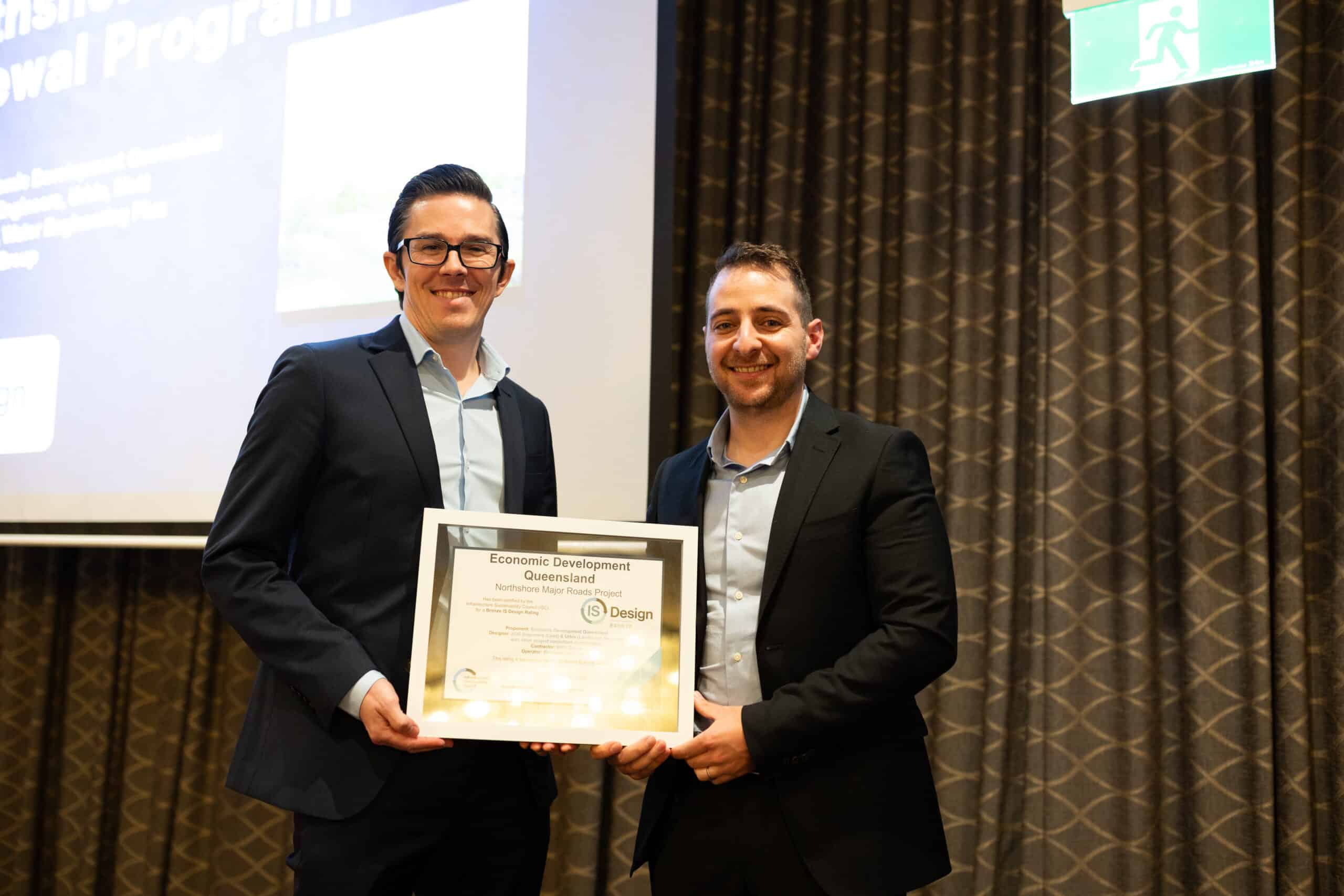
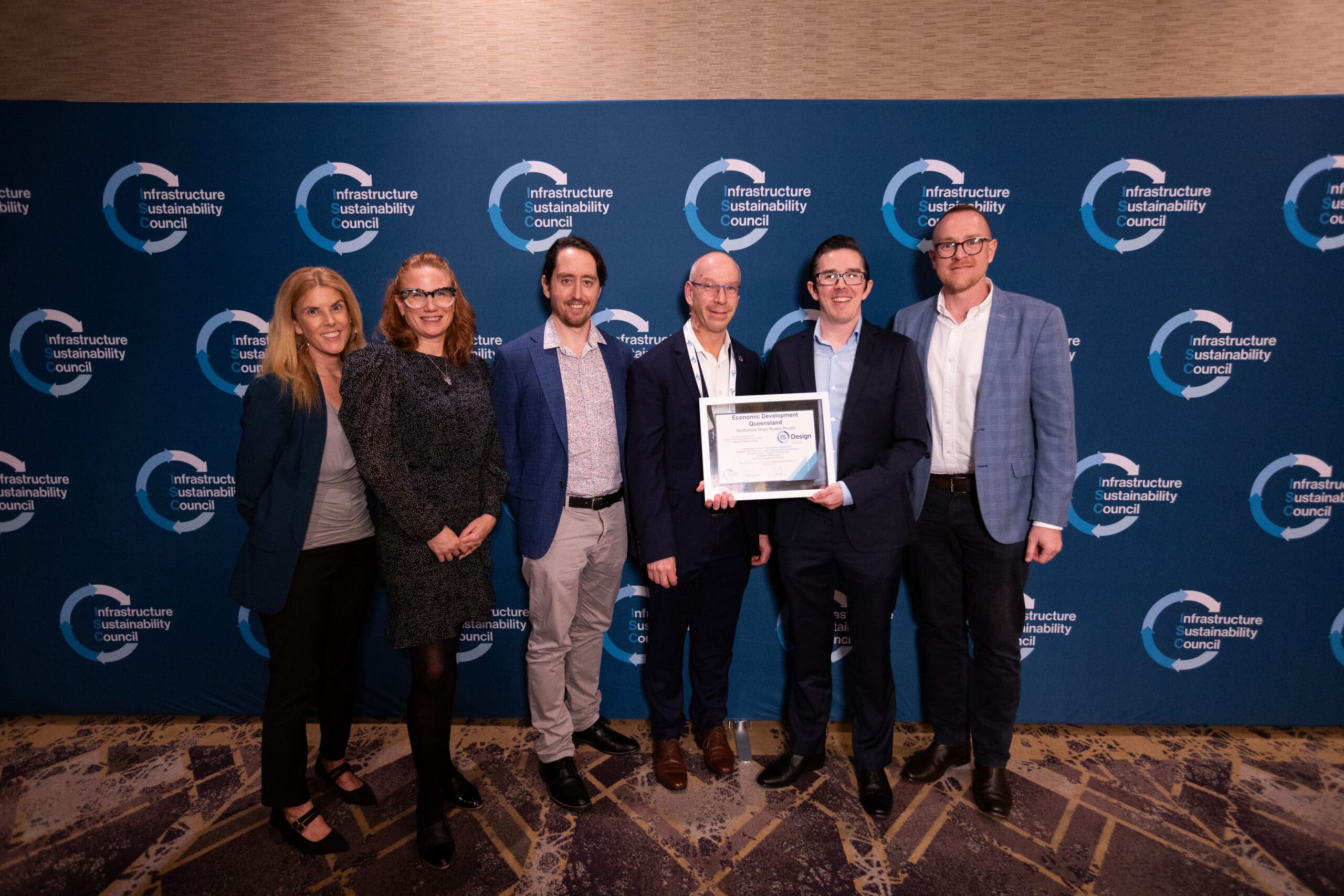
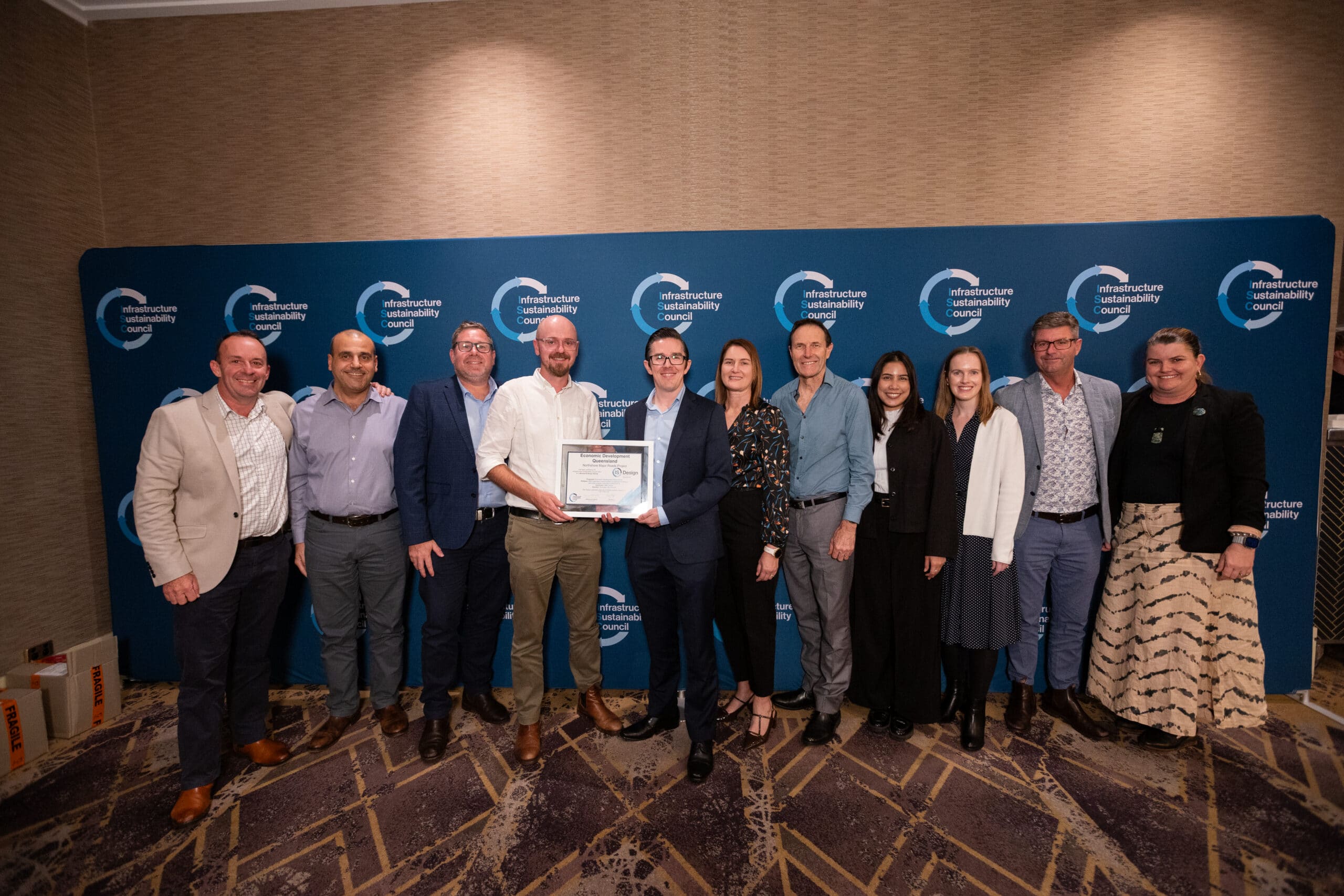
EDQ is extremely proud of the IS v2.1 Design Rating achieved for the Northshore Street Renewal Program. As EDQ's first IS rating, it has been a challenging but highly rewarding journey and we are honoured to have achieved Queensland's first IS v2.1 Infrastructure Sustainability Design Rating and to be verified for our project Innovations, namely the 2150 Climate Resilience Horizon and our Advanced Urban Heat Modelling and Tree Canopy Analysis.
We appreciate the significant value which the IS Rating has brought to provide a common design language and goal understanding across organisations, and its ability to build and maintain ambition and momentum for the project’s sustainability vision. We also regard highly the benefits the IS Rating has brought as a delivery framework and assurance mechanism to embed sustainability deeply into all project aspects and drive enhanced tangible outcomes for the Northshore precinct, it’s future occupants and our Stakeholders.
Peter Rooks, Sustainable Futures Manager - Economic Development Queensland