Description
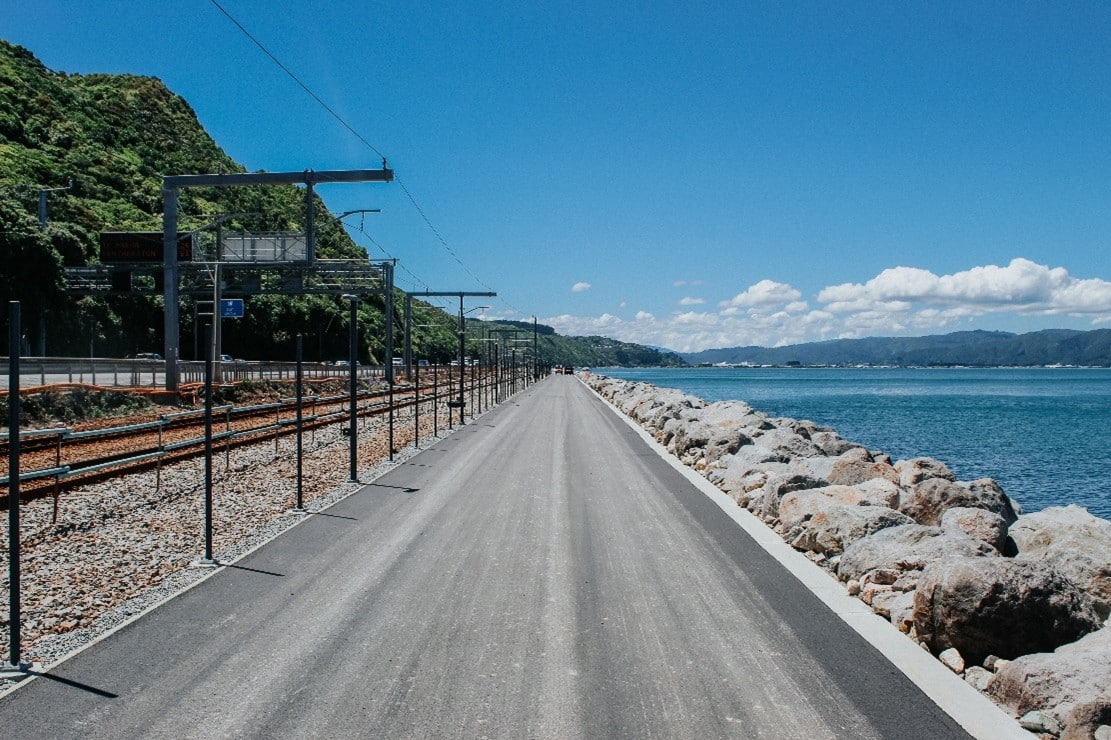
Te Ara Tupua will create a new resilient coastal edge which will protect road and rail and provide a safe and attractive walking and cycling link between Wellington and Lower Hutt.
Rating Highlights
| Category | Credits | Achievements |
| Heritage | Her-1 | The strong relationship between the NZ Transport Agency Waka Kotahi and mana whenua has been fundamental in defining the character of this project and it is represented in most of the credits, but is particularly highlighted in the Heritage credit.
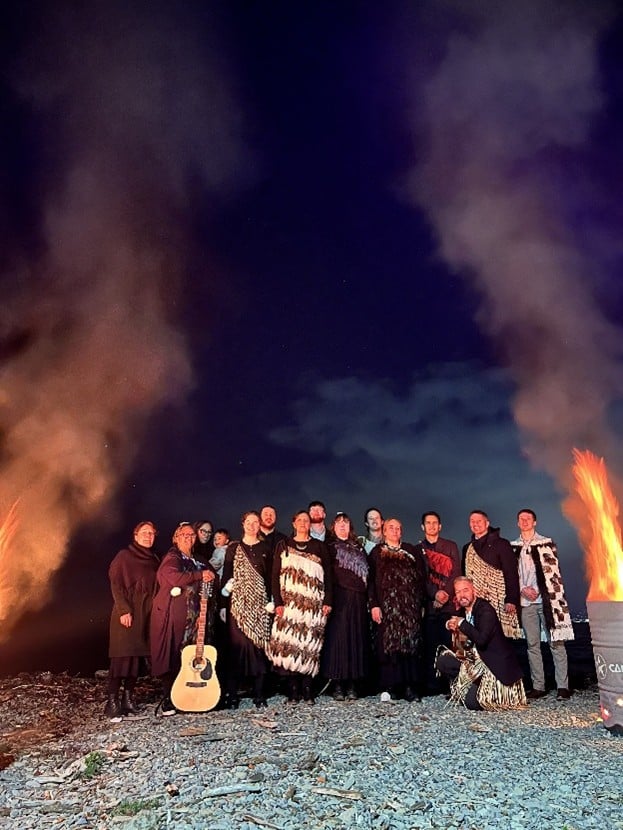
Underpinning the achievements was integration of mana whenua throughout the project. The Mana Whenua Steering Group (MWSG) was the primary mechanism that ensures that Mana Whenua values, interests and aspirations were represented and empowered within the Project at all stages of the project cycle. The MWSG consisted of representatives from the iwi that hold mana whenua within the Wellington/Hutt Valley area (Taranaki Whānui and Ngāti Toa). There were mana whenua involved at all levels of the project, from Board to trainee. This approach enabled heritage to be fully integrated into the project, including:
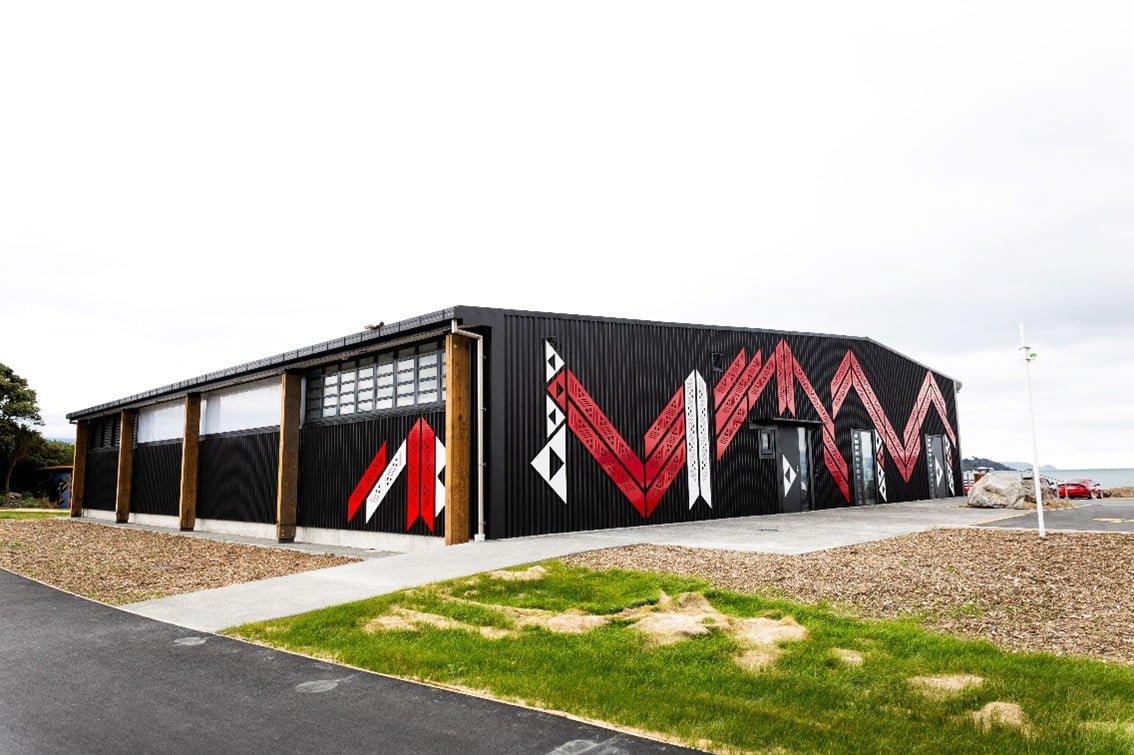
“Working together, we have created a design that speaks directly about our stories of identity and our values as iwi mana whenua, and which acknowledges our history, our tupuna and our significant sites. The vision we have developed for Honiana Te Puni Reserve is a prime example of this.” - Kim Skelton MWSG Chair, Taranaki Whānui |
| Ecology | Eco-2 | Through thinking differently about biodiversity offset and integrating ecological elements into the design, the project has enhanced horizontal and vertical ecological connectivity at the site level, in the wider marine environment, and regionally.
Ecological elements of the project included reef enhancement over 5 ha at a degraded site that is largely devoid of habitat structure. The design of the reef provides vertical ecological connectivity, with variation in temperature, light, upwelling and nutrient dispersal, so fish of a different species and in different life cycle stages can simultaneously inhabit the habitat. The habitat will also include translocated at risk-declining giant kelp species Macrocystis pyrifera. Benefits of the reef are expected to be seen up the food chain as well, where an increased abundance of fish is expected to provide an increase in food availability for seabirds within Te Whanganui-a-Tara. Other enhancements were dune restoration to connect a natural terrestrial habitat mosaic to the marine environment in a natural sequence for avifauna species (such as little blue penguins), tide pools in clusters in the intertidal zone to create water retaining features, and eco-enhanced revetment to provide multiple habitat types within the same area. The monitoring plan for the reef habitat includes both western and te ao Māori science, contributing to growing understanding and recognition of other knowledge systems. |
| Community Health, Wellbeing and Safety | Hea-1 | The core purpose of the project is to create an active mode path, which will contribute to community health and wellbeing through facilitating active travel modes. In addition to this, the project targeted additional outcomes for community health and wellbeing which includes the following:
Labour hire for social impact – we worked with AWF (a leading recruitment agency) to develop a work collective programme, providing training and opportunities for Māori and local iwi. |
Verified Innovations
| Name | Innovation Type | Description |
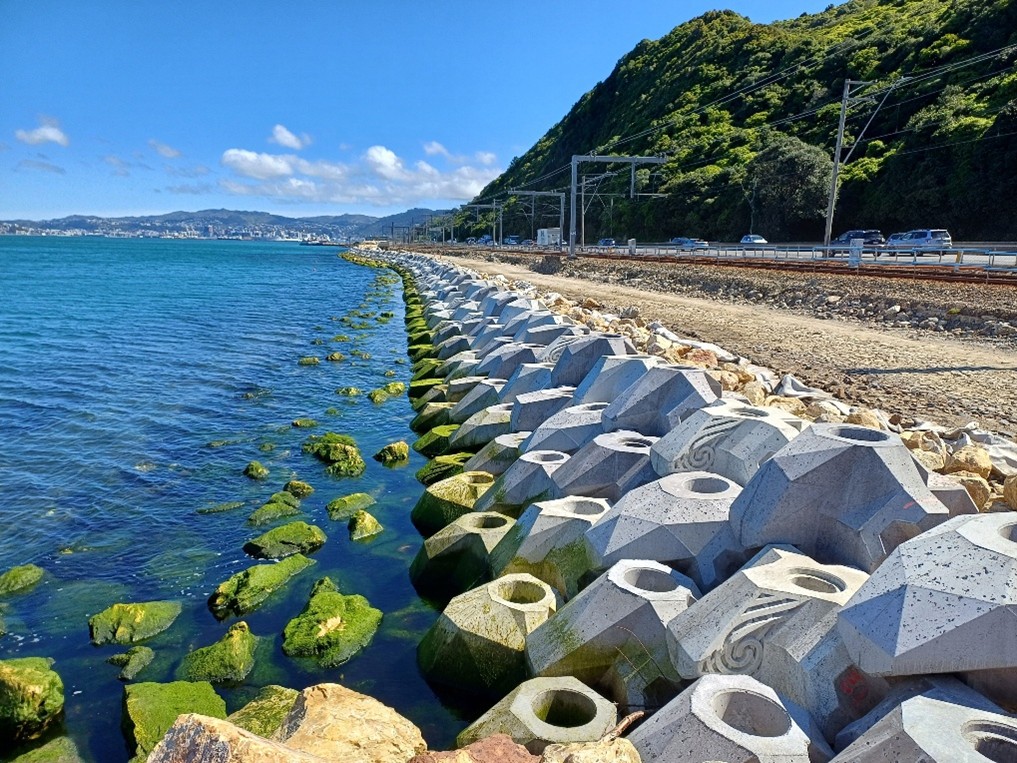
| Inn-1 (1) XblocPlus single layer units (NZ first) | Innovation technology or process | The use of a single-layer armour unit solution has reduced GHG emissions, material volume, transport, and construction time compared to traditional double-layer armour systems (i.e. hanbars, akmons, tetrapods) or rock armour. In addition, single layer units occupy a smaller footprint reducing the adverse environmental impact compared to double layer and rock armour solutions. |
| Inn-1 (2) Ecological and architectural enhancement of units (NZ first) | Innovation technology or process | The use of the XblocPlus units has enabled incorporation of custom designed ecological habitat enhancement in the form of surface modification to encourage growth of aquatic flora. While modifications have been applied elsewhere (e.g. Coastlock units and living seawall tiles), the modifications applied here have been specifically designed to replicate local kelp hold-fasts. An iterative design process was undertaken to integrate ecological requirements with a cultural narrative resulting in a weave of kelp holdfast-like forms within a recessed surface to create diverse subregions. This design has drawn on ecological examples from the local marine environment along with a cultural narrative designed by iwi lead artist Len Hetet and seeks to convey Te Ara Tupua’s narrative, specifically here Te Aukume and Te Aurona - the incoming and outgoing tides. |
| Inn-1 (3) Multi-model testing and design approach for seismic performance of XblocPlus units (NZ first) | Innovation technology or process | The stability of single layer concrete armour units rely on interlocking between units. These units have had limited application in seismically active regions, being generally tested under storm wave conditions within a wave flume using a scaled model. We developed a multi-model testing approach of physical and numerical modelling utilizing gaming engine technology, shake table, and wave flumes to investigate the blocks’ seismic performance. The testing enabled confirmation of the units’ performance under seismic conditions and the development of a repair methodology to reduce long-term maintenance costs. This work contributes to expanding the safe application of the units into earthquake-prone regions. |
Acknowledgement
PEOPLE:
Marcus Benter-Lynch - Design Rating Lead
Erica Olesson - Design Rating Lead
Ed Breese – Partnership, Environment, Planning and Comms Manager
SUPPLIERS:
DCM NL - XBloc designer
Preco Precast - X Bloc maker
MMA Offshore – Artificial reef designer