
Envirofluid Soil Conditioners
Details
- Product Type Construction Services, Contamination and Remediation Services, Environmental Management Services, Services
- Regions Australia, New Zealand
Contact
- Daniel Ohlmeyer +61355646455
- Website Visit
- Email daniel.ohlmeyer@envirofluid.com
ISupplier
- Company Name Envirofluid
- ISupplier Profile Visit
About
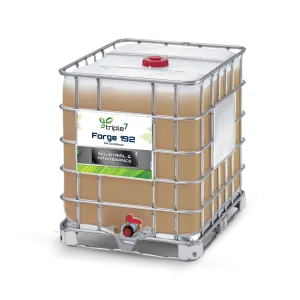
Envirofluid manufactures soil conditioning solutions for tunnel boring machine (TBM) and related tunnelling applications. The products are used to condition excavated ground and spoil to achieve more consistent spoil behaviour, improved workability and more controlled handling through the excavation, transfer and spoil management process.
For suitable ground conditions, these solutions are used to support spoil conditioning outcomes such as improved flow, reduced stickiness and clogging, and cleaner handling through the tunnelling circuit. This can assist projects where spoil consistency, handling efficiency, dust control, sediment management and downstream spoil management are important construction considerations.
The offering is intended for infrastructure and tunnelling projects that require practical, project-specific soil conditioning support. Product selection can be aligned to ground type, moisture conditions, spoil response and tunnelling methodology. Envirofluid can also support project teams with product selection, trial work and implementation guidance to help establish an appropriate conditioning approach for the works.
This listing is relevant to projects seeking soil conditioning products for TBM excavation and associated spoil handling activities, particularly where construction performance and environmental management outcomes need to be considered together.


Sustainability Outcomes
Envirofluid’s TBM soil conditioning solutions deliver more sustainable tunnelling by improving the control, consistency and manageability of excavated material throughout the spoil handling process. Better-conditioned spoil supports cleaner excavation, smoother transfer, stronger handling performance and a more controlled construction environment.
This directly supports improved environmental outcomes on tunnelling projects by reducing nuisance dust during excavation and spoil movement, improving control of fines and sediment, and strengthening protection of local receiving water quality. It also supports more efficient use of water and conditioning inputs through a controlled, project-specific conditioning approach rather than an inconsistent or over-applied one.
Improved spoil behaviour reduces unnecessary rehandling, supports cleaner temporary storage and removal, and strengthens overall resource efficiency across the tunnelling operation. These outcomes are highly relevant on projects where spoil management, site cleanliness, environmental control and construction efficiency need to work together rather than in conflict.
Within an IS context, the product aligns strongly with project objectives around air quality, receiving water quality, water use, resource efficiency, spoil management and sustainable procurement. It gives project teams a practical way to improve sustainability performance during design and construction while maintaining strong operational control through the tunnelling cycle.
Applicable Credits
| IS v1.2 | Discharges to Air, Land and Water (Dis)-1, Discharges to Air, Land and Water (Dis)-4, Innovation (Inn)-1, Materials footprint measurement and reduction (Mat)-1, Waste (Was)-1, Water (Wat)-1 |
| IS v2.1/IS v2.2 | Environmental Impacts (Env)-1, Environmental Impacts (Env)-4, Innovation (Inn)-1, Material Life Cycle Impact Measurement and Management (Rso)-6, Resource Efficiency & Management (Rso)-1, Resource Efficiency & Management (Rso)-4, Sustainable Procurement (Spr)-2, Water (Wat)-1 |
| Mat-1 (ISv1.2) | Materials footprint measurement and reduction | TBM soil conditioning can support reduced lifecycle material impacts by improving spoil conditioning efficiency and supporting more controlled use of conditioning inputs during excavation and spoil handling. This is relevant where projects are seeking design and practice improvements that reduce material-related impacts. |
| Wat-1 (ISv1.2) | Water use monitoring and reduction | TBM soil conditioning can support more efficient water use during excavation and spoil handling by helping achieve the required spoil behaviour through a controlled conditioning approach. This assists projects seeking to monitor and minimise water use across construction activities. |
| Inn-1 (ISv1.2) | Innovation | This listing supports the Innovation credit through the ISupply pathway, specifically the Innovation Challenge-8 Sustainable Suppliers and ISupply challenge, by providing a tunnelling-related product offering that projects may consider where it supports their sustainability objectives. |
| Was-1 (ISv1.2) | Waste management | TBM soil conditioning can support sustainable waste management practices by improving spoil consistency and handling, which contributes to cleaner spoil management, reduced unnecessary rehandling and better control of spoil-related site impacts. |
| Dis-4 (ISv1.2) | Air quality | TBM soil conditioning can assist with air quality management by improving spoil cohesion and moisture retention, which reduces nuisance dust during excavation, spoil transfer, temporary stockpiling and handling. |
| Dis-1 (ISv1.2) | Receiving water quality | TBM soil conditioning can assist with managing fines, slurry and spoil behaviour during tunnelling works, which helps reduce the risk of uncontrolled sediment-laden runoff and support better protection of local receiving water quality. |
| Env-1 (ISv2.1/ISv2.2) | Receiving Water Quality | TBM soil conditioning improves control of fines, slurry and spoil behaviour during tunnelling works, supporting stronger management of sediment and runoff risks that affect local receiving water quality. This aligns with Env-1, which focuses on maintaining or improving the environmental quality of local streams, rivers and water bodies. |
| Inn-1 (ISv2.1/ISv2.2) | Innovation | This listing supports the ISupply Innovation Challenge-4 pathway for Sustainable Suppliers and ISupply by making a tunnelling-related product available for consideration on projects pursuing sustainability outcomes. The alignment is through the ISupply pathway identified under Inn-1. |
| Spr-2 (ISv2.1/ISv2.2) | Supplier Assessment and Selection | Envirofluid’s TBM soil conditioning solutions support supplier assessment and selection by giving project teams a product option that contributes to sustainability objectives relating to spoil management, receiving water quality, air quality and resource efficiency during tunnelling works. This aligns with Spr-2 through selection of goods that support project sustainability outcomes. |
| Wat-1 (ISv2.1/ISv2.2) | Avoiding Water Use | TBM soil conditioning reduces water demand during excavation and spoil handling by delivering the required spoil behaviour through a controlled conditioning approach. This aligns with Wat-1, which focuses on reducing water demand across the life cycle of the infrastructure asset. |
| Rso-6 (ISv2.1/ISv2.2) | Material Life Cycle Impact Measurement and Management | TBM soil conditioning supports material life cycle impact management through more efficient use of conditioning inputs and improved handling performance during excavation and spoil management. This aligns with Rso-6, which focuses on reducing the environmental impacts of materials across the life cycle of the infrastructure asset. |
| Rso-4 (ISv2.1/ISv2.2) | Resource Recovery and Management | TBM soil conditioning improves spoil consistency and handling, supporting cleaner spoil management, reduced unnecessary rehandling and stronger management of resource outputs. This aligns with Rso-4, which focuses on beneficial reuse and reducing the volume of resources sent to landfill. |
| Rso-1 (ISv2.1/ISv2.2) | Resource Strategy Development | TBM soil conditioning supports resource efficiency by improving spoil manageability and establishing more controlled use of water and conditioning inputs during tunnelling works. This aligns with Rso-1 through identification, implementation and management of resource efficiency expectations across the infrastructure life cycle. |
| Env-4 (ISv2.1/ISv2.2) | Air Quality | TBM soil conditioning improves spoil cohesion and moisture retention during excavation, spoil transfer and spoil handling, supporting stronger management of air quality impacts and reduced nuisance dust. This aligns with Env-4, which focuses on managing air quality impacts and improving air quality for receptors. |
More from Envirofluid

