
Mapei WSP Line
Details
- Product Type Composite Materials
- Regions Auckland, Australia, Australian Capital Territory, New South Wales, New Zealand, Northern Territory, Queensland, South Australia, Tasmania, Victoria, Western Australia
Contact
- Max Fernando 61436812204
- Website Visit
- Email m.fernando@mapei.com.au
ISupplier
- Company Name Mapei Australia
- ISupplier Profile Visit

About
POLYFOAMER ECO WSP
Foaming agent from Mapei WSP system with low environmental impact, specifically designed to reduce water consumption needed for conditioning cohesive soils during mechanised tunnel excavation.
POLYFOAMER EWSP GS
Foaming agent from Mapei WSP system specifically designed to reduce water consumption needed for conditioning granular soils during mechanised tunnel excavation.
MAPEDISP ECO WSP
Dispersing polymer from the Mapei WSP system, specifically for reducing water consumption required for conditioning cohesive formations during mechanised tunnel excavation.
Find more at: https://www.mapei.com/au/en/news-and-events/event-detail/2021/08/11/environmentally-friendly-soil-conditioning-with-polyfoamer-eco
Sustainability Outcomes
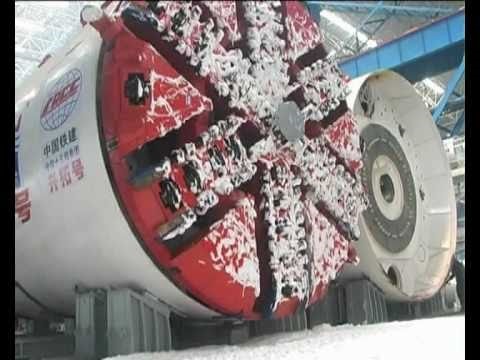
Mapei’s WSP line of soil conditioning agents is specifically designed to address the environmental challenges associated with mechanised tunnelling, particularly in Earth Pressure Balance (EPB) Tunnel Boring Machine (TBM) applications. These innovative products deliver high technical performance while reducing environmental impact in two major ways:
- Water Conservation
The POLYFOAMER ECO WSP and MAPEDISP ECO WSP products significantly reduce the water required during soil conditioning. Independent research (e.g., by the University of Turin) has shown water savings between 17% and 30% across various soil types when compared to conventional foaming agents. Lowering the Water Injection Ratio (WIR) directly reduces the overall water consumption in tunnelling — which can save millions of liters over long tunnel drives.
- Reduced Eco-toxicity and Enhanced Biodegradability
The POLYFOAMER ECO line is formulated using biodegradable surfactants and plant-derived polymers, free from glycols and other persistent synthetic compounds. The products demonstrate:
– Low aquatic toxicity in lab tests on daphnia and algae
– Fast biodegradation, reducing residual environmental burden
– Compliance with strict environmental controls, e.g., in heritage zones like the Santa Lucia Tunnel in Tuscany, Italy
– These features enable safe and responsible spoil management, often allowing for reuse or reclassification of conditioned spoil under circular economy principles.
Applicable Credits
| IS v1.2 | Discharges to Air, Land and Water (Dis)-1, Innovation-1, Materials (Mat)-2, Water (Wat)-1, Water (Wat)-1, Water (Wat)-2 |
| IS v2.1/IS v2.2 | Environmental Impacts (Env)-1, Innovation-1, Material Life Cycle Impact Measurement and Management (Rso)-6, Resource Efficiency & Management (Rso)-4, Resource Efficiency & Management (Rso)-7, Water (Wat)-1 |
| Env-1 (ISv2.1/IS v2.2) | Receiving Water Quality Use of biodegradable, low-toxicity ingredients reduces potential for contamination of local water systems. |
| Inn-1 (ISv2.1/IS v2.2) | Contributing to Innovation Challenge-4: Sustainable Suppliers and ISupply. Contributing to Innovation Challenge -5: Circular Economy Soil treated with Polyfoamer ECO has been approved for reuse under strict European spoil reuse protocols. |
| Rso-6 (ISv2.1/IS v2.2) | Material Life Cycle Impact Measurement and Management environmental impacts across the life cycle of infrastructure assets by lowering material-related emissions and improving resource efficiency during tunnel excavation. By reducing the water injection ratio (WIR) required for effective soil conditioning by up to 30%, these products help cut down on the embodied carbon associated with water sourcing, treatment, and handling. Additionally, the range is formulated with biodegradable products, eliminating reliance on conventional, petroleum-derived chemicals. This results in a lower environmental footprint during manufacturing and application. The improved environmental profile of the conditioned spoil also enhances its potential for reuse, reducing waste sent to landfill and supporting circular economy outcomes. |
| Rso-7 (ISv2.1/IS v2.2) | Supported by third-party EPDs to show the measures impacts throughout entire lifecycle of the product. |
| Wat-1 (ISv2.1/IS v2.2) | Avoiding Water Use Direct reduction in water demand across the life of the project. Reduce water consumption needed for : Conditioning cohesive soils during mechanised tunnel excavation. Conditioning granular soils during mechanised tunnel excavation. Conditioning cohesive formations during mechanised tunnel excavation. |
| Wat-2 (ISv2.1/IS v2.2) | Appropriate Use of Water Sources Lower water input allows integration of recycled or lower-grade water, reducing pressure on potable supply. |
| Rso-4 (ISv2.1/IS v2.2) | Resource Recovery and Management Environmentally safe spoil conditioning improves potential for recovery and reuse, rather than disposal. |
| Dis-1 (IS v1.2) | Receiving Water Quality Lower eco-toxicity of foaming agents minimises risk of groundwater or surface water contamination during spoil handling. |
| Mat-1 (IS v1.2) | Materials Footprint Measurement and Reduction The products support the reduction of environmental impacts across the life cycle of infrastructure assets by lowering material-related emissions and improving resource efficiency during tunnel excavation. By reducing the water injection ratio (WIR) required for effective soil conditioning by up to 30%, these products help cut down on the embodied carbon associated with water sourcing, treatment, and handling. Additionally, the range is formulated with biodegradable products, eliminating reliance on conventional, petroleum-derived chemicals. This results in a lower environmental footprint during manufacturing and application. The improved environmental profile of the conditioned spoil also enhances its potential for reuse, reducing waste sent to landfill and supporting circular economy outcomes |
| Mat-2 (IS v1.2) | Supported by third-party EPDs to show the measures impacts throughout entire lifecycle of the product. |
| Wat-1 (IS v1.2) | Water Use Monitoring and Reduction Proven water demand reduction in soil conditioning helps achieve lower water usage per linear meter of TBM advance. |
| Wat-2 (IS v1.2) | Replace Potable Water Reduced water demand may facilitate partial or complete substitution of potable water with lower-grade or recycled alternatives. |
| Inn-1: Innovation (IS v1.2) | Contributing to Innovation Challenge-8: Sustainable Suppliers and ISupply |
More from Mapei Australia

