11 - 2024 - ISCouncil

Breaking Barriers to largescale FOGO use in Infrastructure Landscaping – Environmental Outcomes

Summary

The MELconnx Alliance, a collaboration between Laing O’Rourke and the Office of Major Transport Delivery, is spearheading the METRONET Morley-Ellenbrook Line Project delivering 21kilometers of double-track rail, five new stations, and associated major structures.

A key performance indicator has been to minimise carbon impacts and support circular economy outcomes, achieved through the innovative use of recycled materials. Central to this initiative was the implementation of FOGO (Food Organics and Garden Organics) in large-scale landscaping. Despite initial scepticism, close collaboration with key stakeholders has implemented a significant trial of FOGO-enriched soil-conditioner, incorporating >900tonnes of FOGO across 36,385sqm of landscaping, diverting ~3,200tonnes of household waste and ~6,000tonnes CO2e- from landfill. A two-year trial optimising soil blends for native planting aims to advance industry knowledge and acceptance.

The trial has fostered new business opportunities for suppliers and set a precedent for large-scale use of recycled materials in support of the local circular economy.

Northshore Hamilton Street Renewal Program – Environmental Outcomes

Northshore Brisbane, Queensland’s largest waterfront urban renewal precinct, is designed as a model for sustainable, sub-tropical living. It will serve as the Brisbane 2032 Olympic and Paralympic athletes’ village, later transitioning into a dynamic residential, commercial, and industrial area.

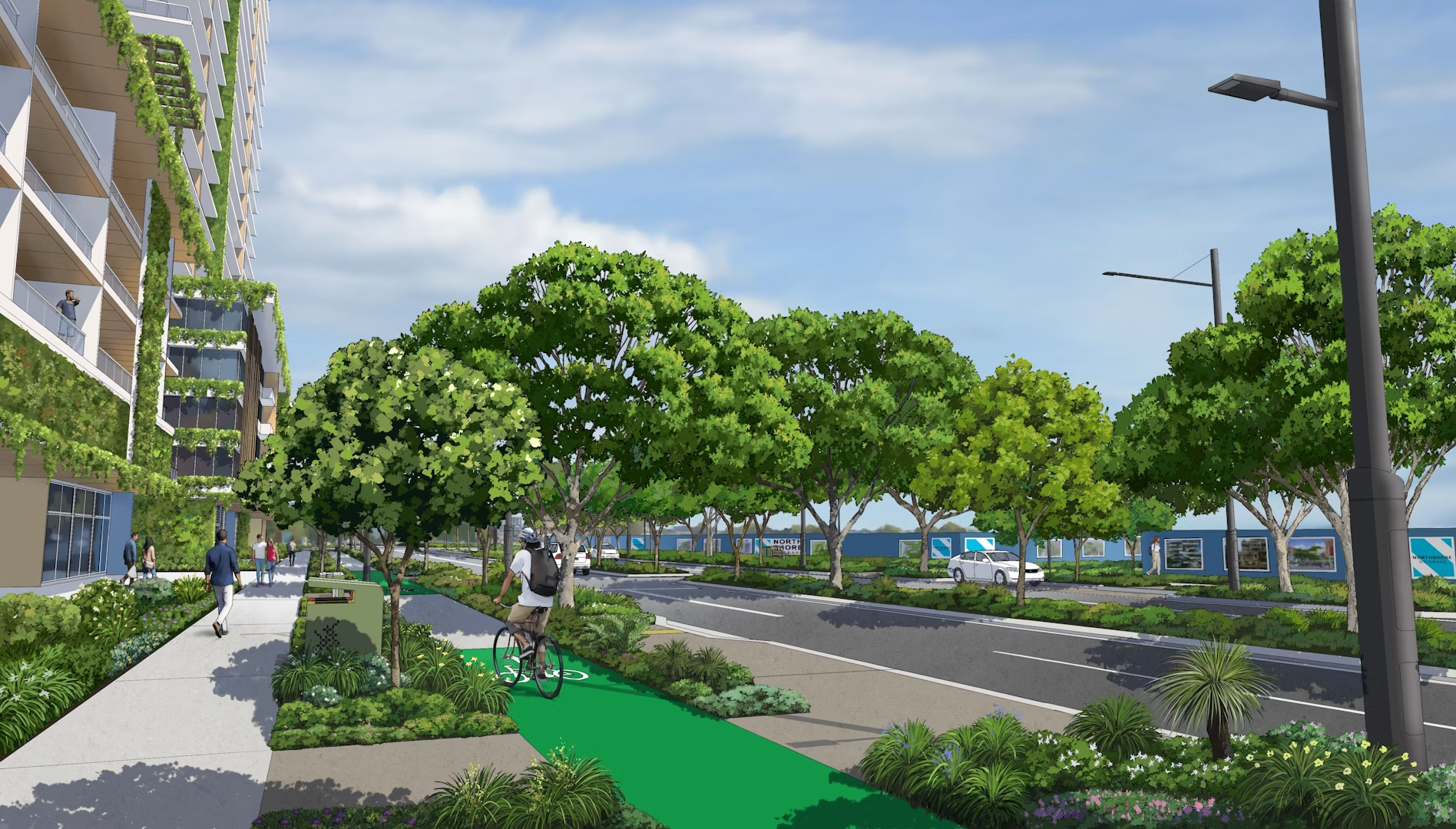
Through EDQ’s Northshore Street Renewal Program, the project intends to achieve 76% shade cover on verges and 63% across the site, helping to reduce heat stress and enhance climate resilience. The project incorporates culturally significant vegetation for First Nations peoples and climate-resilient tree species, promoting a sustainable lifestyle for future residents.

The success of the project is due to an innovative digital workflow and an interdisciplinary approach, addressing challenges such as street lighting, passive irrigation, flooding, water quality and accessibility. This initiative not only creates shaded, comfortable spaces but also enhances active transport routes and supports the sharing of cultural knowledge, contributing to a more resilient future.


Describe WHAT you have done and HOW you have done it. Please provide a summary of your initiative, innovation, or approach.

Northshore Brisbane, Queensland’s largest waterfront precinct, is setting a new standard for sustainable urban design as the first project in Queensland to target an IS rating (v2.1). Led by Economic Development Queensland (EDQ), the Northshore Street Renewal Program showcases cutting-edge green infrastructure, exemplifying biophilic design, biodiversity net gain, and ecosystem improvement.

At the core of this initiative is an ambitious tree canopy target, aimed at reducing the urban heat island effect (UHIE) and optimising urban cooling for climate resilience. Key features of the program include:
• High street tree canopy cover to reduce heat stress
• Integrated stormwater and passive irrigation systems
• Collaborative First Nations design and species selection
• Universal design considerations beyond DDA compliance
The project’s success comes from a collaborative effort involving EDQ, Urbis, ADG, Mott MacDonald, and Roesner and Hamilton, ensuring sustainable streetscape outcomes through thoughtful integration of trees, lighting, and stormwater solutions.

The process involved:

  1. Strong Vision and Leadership by setting ambitious goals and guiding the project’s direction.
  2. Educating stakeholders on tree science and the benefits of urban tree planting – which led to selecting tree species not presently included in standard street tree planting local planning controls.
  3. Engaging First Nations representatives to incorporate culturally significant and resilient plant species.
  4. Analysing streetscape scenarios to optimise canopy cover and mitigate UHIE (i.e. low (≃15%), medium (≃50%), and high (≃80%), and the effects on Mean Radiant Temperature of the selected representative sites.
  5. Testing and refining designs through iterative urban heat assessments, focusing on maximising shading and cooling effects.
  6. Using innovative structural soil cells, which are not yet widely used, to support tree roots for healthier growth and a robust canopy in constrained areas, demonstrating their potential to drive wider industry adoption of Australian made green infrastructure solutions.
  7. Balancing street lighting with canopy goals to enhance walkability and public amenity.

The iterative design process at Northshore Brisbane utilised advanced analysis, including sunlight hours, climate data, and mean radiant temperature (MRT) assessments. By testing various canopy cover scenarios, from 15% to 80% the impact on cooling was thoroughly evaluated. This analysis identified ‘hot spots’ and developed strategies to enhance street cooling through targeted tree canopy cover, thoughtful material selection, and an optimised streetscape hierarchy.

This comprehensive approach not only tackled current difficulties in street lighting and tree selection practices that limit tree canopy outcomes to deliver significant urban cooling outcomes. It enhances liveability, boosts biodiversity, and upholds the cultural and ecological values of the area. Northshore Brisbane is a model for future developments, seamlessly integrating sustainability with community-focused design.

Through the Northshore Street Renewal Program, EDQ is creating a legacy of climate resilience, cultural inclusion, and sustainable urban living. By educating stakeholders, integrating culturally significant plants, optimising canopy cover, refining designs with heat assessments, and employing advanced structural soil cells, EDQ is setting a new standard in urban design.

What were the OUTCOMES and how were those outcomes shared?

The Northshore Brisbane project establishes a new standard in sustainable urban design with its innovative street tree initiative. Key achievements include:

• Targeted Canopy Cover: Priority streets have been identified for high tree canopy cover based on urban heat and active transport usage, enhancing the overall green infrastructure.
• Innovative Verge Designs: Wider verge designs have been delivered to accommodate extensive street tree planting.
• Optimised Infrastructure: Drainage and civil works have been refined to support mature trees with passive irrigation, water storage and water quality treatment.
• Exceptional Shade Coverage: Achieving 76% shade on verges and 63% across the site, Northshore Brisbane surpasses Brisbane City Council’s 50% shade cover target for 2031 (BCC shade target for pathway and cycle tracks only).
• Significant Urban Cooling: UHIE modelling demonstrates a 16°C reduction in surface temperature in shaded areas for 2090, mitigating outdoor heat stress and enhancing the comfort of active transport routes.

Sustainable Streetscape Outcomes:
• Environmental Benefits:

  • Ecosystem Services: The canopy sequesters carbon and reduces the urban heat island effect. The integrated stormwater system reuses water for irrigation, supporting tree growth and climate resilience. According to the Brisbane City Council GreenFactor Tool, the ecosystem benefits have improved by 50% compared to other sub-tropical streets.
  • Climate Resilience: The project addresses urban heat risk through ambitious canopy cover (that is suitable to future projected climate) and stormwater management, reducing energy use for cooling and managing stormwater to mitigate flooding.

• Social Benefits:

  • Health and Wellbeing: Biophilic design principles enhance mental health by connecting people to nature, reducing heat stress and creating liveability.
  • Active Transport: Shaded routes encourage outdoor activities, promote physical health, and reduce vehicle emissions.
  • Creating Place: The high tree canopy and native species foster a distinct sense of place and visual appeal, enhancing the environment for all users.
  • Designing with Country: Integrating cultural knowledge into the selection of important trees and plants, this approach enriches social inclusion and strengthens the identity of Northshore. By incorporating First Nations’ perspectives, the project enhances cultural relevance and community connection.
  • Traffic Calming: Tree-lined streets naturally slow traffic, enhancing safety and reducing congestion.

Sharing the Impact:

The outcomes of this initiative have been widely shared through various channels:

• ISC Case Study: Documented as part of the ISC v2.1 rating, featured on the ISC website, and promoted through Urbis, ADG, and Mott MacDonald’s social media.
• Innovation Recognition: An ISC v2.1 innovation claim was submitted for the digital approach to UHIE assessment, with presentations given to the Australian Institute of Landscape Architecture (Queensland Charter) and other relevant forums.
• Workshops and Presentations: Engaged with key stakeholders including EDQ, the Project Design Team, Brisbane City Council, community members, Queensland Infrastructure Sustainability Community of Practice (CoP), Queensland Transport and Main Roads, and the Environmental Institute of Australia and New Zealand (EIANZ) at the Nature Positive Symposium in Sydney. Internal presentations were also made to Mott MacDonald transport engineers.

The Northshore Brisbane project has set a high standard by achieving 76% shade cover and significantly improving urban cooling, making streets more comfortable and walkable.

EDQ is actively sharing these outcomes through case studies, presentations, and workshops to encourage broader industry adoption. This approach illustrates how integrating green infrastructure with urban planning can effectively support community well-being and sustainable development.

Describe WHO benefited from your initiative, innovation, or approach?

The sustainable streetscape design at Northshore Brisbane delivers impactful benefits across various stakeholders:
• Future Community: The initiative will greatly enhance the lives of Northshore’s future residents, workers, and visitors, including those attending the Brisbane 2032 Games. The green infrastructure will support the health and well-being of an estimated 24,500 residents, 25,000 employees, and tens of thousands of annual visitors. It will create a vibrant, cohesive community space, fostering local engagement and stewardship. By incorporating Indigenous cultural knowledge, the project also strengthens cultural ties and fosters a shared sense of heritage.
• Economic Development Queensland (EDQ): Northshore Brisbane sets a new benchmark for streetscape design and tree canopy standards within EDQ’s portfolio. This project exemplifies EDQ’s commitment to sustainable development, building on a decade of achievements that include over $3.7 billion in private sector investment and $1 billion in infrastructure across 34 Priority Development Areas. The success of Northshore Brisbane will drive further innovations and improvements in urban design throughout Queensland.
• Brisbane City Council (BCC): The project challenges and redefines industry and Council standards, proving that high street tree canopy coverage is achievable and beneficial. It demonstrates how to integrate advanced lighting and stormwater management with extensive street tree planting, setting a precedent for future urban planning and design.
• Indigenous Communities: The ’Designing with Country’ initiative highlights and honours Indigenous culture by incorporating tree species of cultural significance. This approach not only respects and celebrates traditional knowledge but also contributes to reconciliation and cultural appreciation. It transforms the urban environment into a space of cultural learning and belonging, enriching the community and fostering a deeper connection to the land.
• Industry: The Northshore Brisbane project showcases innovative practices in urban design and green infrastructure, setting a new standard for the industry. By demonstrating effective integration of high canopy coverage, advanced stormwater management, and cultural considerations, it provides a practical model for other developers and urban planners. This not only drives industry-wide adoption of sustainable and resilient design principles but also encourages the development of new technologies and solutions, paving the way for more impactful and environmentally responsible urban projects.

What LEGACY and UN SDG CONTRIBUTION was achieved?

Northshore Brisbane, Queensland’s largest waterfront urban renewal precinct, is designed as a model for sustainable, sub-tropical living. It will serve as the Brisbane 2032 Olympic and Paralympic athletes’ village, later transitioning into a dynamic residential, commercial, and industrial area.

Through EDQ’s Northshore Street Renewal Program, the project intends to achieve 76% shade cover on verges and 63% across the site, helping to reduce heat stress and enhance climate resilience. The project incorporates culturally significant vegetation for First Nations peoples and climate-resilient tree species, promoting a sustainable lifestyle for future residents.

The success of the project is due to an innovative digital workflow and an interdisciplinary approach, addressing challenges such as street lighting, passive irrigation, flooding, water quality and accessibility. This initiative not only creates shaded, comfortable spaces but also enhances active transport routes and supports the sharing of cultural knowledge, contributing to a more resilient future.

The sustainable streetscape design at Northshore Hamilton is set to deliver a lasting legacy through the following impactful achievements:
• New Standards in Sustainable Urban Development: Northshore Brisbane redefines urban design with its ambitious tree canopy cover goals, innovative approaches to street lighting, and integrated stormwater management. This sets a new benchmark for creating pedestrian and cycle-friendly environments that promote active transport and high-quality urban living.

  • SDG 11: Sustainable Cities and Communities: By improving urban infrastructure to be more sustainable and walkable.
  • SDG 13: Climate Action: Through significant contributions to urban cooling and environmental resilience.
    • Healthy and Robust Landscape: The project’s commitment to a high canopy target and cutting-edge stormwater management fosters a resilient and thriving landscape. This robust environment enhances biodiversity, reduces maintenance needs, and offers vital ecosystem services like air purification and temperature regulation, ultimately enriching the quality of life for residents and visitors.
  • SDG 11: Sustainable Cities and Communities: By enhancing the urban environment and supporting biodiversity.
  • SDG 13: Good Health and Well-being: Through improved environmental quality and ecosystem resilience.
    • Development of Innovative UHIE Assessment Methodology: The project has pioneered a new digital workflow for urban heat island effect (UHIE) assessment, enabling precise and interactive design optimisation. This approach integrates seamlessly with civil design and other requirements, setting a new industry standard and influencing practices in urban cooling and design.
  • SDG 9: Industry, Innovation, and Infrastructure: By advancing methodologies and tools for urban design.
  • SDG 11: Sustainable Cities and Communities: Through improved urban planning and infrastructure.
  • SDG 13: Climate Action: By addressing climate impacts with innovative solutions.
    • First Nations Outcomes: Through the ’Designing with Country’ initiative, the project honours Indigenous culture and strengthens community ties. By incorporating culturally significant plants and respecting traditional knowledge, Northshore Brisbane fosters a deep sense of belonging and cultural appreciation, contributing to reconciliation and social inclusion.
  • SDG 10: Reduced Inequalities: By promoting cultural recognition and inclusion.
  • SDG 11: Sustainable Cities and Communities: By integrating Indigenous perspectives into urban design.
  • SDG 13: Good Health and Well-being: By enhancing community well-being through cultural and environmental integration.
    Northshore Brisbane’s legacy extends beyond its immediate outcomes, setting new industry standards, promoting resilience, and showcasing how thoughtful urban design can align with global sustainability goals. Through these advancements, this project paves the way for future developments that balance infrastructure needs with environmental stewardship and community well-being.

Union Road & Mont Albert Road Level Crossing Removal Project – Environmental Outcomes

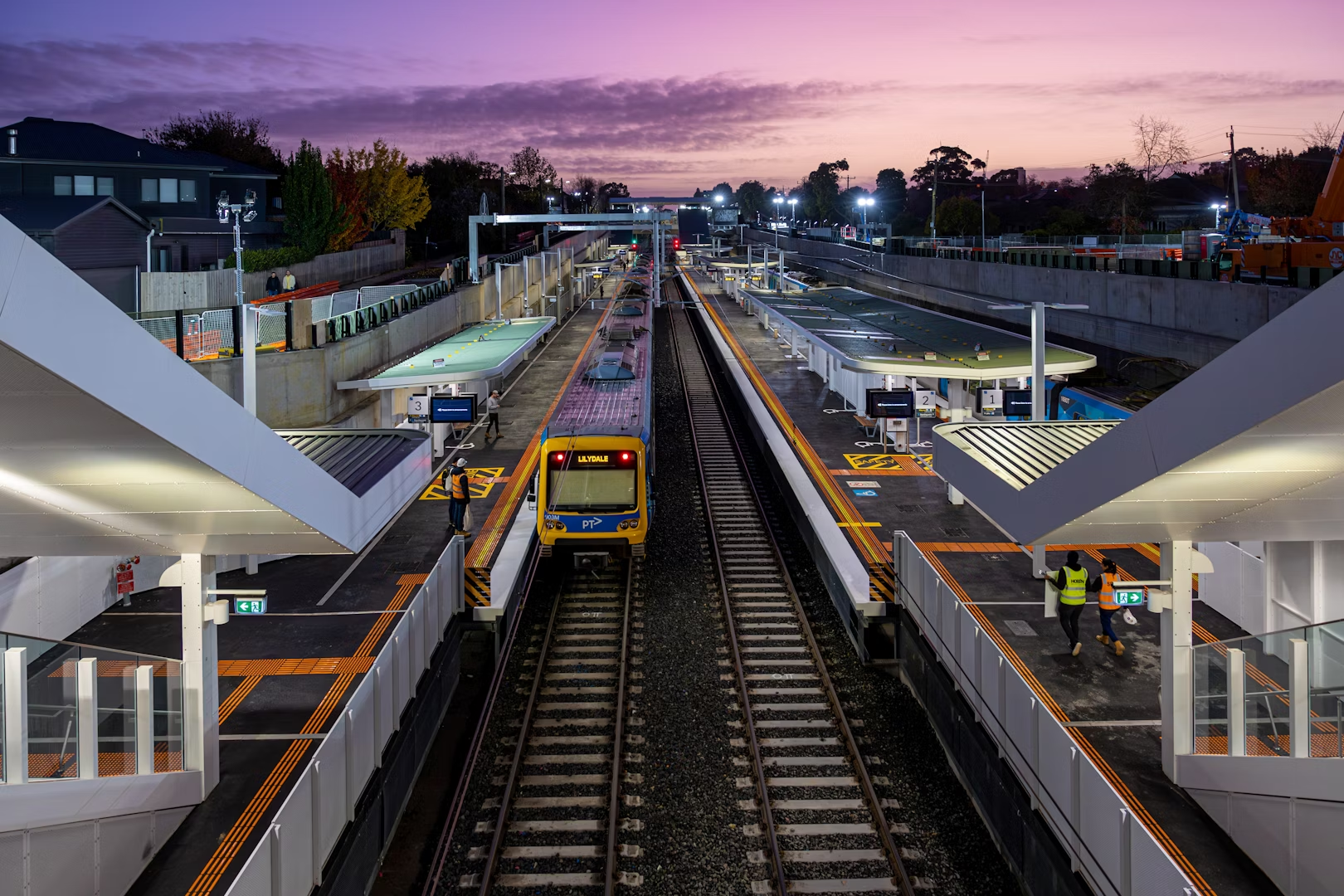
The Union Road and Mont Albert Road Level Crossing Removal Project has set a new standard in environmental sustainability through a build-less approach and the use of the decarbonisation hierarchy. By reducing construction scale, innovating material use, preserving heritage, and managing environmental discharges, the project has demonstrated a comprehensive approach to minimising environmental impact and achieving long-term sustainability.

The project achieved a reduction in embodied GHG emissions by 32%, driven by the avoidance of building an additional station and platforms. The project worked with the supply chain to pioneer the development of a 70% SCM pilling mix.

The team focused on preserving the history of the local area by refurbishing and repurposing the Mont Albert Station building as a community space. This reuse aligns with circular economy principles, yielding positive embodied carbon and community outcomes.

Describe WHAT you have done and HOW you have done it. Please provide a summary of your initiative, innovation, or approach.

The Union Road and Mont Albert Road Level Crossing Removal Project (UMA), delivered by the South Eastern Program Alliance (SEPA), implemented strong governance and leadership from the onset. There was also a focus on considerate decision making, adopting a build-less approach and innovative decarbonisation strategies.

The project focused on a standardised approach to gap analyses to allow for consistent approaches, and collective efforts to address areas for improvement. The project also embedded sustainability requirements and responsibilities into team strategies. The success of the project is a result of the early commitment and engagement of the whole team through shared sustainability responsibilities.

The award of the UMA project represented a new challenge for SEPA and an opportunity to leverage the power of the program to deliver an exemplar outcome. An Alliance-wide sustainability strategy was developed to align ambitious sustainability goals with the rest of the delivery strategy. The strategy focused on decarbonisation of scope 1, 2 and 3 emissions. The sustainability strategy considered the goals of each parent organisation to ensure alignment, all of whom have a focus on reducing greenhouse gas emissions and resource efficiency.

The project focused on decarbonisation by looking back at previous project data to understand where the scope 1 and scope 2 carbon sits within our typical level crossing removal projects – with approximately 20% of the construction phase emissions coming from site compound set up and the remaining 80% coming from fuel burn for plant and equipment on site. Of this, fuel represented approximately 90% of the total emissions. This data helped the team to set up frameworks to tackle both low-hanging fruit and the high-impact emissions.

A decarbonisation hierarchy was developed, with supplementary training and a site decarbonisation checklist disseminated to the wider team. The team also adopted a data driven approach to monitor, track, challenge, review, and improve based on data collected throughout the project. This allowed for certainty to meet the project’s decarbonisation goals and was presented on a dashboard available to all employees on the project.

Another pillar of the project’s sustainability strategy was Circular Economy. The top two elements of the circular economy hierarchy were championed on this project – avoidance and reuse. This occurred through knowledge sharing and upskilling the wider team on the design decisions that have the most impact on sustainable outcomes in the scope 3 space. Additionally, the project facilitated a major innovation with Victoria’s lowest-carbon piling mix.

There was a strong focus on promoting a culture of sustainability throughout the project, with interactive alliance-wide presentations on waste, online quizzes at wider team meetings, lunch and learns on topics that relate to the wider team, and regular toolbox talks to integrate the workforce. This helped to bring the wider staff and workforce on the journey and create buy-in.

What were the OUTCOMES and how were those outcomes shared?

The UMA project, has achieved significant environmental milestones by adopting a build-less approach and innovative decarbonisation strategies. This project sets a new benchmark in sustainability, focusing on reducing carbon emissions, preserving heritage, and managing environmental discharges effectively.

From the outset, the UMA project applied a build-less approach as part of its decarbonisation strategy. By consolidating the Surrey Hills and Mont Albert stations into a single facility, Union Station, the project embraced a top-tier principle in the decarbonisation hierarchy. This decision not only minimised the need for additional infrastructure but also substantially reduced material use and associated carbon emissions. The build-less approach demonstrates how strategic planning and design can lead to substantial long-term environmental benefits by focusing on reducing the scale of construction.

The UMA project achieved impressive environmental outcomes through several key measures. A reduction in embodied greenhouse gas emissions, the project realised a 32% reduction in embodied greenhouse gas emissions from materials, resulting in a 31% improvement in IS EnviroPoints. This reduction was driven by various factors. Optimised design included integrating two stations into one, the project avoided constructing an additional building, which contributed to a decrease in overall material use and emissions. The project achieved a lifecycle carbon reduction of 14,553 tonnes, or 61%, compared to the base case. This was accomplished through the installation of a 70kW solar array, an energy-efficient station design, and the use of an electric vehicle truck. The project diverted 40% of office waste from landfills by using recycled alternative waste streams, such as coffee cups and textiles, further reducing its environmental footprint.

The Alliance collaborated with the supply chain (Vinsi Partners, Keller, and Holcim) to co-develop to test and produce a 70% supplementary cementitious material (SCM) pilling mix by the Department of Transport. The introduction of the 70% SCM concrete mix was a major innovation, meeting environmental standards and demonstrating a scalable approach to reducing carbon emissions. This was further applied across SEPA projects including Bedford Road, Coolstore Road, and Dublin Road, and is projected to prevent around 4,000 tonnes of CO2 emissions compared to traditional methods. The approach’s benefits are through the power of the program expected to extend to other level crossing removal projects and change the benchmark in piling for the industry.

The project incorporated a 70 kW solar array and adopted energy-efficient design principles, reducing reliance on non-renewable energy sources and lowering overall carbon emissions. Additionally, the use of an electric truck contributed to a reduced carbon footprint in transportation and operational activities.

The UMA project made significant efforts to preserve and repurpose historic and heritage assets. The historic Mont Albert Station building was refurbished and repurposed as a community space within the new Mont Albert Plaza. This reuse aligns with the circular economy principle, yielding positive embodied carbon outcomes. The repurposing preserved local history and created a legacy with the use of contextually relevant materials, such as brick and bluestone, and heritage inspired furniture. The successful removal, storage, and reinstatement of a heritage palm tree further highlighted the project’s commitment to preserving cultural landmarks.

The project excelled in managing discharges related to noise, vibration, and light. High performance in the discharge credit category reflected effective governance and management practices. Despite a high volume of complaints, the team’s proactive communication and stakeholder relations strategies ensured that issues were resolved quickly and satisfactorily. The project achieved outstanding results in noise and vibration management, particularly in a densely populated area.

The upgraded UMA project has set a new standard in environmental sustainability through a build-less approach and the use of the decarbonisation hierarchy. By reducing construction scale, innovating in material use, preserving heritage, and effectively managing environmental discharges, the project has demonstrated a comprehensive approach to minimising environmental impact and achieving long-term sustainability.

Describe WHO benefited from your initiative, innovation, or approach?

Our environmentally sustainable approach has brought substantial benefits to multiple stakeholders, including the community, industry, and environment.

The primary beneficiaries of our initiatives are communities. By implementing a system for environmental credits linked to heritage conservation, we’ve enhanced the community’s access to funds that support local heritage projects. This approach promotes the preservation of cultural landmarks and fosters a sense of pride and engagement among residents. Additionally, the initiative has created job opportunities within the community, ranging from administrative roles to fieldwork positions, contributing to local economic growth. In terms of the environment, decarbonisation initiatives that focus on electrifying or renewables, such as the electric truck and the use of solar crib sheds, reduce noise and air pollution for the community.

Collaborating with supply chain partners Vinsi, Keller, and Holcim the project introduced a groundbreaking sustainable concrete mix, significantly advancing industry practices. By focusing on concrete and piling, key contributors to embodied carbon emissions, the team successfully increased the allowable proportion of SCM to 70%, an increase to double the previous limits. This change was approved by Victoria’s Department of Transport and Planning and has been implemented on major projects since, including SEPA’s Bedford Road, Coolstore Road, and Dublin Road. The team who worked on developing this mix focused on leading industry change by allowing Holcim, the concrete supplier, to own the mix, so that it is available for use on any project across Victoria. This is an exemplar showcase of genuine industry change. Its successful application on these projects demonstrates a scalable model for sustainability, with the potential for widespread impact as the level crossing removal projects expanded to 110 level crossings and Big Build projects continue in Victoria.

From an environmental perspective, our initiative has led to notable improvements. The integration of sustainable practices relating to discharge credits has reduced the environmental footprint associated with waste and emissions, including noise and vibration to the local community. The project had a strong collaborative approach between the Communications and Environment teams to ensure the community was aware of potential noise and vibration impacts early and offered respite and relocation to mitigate impacts.

By optimising resource use and promoting recycling and conservation efforts, we have significantly decreased the strain on natural resources. This has resulted in a cleaner environment and a reduction in social and environmental pollution, contributing to overall environmental sustainability and a more enjoyable environment for the community.

What LEGACY and UN SDG CONTRIBUTION was achieved?

A key achievement of the UMA project was the consolidation of the Surrey Hills and Mont Albert stations into the large Union station which services both communities. This ”build-less” approach marked a top-tier strategy in the decarbonisation hierarchy by minimising the need for additional infrastructure. By merging two stations into one, the project effectively reduced material usage and associated carbon emissions, showcasing how thoughtful design decisions can lead to substantial and enduring environmental benefits. This strategic decision also allowed for the creation of more community spaces.

By redesigning the stations, the project effectively reduced embodied greenhouse gas emissions by 32%, which translates to a 31% improvement in IS EnviroPoints. Notable reductions included a decrease in pile depth and a reduction in concrete and steel usage due to changes in design alignment. The project also trialed a pioneering 70% SCM concrete mix and employed PolyRok in pre-cast seating, which contributed to these savings.

In addition to the direct environmental benefits, the project secured a groundbreaking exemption from Victoria’s Department of Transport and Planning, allowing the use of up to 70% SCM in piling concretes. This exemption led to a 42% reduction in CO2 emissions compared to the previous benchmark, demonstrating a significant collaboration across the supply chain and advancement in sustainable construction practices. The new piling mix has successfully been implemented on other SEPA projects including Bedford Road, Coolstore Road, and Dublin Road, but also wider on other LXRP Alliances though the power of the program. The mix is planned to be used on other Big Build projects as well. This demonstrates the ripple effect and how the project is changing the industry’s traditional approach to piling.

The SEPA project’s legacy extends to its contributions to several UN Sustainable Development Goals.

SDG 9: Industry, Innovation, and Infrastructure – The project’s innovative approach to concrete sustainability and the successful regulatory challenge to increase SCM content in concrete mixes highlight advancements in building resilient infrastructure with reduced carbon footprints. By setting new industry standards and making sustainable practices more accessible, the project drives innovation in construction methods.
SDG 11: Sustainable Cities and Communities – Consolidating stations and repurposing the Mont Albert Station building as a community space aligned with the goal of creating sustainable urban environments. The reuse of historical elements and the creation of community areas contribute to enhanced livability and local heritage preservation.

SDG 12: Responsible Consumption and Production – The project demonstrated responsible resource management by utilising recycled materials and diverting 40% of office waste from landfills. This aligns with the principles of the circular economy and sustainable material use.

SDG 13: Climate Action – Achieving a 61% reduction in carbon emissions through energy-efficient designs, solar power, and the use of electric vehicles reflects a strong commitment to mitigating climate change. The project’s focus on reducing embodied carbon in concrete and its overall lifecycle carbon footprint further underscores its contribution to climate action.

SDG 15: Life on Land – The careful management of environmental impacts, including the removal and reinstatement of a heritage palm tree, demonstrates a commitment to preserving natural and cultural heritage. The project’s efforts to manage noise, vibration, and air quality also supports environmental sustainability.

The project’s innovative solutions and sustainability measures have set a new benchmark in the infrastructure industry. The achievements not only reduce environmental impacts but also enhance community spaces and uphold heritage, all while advancing several UN Sustainable Development Goals. The legacy of this project will influence future practices and contribute to more sustainable and resilient urban environments.

Sydney Metro West – Western Tunnelling Package – Environmental Outcomes

The Gamuda and Laing O’Rourke Consortium’s Sydney Metro West – Western Tunnelling Package project has pioneered three significant innovations, leading to a more sustainable tunnelling operation:

• Australia’s First Autonomous Tunnelling Boring Machine (A-TBM): Implementing AI-driven autonomous operation, minimising human intervention whilst achieving an 8% energy saving compared to manual TBMs.

• 100% Recycled Water for TBM Operations: Collaborating with Herrenknecht, the Rosehill Water Treatment Plant treats groundwater and rainwater to meet TBM needs and NSW Environmental Protection Authority (EPA) standards, ensuring complete water recycling.

• Industry-Transformative Precast Segment Mix: Developing an industry transformative precast tunnel segment mix with 50% supplementary cementitious material (SCM), an Australian first in precast tunnelling segment production. Meeting Sydney Metro’s aspirations, this expectation is now extended to delivery partners across other Sydney Metro projects.

Describe WHAT you have done and HOW you have done it. Please provide a summary of your initiative, innovation, or approach.

The Gamuda and Laing O’Rourke Consortium (GLC) is delivering the Sydney Metro West – Western Tunnelling Package (WTP). The project showcases a groundbreaking approach to tunnel construction, addressing key environmental challenges. Our approach has yielded three innovations across the usage of energy, water and materials.

• Autonomous Tunnel Boring Machines (A-TBMs) – energy savings

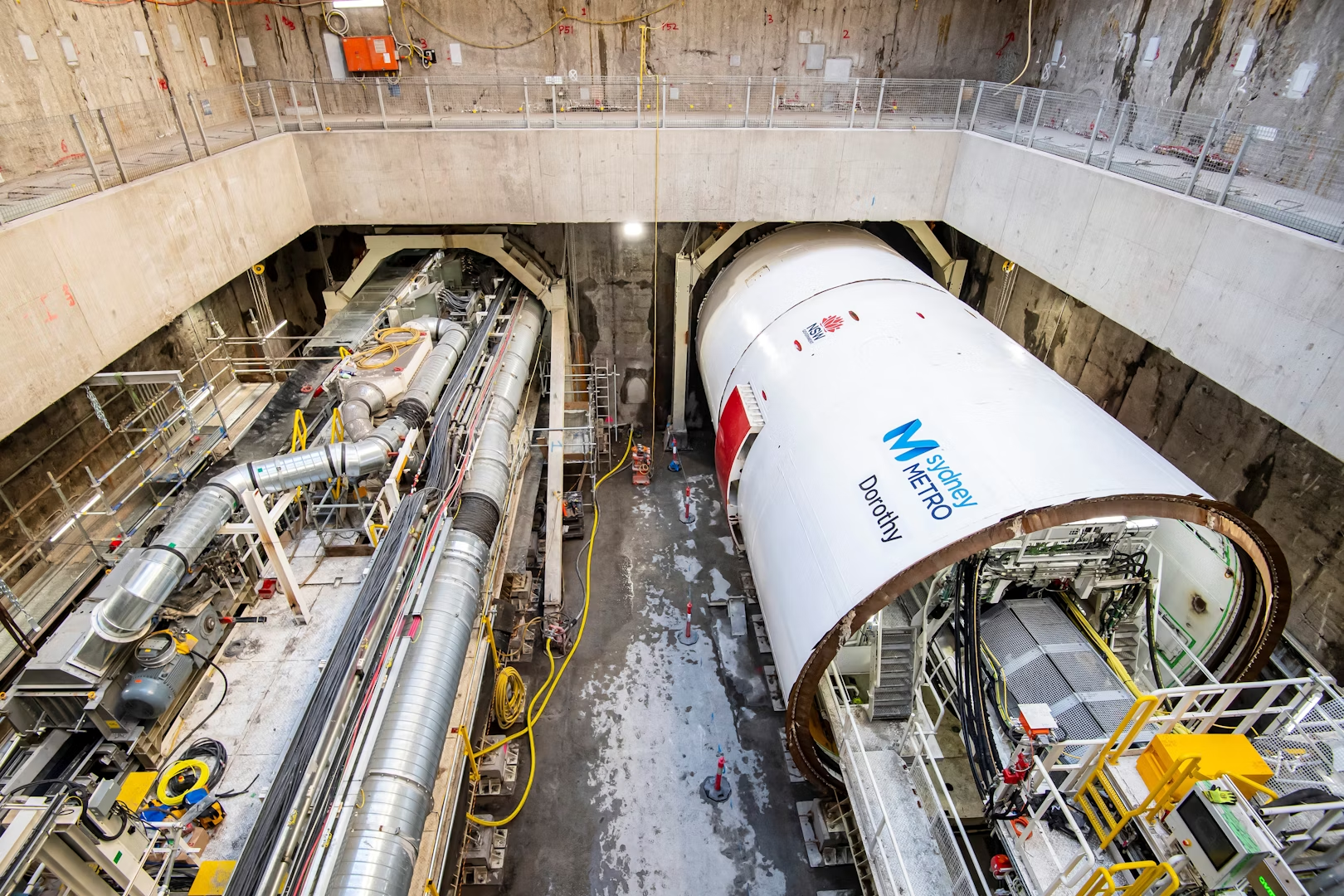
WTP is the first in Australia to implement an A-TBM, previously proven on Malaysia’s KVMRT Line 2 project as a world first. This technology utilises advanced sensors, control systems, and artificial intelligence (AI) for autonomous operation, minimising manual handling whilst maximising efficiency. A comparative study of the A-TBM against manual TBMs has been conducted by GLC’s tunnelling engineers on WTP. The study revealed substantial energy savings, improved steering accuracy, and increased productivity, solidifying the technology’s benefits in a market that has traditionally seen the use of manually operated TBMs.

• Treated water feeding all A-TBM operations – potable water savings

The use of treated groundwater for all TBM operations has historically been difficult to implement. TBMs have strict water quality requirements, and have significant operational and associated production risks, so the drivers to innovate in this space have been historically low. In addition, mains supplied potable water is reliable, consistent, and cheap (~$2.70/kL).

In collaboration with the world’s largest TBM manufacturer, Herrenknecht, GLC designed and commissioned the Rosehill Water Treatment Plant. The plant captures and treats groundwater and rainwater to meet the A-TBMs water quality and operational volume requirements and the NSW Environmental Protection Authority (EPA) water quality discharge specifications. The robust groundwater treatment process ensures that the water quality and operational volume consistently meets the requirements for the A-TBM’s water demands. GLC’s use of treated water for all A-TBM operations saves a substantial amount of potable water, setting a new benchmark for sustainable water management in tunnelling operations.

• Industry transformative concrete mix for precast tunnel lining segments – material usage savings

To meet the industry leading sustainability challenge set by Sydney Metro, GLC collaborated with Boral to develop a precast tunnel segment mix with 50% supplementary cementitious material (SCM), an Australian first in precast tunnelling segment production. This mix, also containing 10% less cementitious material compared to traditional mixes of similar strength, is a market first for high-speed carousel production, setting a new standard for sustainable concrete mixes in tunnelling. Notably, the mix also incorporates 50% manufactured sand, a feat previously not achieved in tunnel projects utilising precast segment lining.

GLC and Boral’s achievement of a 50% SCM mix (and all associated results) proved the viability of Sydney Metro’s aspirations, who then extended that expectation to how delivery partners approach SCM rates in their concrete across other Sydney Metro projects.

GLC’s collaborative approach significantly reduces the environmental impact associated with energy, water and materials consumption on the WTP tunnelling works. Whilst driving sustainable construction practices, this innovative approach demonstrates a significant advancement in the Australian tunnelling industry. By integrating autonomous technology, sustainable water management, and low-carbon materials, GLC has met and set new standards for efficient, environmentally responsible tunnelling practices.

What were the OUTCOMES and how were those outcomes shared?

GLC’s innovative approach has yielded tangible benefits of integrating advanced technologies and sustainable practices into a complex tunnelling project. These outcomes has influenced industry standards and set new benchmarks for environmental responsibility and efficiency in infrastructure construction.

• Autonomous Tunnel Boring Machines (A-TBMs) – energy savings

Traditionally, skilled TBM operators navigate the TBM along the designed tunnel axis (DTA) as determined by tunnel surveyors. The introduction of autonomous functionality in TBMs requires a maximum deviation from the DTA to just ±5mm. This ensures a high-quality tunnel finish and prevents unnecessary deviations, and slower mining progress which consumes more time and energy.

The A-TBM’s energy efficiency has been demonstrated in the Australian context through a comparative performance experiment between the A-TBM and manually operating TBM on WTP. The experiment was undertaken for a fair and robust comparison between the two types of TBM operations. A-TBM operation was compared with a manually operated TBM within the same chainage of the tunnel alignment, ensuring that both had the same steering radius and encountered identical geological conditions. The study found that the A-TBM was 8% more efficient compared to a manually operated TBM. As the two A-TBM’s are significant end users of electricity on WTP, estimated to account for ~30% of all electricity used on WTP, a saving of 8% equates to 560MWh of electricity saved. Based on the July-2023 to June-2024 reporting period only, the saving is 198 tCO2eq abated compared to a manually operated TBM.

• Treated water to feed all TBM operations – potable water savings

By treating rainwater and groundwater inflows and reusing them for tunnelling operations, GLC has conserved 109,000kL of potable water through the reuse of non-potable (treated) water, of which 90,000kL falls within the July-2023 to June-2024 reporting period. This achievement has not only reduced WTP’s environmental impact and reliance on a finite resource, but demonstrates that through collaboration and upfront capital investment, alternative water sources can be successfully utilised on large-scale tunnel construction projects. The sheer scale of this initiative is unprecedented. As endorsed by Herrenknecht, the world’s largest manufacturer and supplier of TBMs, treated groundwater has never been used to supply tunnelling operations in any of their TBM’s in Australia. Sydney Metro has confirmed that no previous tunnelling contractor across their projects has done this before, a first in NSW.

• Industry transformative concrete mix for precast tunnel lining segments – material usage savings

GLC collaborated with Boral and Sydney Metro to develop and implement a 50% SCM precast concrete tunnel segment mix, which significantly reduced WTP’s embodied carbon footprint. The key material of concrete, cement, releases high amounts of CO2 during its production process. Therefore, it is imperative for sustainable construction to use cement alternatives in concrete production.

The 50% SCM concrete mix, along with Boral’s ZEP additive, meets and exceeds Sydney Metro’s progressive benchmark for sustainable precast concrete production in the Australian tunnelling industry. Compared to the industry standard, the use of Boral’s Envisia mix with 50% SCM replacement equated to a carbon saving of ~6,070tCO2eq during the July-2023 to June-2024 reporting period alone with 11,221t of cement replaced. With only half of the segments produced, the total savings from this industry transforming mix will equate to approximately 12,000 tCO2eq abated, significantly contributing to the fight against climate change. Additionally, the incorporation of 50% manufactured sand in the mix has demonstrated the potential for utilising alternative materials in precast concrete production, reducing the demand for natural resource usage.

The proof of Sydney Metro’s concept of high SCM, low carbon concrete, has prompted other major projects, the Eastern Tunnelling Package (ETP), and the Western Harbour Tunnel (WHT), to adopt similarly sustainable mixes. ETP’s Project Director formally reached out to GLC to explore the benefits of the precast concrete mix design. Additionally, Boral has confirmed that this mix is now being supplied to ETP and is under consideration for use in the WHT project.

These initiatives alone will save 560MWh of electricity, 109,000kL of water, and more than 12,000tCO2eq of carbon emissions. The outcomes of these innovations represent the transformative power of collaboration. By embracing advanced global technologies, sustainable practices, and a commitment to knowledge sharing, GLC is pushing the boundary of sustainable and efficient construction within the Australian tunnelling industry.

Describe WHO benefited from your initiative, innovation, or approach?

First and foremost, this wholistic approach represents our project team’s commitment to addressing climate change by consuming less power and lowering our carbon footprint to benefit our planet, our community and future generations.

The Environment:

Our planet directly benefits from GLC’s approach. Given the significant role of the construction industry in global carbon emissions, this reduction in carbon emissions is a tangible contribution to mitigating climate change. The reduction in cement usage in the precast segment mix and reduced electricity usage from the A-TBM’s diminishes WTP’s carbon footprint. Moreover, the conservation of 90,000kL of potable water, a scarce resource across Australia, showcases WTP’s commitment to environmental stewardship and social consciousness.

The Industry:

The wider construction and tunnelling industry have benefited from GLC’s innovations, which drive the industry to improve existing practices and adapt to new technologies. The implementation of the A-TBM and the demonstration of its efficiency have set a new standard for tunnel construction in Australia, particularly as advancements in AI continue to revolutionise industries worldwide. By minimising human error and optimising decision-making processes, AI-powered systems like the A-TBM can significantly enhance the speed and precision of tunnel construction. The demonstrable improvements in the A-TBM’s performance will encourage wider adoption of this technology, driving improvements in the industry and leading to more efficient and sustainable projects in Australia.

GLC’s collaboration with Boral to produce the “Envisia” mix with 50% SCM replacement, has set a new benchmark for sustainable concrete segment mix production in Australia. The substantial carbon savings achieved through this mix, estimated to be over 12,000 tCO2eq across all produced segments, have already influenced other projects, fostering a broader shift towards low-carbon construction materials.

In an industry first, through the re-use of non-potable water in TBM operations, GLC has set a new standard for what is possible in tunnel construction. This has never been achieved and ensures a lower impact to Western Sydney’s potable water supply.

The Local Community and Future Generations:

GLC’s sustainable tunnelling approach also benefits the local community and future generations. The project’s reduced environmental impact contributes to a healthier and more sustainable living environment. The conservation of potable water ensures a more reliable supply for the community, particularly in times of drought or increased demand. GLC’s focus on innovation and knowledge sharing fosters a culture of continuous improvement and development within the industry, paving the way for a more resilient future.

What LEGACY and UN SDG CONTRIBUTION was achieved?

The strong collaboration and knowledge sharing on WTP has established a legacy of groundbreaking environmental outcomes in the Australian tunnelling industry. By working with our Malaysian counterparts, we introduced the innovative use of A-TBMs, significantly advancing energy efficiency and setting new standards for sustainable tunnelling. Our partnership with Herrenknecht proved that treated water could be effectively reused in all TBM operations, marking a breakthrough in sustainable water management. Additionally, the combined effort of Sydney Metro’s dedication, GLC’s expertise, and Boral’s ingenuity led to the creation of a 50% SCM precast tunnel segment, pushing the boundaries of low-carbon concrete technology. These initiatives have not only challenged the current limits of the Australian tunnelling industry but have also set new benchmarks for all future projects. The legacy of these environmental outcomes demonstrates the powerful impact of collaboration and a strong commitment to sustainability, setting a precedent for future industry practices.

UN SDG 6: Clean Water and Sanitation: Ensure availability and sustainable management of water and sanitation for all.

WTP’s use of treated groundwater for A-TBM operations directly addresses this goal by ensuring the availability and sustainable management of water. This initiative has significantly reduced the WTP’s reliance on Western Sydney’s potable water supply, a critical resource in an era of increasing water scarcity. This initiative not only conserves valuable water resources but also sets a precedent for sustainable water management in the construction industry, demonstrating that large-scale projects can operate with minimal impact on local water supplies, especially in an urban environment.

UN SDG 9: Industry, Innovation, and Infrastructure: Build resilient infrastructure, promote inclusive and sustainable industrialization and foster innovation.

WTP’s implementation of the A-TBM technology and the high SCM precast segment mix exemplifies this goal by showcasing the benefits of innovation. The A-TBM’s utilisation of advanced AI and automation technology showcases the transformative potential of digital innovation in the construction sector. This technology not only improves efficiency and productivity but also enhances safety and reduces the environmental impact of tunnel construction. Similarly, the development of the high SCM precast segment mix demonstrates a commitment to innovative materials for a responsible infrastructure. The successful implementation and testing of this mix on WTP has paved the way for its adoption in other major projects like the ETP project who uses a similar mix based on the concrete mix design provided to the project by GLC.

UN SDG 12: Responsible Consumption and Production: Ensure sustainable consumption and production patterns.

The use of treated water for A-TBM operations, the reduction in cement use in the precast segment mix, and the incorporation of manufactured sand all contribute to a more responsible and sustainable approach to resource utilisation. These practices not only minimise WTP’s environmental impact but also demonstrate the feasibility of circular economy principles in the construction industry.

UN SDG 13: Climate Action: Take urgent action to combat climate change and its impacts.

GLC’s contribution to SDG13 includes reducing our greenhouse gas emissions through energy efficiency measures such as the use of the A-TBM, and substitution measures such as cement replacement. WTP’s emphasis on sustainable practices sets an example for the industry, as we demonstrate that critical infrastructure projects can be delivered without sacrificing development and prosperity for people and planet. Already, GLC has seen our influence on the industry through ETP’s uptake on their high SCM precast concrete mix.

GLC has answered the UN’s call to action by showing how critical development infrastructure can be built while tackling climate change and conserving our natural resources through innovation and collaboration.

Sydney Metro City & SW – Line-wide Works – Outstanding Achievement

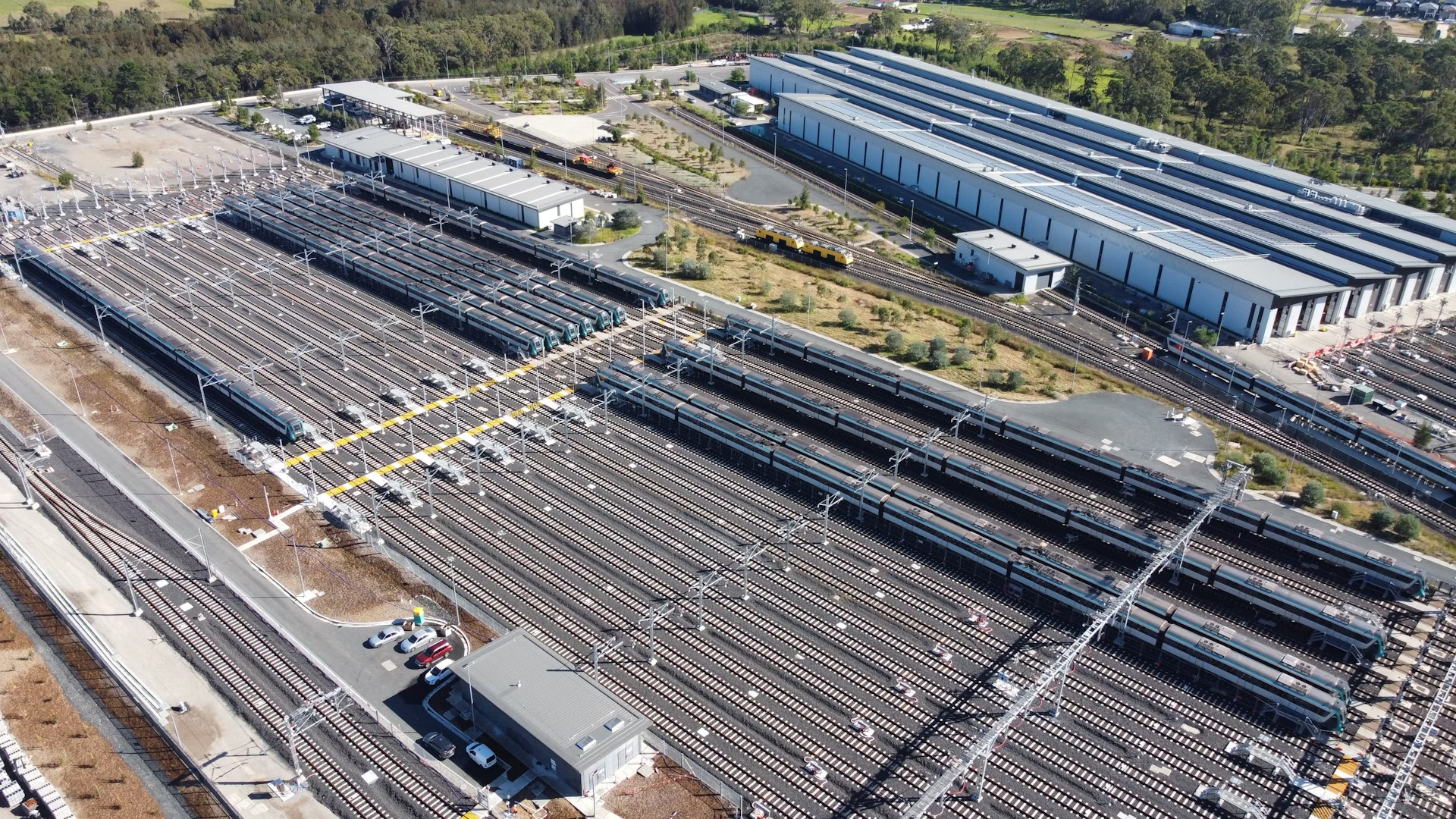
Sydney Metro City & Southwest (SMCSW) is a key component of Sydney Metro, Australia’s biggest transport project. The extensive Line-wide Works package delivered by Systems Connect, a joint venture of CPB Contractors and UGL Limited, included installation of 31 km of underground railway track, power equipment, cabling, ventilation, drainage and monitoring equipment, as well as constructing and expanding train stabling and maintenance facilities and fitting out substations in train stations.

Outstanding collaboration with Sydney Metro and 28 delivery partners enabled a culture of innovation and delivery excellence and sustainable outcome. The team overcame challenges and developed innovative program and methodology solutions for a safe, sustainable, on-time delivery. Innovations and leading practices – including low-carbon concrete and synthetic fibre reinforcements, geopolymer sleepers, recycled crushed glass, circular solutions for reuse of water, sustainable procurement, and social sustainability initiatives – set new industry benchmarks for delivering sustainable future-ready metro rail projects.

Describe WHAT you have done and HOW you have done it. Please provide a summary of your initiative, innovation, or approach.

Systems Connect’s Line-wide Works (SCLWW) package is a major component of Sydney Metro City & Southwest (SMCSW) project. It involved a wide range of engineering design components consisting of tunnel permanent way, overhead lines and services fit-out, train maintenance and services buildings, ground water treatment plant, and multiple traction substations with HV Bulk-power supply (BPS) routes along the alignment.

A strong SMCSW Sustainability Strategy was established at the outset, setting out objectives and requirements with clear expectations for driving sustainability outcomes, including KPIs and incentives aimed at enhancing performance and innovation. A Sustainability Management Plan was established shortly after contract award, setting out a process to integrate sustainability into design, procurement and construction. A series of Sustainability, Innovation and Climate Change Risk workshops were held during the early design phase, to identify and embed sustainability and climate resilience outcomes into the design, procurement and construction processes. SCLWW Sustainability team worked collaboratively with the design, procurement and all construction teams across the project to ensure that Sydney Metro requirements and initiatives were delivered.

To facilitate effective identification and delivery of sustainable innovations and improvements early in the design phase, SCLWW had established the Continual Improvement Working Group (CIWG). The Group comprised representatives from all disciplines and Project areas to generate innovative design ideas, reviewed at the monthly CIWG meetings.

The CIWG approach involved the individual who raised an idea (the owner) being responsible for implementing the initiative into their respective design package. Progress was recorded and discussed at each meeting using the Improvements and Innovations Register. Where an idea was selected for further investigation, the owner prepared a brief proposal summarising the benefits/impacts on multiple factors: project program, whole-of-life cost, superior technical or improved functionality or operational characteristics, delivery or operational risk/s, impacts to environmental and/or community. The proposals were reviewed by the project’s subject matter experts and Senior Leadership Team before receiving endorsement.

SCLWW also encouraged active participation in raising sustainability ideas with: reward and recognition programs such as the monthly ‘Da Vinci Award’ recognising sustained efforts towards driving innovation, physical presence (toolbox talks and presentations, monthly innovation news, on-site and in-office marketing and promotional collateral) and digital presence (intranet containing a dedicated live innovation register accessible to all staff, including idea submission forms, and record of Da Vinci Winners ‘hall of fame’).

Prioritising innovation, SCLWW successfully delivered a range of sustainable outcomes through early design implementation of opportunities that encompass all fronts of sustainable design. A new benchmark for delivering future-ready metro rail projects was set by incorporating: 1) low-carbon solutions through sustainable material selection and reduction in materials by design optimisations, 2) reduction in energy and water operational footprints, and 3) social sustainability initiatives, all of which leave a legacy for the community with both environmental and social benefits.

What were the OUTCOMES and how were those outcomes shared?

Key outcomes include: 1) Embodied Carbon Reduction 2) Energy and water operational footprint reductions, and 3) Community benefits with social sustainability initiatives.

(1) Embodied Carbon Reduction
SCLWW achieved 27% reduction in greenhouse-gas (GHG) emissions and 15% reduction in Enviro-Points for the Mat-1 credit in the Design submission. This calculation was revised in the As-Built submission based on actual construction data and allowed the reductions from each initiative to be accurately measured, leading to verified GHG reduction of 36% and Enviro-Points reduction of 19.4%. Notable materials-related initiatives include:

  • Low Carbon Concrete
    SCLWW procured low-carbon concrete mix with alternatives to emission-intensive Portland cement, including Boral’s ‘Low Carbon High Performance’ ENVISIA® which has 50% ground granulated blast-furnace slag as its supplementary cementitious material (SCM). In total, SCLWW used approximately 73,000m3 of ready-mix concrete with around 47% SCM replacement, reducing embodied carbon by more than 24,000 tCO2e (~70% less) compared to BAU.
  • Fibre Reinforced Trackslab
    Around 1,900 tonnes of reinforcing steel in the tunnel trackslab construction were replaced by a polymer fibre reinforcement product, BarChip (approx. 200 tonnes), reducing the embodied carbon by at least 3,000 tCO2e (44% less).
  • Geopolymer concrete sleepers Trial
    Geopolymer concrete sleepers have approx. 57% lower emissions than those with conventional levels of Portland cement, with equivalent durability and strength, reduced shrinkage, and greater resistance to chlorides, acids, salts and fire. This successful trial at Sydney Metro Trains Facility (SMTF) South in Marrickville was verified as an ‘Australian First’, demonstrating the opportunity for wider geopolymer sleeper use in rail projects.
  • Recycled crushed glass
    SCLWW procured approximately 1,000 tonnes of recycled crushed glass sand from a NSW-based provider for bedding/haunch/side overlay material in the track drainage material at SMTF stabling yard expansion in rouse Hill, replacing virgin-sand which reduced emissions-intensive haulage and avoided the environmental impacts of sandmining. SCLWW procured Pyrotek’s noise panels along the twin 15.5km tunnels, made of recycled crushed glass instead of the conventional cement material.
  • Local Procurement
    Transport of heavy materials is a significant contributor to embodied carbon footprint particularly when imported from overseas. 75% of all steel was sourced locally in Australia, including steel used for rail, reinforcement bar and mesh, cable containments, roofing and portions of structural steels. Further, around 37,000 precast sleepers used for the length of the twin tunnels were procured from Austrak (manufactured in Wagga Wagga), significantly reducing transportation emissions compared to BAU assumption of overseas procurement.

(2) Energy and water operational footprints reduction
SCLWW achieved 99.8% reduction in energy compared to base case footprint across construction and 100 years of operation in the Design submission. Initiatives include offsetting 25% of construction electricity with Green Power and ACCUs, implementation of energy efficient design including 250kWp PV system at SMTF-S, and primarily Sydney Metro’s renewable energy offset commitment during operations.

SCLWW achieved around 75% reduction in water demand in Design submission compared to base case footprint where key measures included implementation of water efficient fittings/fixtures and planting drought-tolerant native vegetation, significantly reducing irrigation water demand.

SCLWW achieved around 80% replacement of potable water demand with non-potable sources across construction and 100 years of operation, where recycled water network and stormwater collected in sediment basins were used during construction, and amenities/washdown/cleaning water demand is supplied from a rainwater tank. The Ground Water Treatment Plant (GWTP)’s treated water tops-up the rainwater system, and the treated water is reused for daily GWTP filter backwash, a large contributor to the water footprint.

(3) Community Benefits with social sustainability initiatives
Social sustainability initiatives delivered tangible benefits to local communities, including:

  • supporting Dignity’s ‘Ready to Work Program’ with funding to increase housing security and employment prospects for 22 homeless individuals
  • developing a volunteering program where 60 SCLWW employees spent 300 hours to assemble essentials for the homeless including food
  • leading a clothing drive in collaboration with delivery partners to support disadvantaged women, homeless individuals and vulnerable Indigenous communities
  • funding The Salvation Army’s Graceville Women’s Refuge to provide emergency accommodation, essential kits for mothers and children, stationery supplies, and counselling sessions.

SCLWW promoted local heritage values by implementing heritage interpretations at Blues Point with interpretive signs referencing Aboriginal land and local history, and at Marrickville with a planned artwork featuring indigenous and non-indigenous elements.

Describe WHO benefited from your initiative, innovation, or approach?

Establishing an industry benchmark
Through the abovementioned design initiatives, SCLWW established a new industry benchmark for future rail projects in reducing embodied carbon, energy and water footprints.

For example, a geopolymer sleeper innovation trial demonstrates the availability of this sustainability technology to the wider rail construction industry which can reduce emission by approximately 57%. Success of this trial shows the potential for wider implementation of this technology which aligns with Transport NSW (TfNSW)’s Recycled and Reused Material Opportunities in Rail Projects visual guide, which states that geopolymer mix in concrete applications is an innovation that must be considered.

Additionally, the reuse of recycled crushed glass on the project outlines the potential for its wider application and adoption as a business-as-usual practice. Recycled crushed glass is a readily available material that can be used as an alternative to natural sand excavated from seashores, whilst rendering large environmental impact (IS EnviroPoints) reductions. Similarly to the geopolymer sleepers, this initiative also aligns with the TfNSW guide’s innovation recommendations.

Social and Workforce Development and Industry Participation (WDIP) Benefits
SCLWW partnered with ‘Mates on the Move’ (Social Traders Certified), a social enterprise providing waste management services to Sydney businesses to create employment and career opportunities for people leaving prison. This initiative was adopted by the North Sydney office where used coffee cups and papers towels were collected by former inmates, providing them with employment opportunities and contributed to office waste targets.

To improve SCLWW’s WDIP outcomes, the project engaged 146 Australian and New Zealand small-medium-enterprises in its supply chain (where at least 20 was the target), of which 125 were local, and 30 ANZ SMEs that are recognised Aboriginal businesses (where at least 10 was the target). SCLWW’s Aboriginal participation spend exceeded its target by over $5 million.

As part of a commitment to provide training and development opportunities for communities along the SMCSW alignment, 82 refugees and asylum seekers were employed by the project. The project benefitted from CPB partnership with CareerSeekers to provide employment opportunities for the refugee community.

Across all SMCSW Projects, 80 returned servicemen have been employed to date, with 15 hired directly by SCLWW.

The project also delivered above it’s 8% target of employing Women in non-traditional trades and occupants of which women comprised 8.1% of the workforce.

What LEGACY and UN SDG CONTRIBUTION was achieved?

Goal 11 SUSTAINABLE CITIES & COMMUNITIES – “make cities and human settlements inclusive, safe, resilient and sustainable”.
The City component of Sydney Metro City & Southwest (SMCSW) opened in August 2024 between Chatswood and Sydenham with 6 new metro stations, new metro platforms at Central and Sydenham, and twin 15.5 km rail tunnels (SCLWW’s scope), and will be extended in 2025 between Sydenham and Bankstown with 11 stations upgraded to metro standards. SMCSW will provide customers with fast, reliable turn-up-and-go rail services and fully accessible stations on Australia’s only driverless rapid metro system. With Greater Sydney’s population expected to grow by around 1 million more people by 2034, improved rail infrastructure will be critical to support this growth and create a connected, livable, accessible and sustainable Sydney with a thriving economy. Through delivery excellence and a positive culture of collaboration and innovation, the SCLWW is supporting the timely and safe opening to the public of a world-class railway for Sydney, setting high benchmarks for the industry, and leaving a positive, sustainable legacy for Australian industries and communities.

GOAL 6 CLEAN WATER AND SANITATION – “Ensure availability and sustainability management water and sanitation for all”.
The permanent groundwater treatment plant (GWTP) at SMTF South in Marrickville captures stormwater and groundwater seepage from the underground tunnels. Instead of discharging directly to downstream (Cooks River), the system is designed to ensure water is first treated to a level that will contribute to achieving the Cook’s River’s water quality improvement objectives. Prior to discharge, the system is designed to reuse its own treated water for filtration back-wash, and for supply to the onsite rainwater tank which is reticulated for irrigation, train washdown and office amenities. This significantly reduces the potable water demand and associated environmental impacts. SCLWW further reduced water demand by installing improved WELS-rated fixtures/fittings at all service buildings and planting drought-tolerant landscaping. Overall, water harvesting and recycling will render the Marrickville trains facility 100% self-sufficient for all non-drinking water needs.

GOAL 8 DECENT WORK AND ECONOMIC GROWTH – “Promote sustained, inclusive and sustainable economic growth, full and productive employment and decent work for all”.
SCLWW’s social sustainability initiatives supporting and engaging in partnerships with multiple charitable organisations successfully provided tangible benefits to local community groups that promote economic growth and employment for the vulnerable members of the community. In improving the Project’s WDIP outcomes, SCLWW engaged 146 local SMEs in its supply chain, exceeded the Aboriginal participation and women in non-traditional roles targets, and employed refugees/asylum seekers and returned service personnel, providing them with employment opportunities. These socio-economic benefits promote sustainable economic growth and a range of employment opportunities, supporting some of the most vulnerable community groups.

GOAL 9 INDUSTRY, INNOVATION AND INFRASTRUCTURE – “Build resilient infrastructure, promote inclusive and sustainable industrialisation and foster innovation”.
The success of this project demanded high-level leadership, collaboration, problem solving and innovation from the outset, achieved by maintaining flexibility and careful management of complex interfaces as SCLWW collaborated with Sydney Metro and 28 delivery partners to develop an innovative program and methodology solutions that facilitated or accelerated the project’s momentum. The CIWG embedded innovation into the Project’s culture and contracts. By prioritising the identification, consideration, and adoption of innovations, providing benefits for delivery partners, efficiency gains and efficiencies in construction and reductions of embodied carbon, energy and water demands. This was key in driving innovative and agile solutions that contributed significantly to the success of the SCLWW Project. By pioneering new techniques, lifting sustainability standards, and setting new industry benchmarks, this Project paved the way for future rail and metro projects to be more efficient and sustainable.

Union Road and Mont Albert Road Level Crossing Removal Project

At the award of the Union Road and Mont Albert Road Level Crossing Removal Project (UMA), the South Eastern Program Alliance (SEPA) conducted a comprehensive review of current processes and systems to develop a strategy based on lessons learned, aiming for more ambitious sustainability objectives. This strategy involved collaboration across all alliance partners and leveraged the power of the Level Crossing Removal Project (LXRP) program to define a new sustainability approach for the Alliance.

The new sustainability approach interpreted client requirements and SEPA partners’ sustainability strategies into a consolidated, Alliance-specific strategy designed to drive sustainability across the SEPA program. This strategy was structured around three pillars: net zero, circular economy, and biodiversity. It included LXRP mandated ratings – Green Star and ISC. People engagement, training, education, and the implementation of new processes and systems were identified as priority actions.

The strategy was well received and became part of SEPA’s business Priority Projects. These projects, which have unified support across the alliance, tackled key areas identified for 2022 and aimed to elevate sustainability efforts.

“The aim of the Sustainability Priority Project was to create a data-driven approach to sustainability that seeks to implement a cultural shift and deliver tangible initiatives to reduce carbon emissions,” says Karin, Sustainability Leader. “Data, reporting and baselining are required to ensure we’re aware of our starting point. We needed to be transparent with where we’re heading and how much we’re reducing.”

One key initiative was to challenge the technical specification of the Victorian Department of Transport and Planning (DTP). In collaboration with our client and concrete supplier, Holcim, we developed a piling mix with up to 70% supplementary cementitious materials (SCMs). This represents a significant 42% reduction in CO2 emissions compared to the previous concrete benchmark, which allowed only 36% cement replacement due to specification limits.

On the project, the team integrated sustainability into the design through sustainability design checklists, which were completed by the design team and reviewed by the construction sustainability team. Risk and opportunity registers were maintained for the project and fed into program-level risks and opportunities. These risks and opportunities were raised in the project’s Senior Leadership Team (SLT) meetings to ensure all functions were aware.

Procurement processes considered sustainability in non-cost reviews, with the team involved in scope of work reviews, pre-tender meetings, and mid-tender meetings to highlight sustainability initiatives for each package. External governance included community involvement in decisions, such as opting for a rail under solution, which had sustainability benefits and improved rail network efficiencies.

The project engaged with the Community Liaison Group (CLG) and another community group throughout the project to keep the community informed and involved. Community engagement was a significant aspect, particularly with the Mont Albert and Surrey Hills traders. The “StampMe” initiative that rewarded shopping locally brought in $60,000 to the traders through this reward platform.

Outcomes achieved

The UMA project achieved outstanding sustainability results with an IS As Built 101 point verified ISC rating. In addition, Union Station was the first rail under solution to achieve a 6 Star Green Star rating. This is due to a strong team effort to strive for a project that leaves a legacy in the community, with considerate design and construction.

Through early engagement with the community, the concept to consolidate the existing two stations (Surrey Hills and Mont Albert) into one station was created. This benefited not only the local community by increasing capacity and amenities, but also increased the efficiency of the rail network. This is a prime example of reducing embodied emissions through avoidance and reduction. The project also focused on adaptive reuse by refurbishing the historic Mont Albert Station for use by the community in the new Mont Albert Plaza.

The UMA project achieved a materials reduction of 32% in Greenhouse Gas Emissions (GHG) compared to the base case footprint. By reducing the need to create two separate stations, efficiencies were realised through specifications for standard platform lengths, curve radius and height restrictions, which meant that the design could be optimised, reducing the materials used to complete the works.

This consolidation of two stations significantly reduced the station’s energy use, together with construction works and efficiencies UMA achieved a 61% reduction in energy (reduction of 14,553 t CO2) compared to the base case footprint. During construction, the reduction in energy was found through reduction in site office and crib shed use, connecting to mains where possible and using 100% GreenPower in site offices, use of EcoSheds as completely off grid solar caravans, value engineering initiatives reducing plant and equipment fuel burn and use of B5 biodiesel. For operations, reductions in energy use are through the 70kW solar array located on the station roof, at the time this was the largest array installed on a metro station, and energy efficient station design (in alignment with our 6 Star Green Star achievement). In addition, at least 27% of materials on the project had an ISC approved environmental label.

A water reduction of 254ML or 46% compared to the base case footprint was realised through construction and operation initiatives. These include a reduction in site office use and the corresponding water using amenities, and reduced dust suppression required while excavating due to efficient design of the rail trench. During operation, water savings are realised through drought-tolerant landscaping, and water efficient fixtures as part of the 6-Star station.

The project is proud to have installed non-contact elevators for each of the elevators in the station, which allow all people, regardless of capability, to access the public transport network.

The project also implemented innovations – improving mental health by conducting sleep studies using wearable technology, an EV truck, as well as engaging multiple suppliers through iSupply. The project also collaborated with Holcim and Keller to create an industry leading 70% SCM piling mix.

The project had extensive engagement with the community through the Stakeholder and Communications team, creating trader support initiatives, two of which are the social media accounts to create a collective brand identity for the Mont Albert and Surrey Hills trader communities, with assistance from a digital marketing agency. The second initiative was the StampMe loyalty program, to reward customers for shopping at local traders.

These outcomes were shared through knowledge sharing platforms internally in the SEPA Program, but also externally through the LXRP program.

The SEPA and broader LXRP program have Joint Coordination Committee meetings for each function, which meet once a month to share knowledge, initiatives, and best practice across the projects. Using these forums, the UMA project has benefited and shared its approach to achieving the outcomes for the project.

Externally the outcomes have been shared through the parent organisations, Laing O’Rourke, Jacobs and Metro Trains Melbourne, taking the knowledge to other projects managed by these companies.

Primary beneficiaries

Our project initiatives have delivered substantial benefits across multiple stakeholder groups. Initially, our sustainability strategy significantly influenced our alliance partners by aligning their diverse sustainability goals into a cohesive, Alliance-specific approach. This collaboration has streamlined sustainability practices across the SEPA program, enhancing efficiency and coherence.

Clients of LXRP have benefited from our approach with improved project outcomes that meet and exceed Green Star and ISC ratings. This not only fulfills client requirements for sustainable infrastructure but also sets a new standard for future projects.

Our community engagement efforts, including partnerships with the CLG and local traders in Mont Albert and Surrey Hills, have yielded tangible benefits. These initiatives have fostered community goodwill and economic support, such as the $250,000 generated for local traders through our local shopping rewards program.

Internally, our approach has empowered SEPA employees through comprehensive training and education on sustainability practices. This investment has equipped our team members with the skills and knowledge needed to effectively implement and advocate for sustainable solutions.

In a significant collaborative effort with our client and our concrete supplier, Holcim, we successfully trialled the use of a 70% SCM piling mix. The concrete mix that achieved this milestone was developed and funded by the alliance, showcasing our commitment to innovation and sustainability. However, the ownership of this new concrete mix remains with Holcim, for use across Victoria. This strategic approach not only ensures that we meet the current project needs but also establishes a new benchmark in the industry, demonstrating what is achievable with advanced, low-carbon concrete solutions.

In summary, our project has had a profound and lasting impact, ensuring sustainability benefits are realised across alliance partners, clients, local communities, and our own workforce. This holistic approach underscores our commitment to creating positive change across diverse stakeholder groups.

Leaving a lasting legacy

The Project has left a significant legacy by enhancing the Surrey Hills and Mont Albert community and expanding the Melbourne rail network. The innovative design and community-focused approach have resulted in a landmark station that blends seamlessly into its environment and serves as a model for future urban transport projects.

Legacy Achievements: The UMA project is distinguished by its “Rail under Road” solution, which minimises visual and noise impacts, creating a pleasant environment for local residents. The extensive urban design incorporates drought-resistant and climate-conscious vegetation, promoting sustainable transportation and creating a lasting public space. Community engagement was a core element, with initiatives such as the StampMe loyalty program and partnerships with local traders fostering continued local economic activity and strengthening community ties. The project also prioritised preserving trees of local importance by designing around them and employing innovative solutions like permeable pavements to ensure their survival.

The project’s legacy extends to its contribution to the Melbourne rail network, enhancing the accessibility and efficiency of public transport. By integrating smart design features, such as increased solar arrays and efficient fittings, and substituting sustainable materials, the project sets a new standard for infrastructure development.

Contribution to UN Sustainable Development Goals (SDGs):

  1. SDG 9: Industry, Innovation, and Infrastructure – The UMA project supports targets 9.1, 9.2, and 9.4 by delivering a high-quality, reliable, and sustainable infrastructure asset. The project’s focus on affordable public transport and its ‘buy local’ approach for goods and services helped build local business capacity and foster resilience in the supply chain. The integration of efficient design and sustainable materials into the existing rail network further exemplifies its commitment to innovation in infrastructure.
  2. SDG 11: Sustainable Cities and Communities – The project advances targets 11.2 and 11.7 by enhancing access to safe, affordable, and sustainable transport. The DDA-compliant station features non-contact elevators and adheres to Crime Prevention Through Environmental Design guidelines, ensuring it is accessible and secure for all users. Additionally, the project’s urban design provides a safe, inclusive, and green public space, contributing to the overall quality of life and community well-being.
    In summary, the UMA Project’s legacy is reflected in its innovative design, community engagement, and contributions to sustainable urban development. Its alignment with UN SDGs highlights its role in advancing infrastructure quality and sustainability while fostering inclusive and resilient communities.


Eastlink WA Program Rating – Outstanding Achievement

EastLink WA is one of Western Australia’s largest planning and development projects, bringing together over 40 years of planning activities to create a safer and more efficient route between Perth and Northam.

Extensive planning and development over two-and-half-years by the EastLink WA Integrated Project Team (IPT) has established a long-term design concept that caters to forecasted population growth and traffic volumes until 2051.

Eastlink WA achieved a ’Silver’ rating, exemplifying the enhanced social, environmental and sustainability outcomes achieved by the IPT’s approach to planning and development.
EastLink WA pioneered a Program approach to the IS Planning rating – focusing on long-term outcomes across five sustainability focus areas which embed sustainability throughout the project lifecycle.

The Program approach has delivered measurable benefits which showcase Main Roads WA’s commitment to sustainable infrastructure and provides a model now being used as a benchmark for one of Western Australia’s most significant infrastructure projects – Westport.

Describe WHAT you have done and HOW you have done it. Please provide a summary of your initiative, innovation, or approach.

EastLink WA is one of Main Roads Western Australia’s largest planning and development projects, bringing together over 40 years of planning activities to create a safer and more efficient route between Perth and Northam. Extensive planning and development over two-and-half-years has established a long-term design concept catering for forecasted population growth and traffic volumes until 2051.

The Outstanding Achievement Award submission focuses on the project’s outstanding achievement through adoption of initiatives and processes that focus on long-term outcomes, robust systems and processes, and development of key sustainability focus areas to guide project direction.

The project was undertaken by the EastLink WA Integrated Project Team (IPT) under a collaborative contract model between Main Roads Western Australia and a joint venture between GHD and BG&E.

The project adopted a Program approach to the ISC Rating – a first for an ISC Planning rating. The Program approach provides a more strategic and streamlined approach to large, long-term planning projects. It was adopted due to the project’s scale, and varied timeframes for delivery of packages.

The Program approach enabled flexibility to address local challenges and opportunities at package-level, yet cohesively delivered within a consistent program-wide strategy.

All Packages, and the overall Program achieved a ’Silver’ rating, exemplifying the enhanced social, environmental and sustainability outcomes achieved through the IPT’s approach to planning and development.

Having successfully developed the Program approach, EastLink WA’s rating provides a model which has now been adopted by other major planning projects including the WA State Government’s Westport project.

A systems-based approach was used to achieve buy-in across the IPT team, assess and focus on the project’s material issues and establish relationships with internal and external stakeholders that can carry forward to future phases.

EastLink WA’s sustainability approach encompasses several key elements:

  • Developing a clear vision, objectives, and targets: Materiality assessment established five ‘Focus Areas’, which provide the central ‘story’ to communicate what sustainability means for this project. Developed and agreed by the broader project team, Main Roads specialists, and external stakeholders, they are available on the project website for our external stakeholders, and in posters for the project team. Focus Areas provide the structure for our objectives and targets, decision-making criteria, risk and opportunity assessment and guided resource allocation.
  • Undertaking sustainability workshops at the outset, including multi-disciplinary teams.
  • Developing a dedicated Sustainability Advisory Group, including external stakeholders and Main Roads’ specialists to capture and integrate a holistic perspective into design development.
  • Establishing frameworks for consistency across all packages in the areas of: Decision-making, Aboriginal Engagement, Resource and Energy Efficiency and Urban and Landscape Design. For packages, localised application was achieved through action plans, design changes or engagement with specific stakeholder groups.
  • Establishing processes to monitor initiatives and outcomes and embed sustainability: e.g. cross-discipline management meetings, steering committee meetings, monthly reports.
  • Collaborating early with the Main Roads delivery team to enable handover of initiatives and documentation – provided to tenderers and forming the basis for the future Design and As Built ratings.

What were the OUTCOMES and how were those outcomes shared?

EastLink WA serves as a benchmark for future planning projects by Main Roads WA:

  • First project to undertake a Program rating under the IS v2.0 Planning scheme.
  • Delivered a long-term design concept that reflects the outcomes of robust decision making, both in the design itself, and in the changes to Planning Scheme boundaries.
  • Established a framework and mechanisms for long-term engagement with the local custodians of the land – the Wadjuk, Yued and Ballardong people of the Noongar Nation – through an Elders Reference Group.
  • Provided resource and energy efficiency opportunities and mandated targets which have informed delivery phase contract documents.
  • Designed improvements for community assets such as the Kep Track trail.

Further detail relating to each project Focus Area is provided below.

Minimise energy, materials, and water footprint
A preliminary lifecycle assessment using the early reference design, identified priority materials and energy uses.

The IPT explored opportunities to reduce the footprint with input from Main Roads specialists and partner organisations, including East Metropolitan Regional Council and the Waste Management Association of WA.

Initiatives included in contract documents for the first delivery package included:

  • Resource Efficiency Strategy and Resource Efficiency Action Plan including mandated reduction targets
  • Provision for high-modulus asphalt (EME2) in pavement; and supplementary cementitious materials (SCMs) in non-structural elements
  • Diesel reduction and renewable energy commitments
  • Initiatives encouraging re-use of on-site/recycled materials
  • Potential implementation of solar lighting on the principal shared path.

Environmental services and impacts
A preliminary Environmental Impact Assessment was completed to gain an understanding of the existing environment and potential project impacts. In addition to consideration of required offsets, the project’s Urban and Landscape Design Framework (ULDF) also identified potential sites for additional planting, for consideration in future phases, as well as enhancements for the Kep Track and other local recreational assets.

People and place
The project sought to maintain connectivity for communities and users, through design decisions, including:

  • Linkage between the proposed Principal Shared Path and local shared path networks, including provision for a connecting path through an under-served section of the Perth Hills.
  • Options assessments that improved outcomes for local amenity.
  • Consideration for Aboriginal heritage places in the project’s UDLF.
  • Establishing a dedicated Elders Reference Group. The Group has played a critical role in co-designing an Aboriginal Engagement Framework for the project. The framework, which has been handed over to Delivery, lays the groundwork for consultation in future project phases across five key pillars: Aboriginal heritage; Connecting with Country; Cultural recognition; Employment and training; and Business.

Requirements of the framework to be applied throughout Delivery to achieve better outcomes for the Aboriginal community include: Liaison with the established EastLink WA Elders Reference Group; Development of a cultural context document to guide the design and Development of a Cultural Competency Framework to build a strong project culture.

Design for the future
The project established a Sustainability Advisory Group with participants from three local governments, Department of Planning, Lands & Heritage, Department of Water and Environmental Regulation, Department of Communities, Eastern Metropolitan Regional Council and Office of Government Architect.

The Group informed the approach across all sustainability focus areas, providing valuable insights into resilience and climate change risks which were considered as part of the design. Registers captured risks and treatments for inclusion in contract documents.

The Group also informed the project’s approach for net zero transition and waste minimisation in line with State and local government policies.

Leveraging economic development
Initiatives required to be applied during Delivery for economic development include:

  • Development of an Aboriginal Engagement and Participation Plan (AEPP) addressing the Framework’s five pillars, including sub-targets and KPIs.
  • Engaging with Aboriginal businesses during request for proposal – analysis of market capacity, development of a project-specific Aboriginal businesses database, support for businesses to engage and bid and an Aboriginal Business Forum.
  • Local spend targets based on contract value
  • Initiatives to support the Swan Valley tourism industry.

Describe WHO benefited from your initiative, innovation, or approach?

A range of benefits at a project-wide and individual stakeholder level have been achieved as a result of EastLink WA’s integrated approach to sustainability.

The IPT benefited from the project’s adoption of a Program rating, resulting in the creation of an efficient, more strategic process for ratings, and has provided the foundation for improved sustainability outcomes. This knowledge will also be carried into future projects by the member organisations.

Main Roads’ Delivery Directorate has benefited from the completion of sustainability documentation for handover to tenderers for the first delivery package, ensuring sustainability priorities are considered and incorporated appropriately by tenderers.

The development of a program-level Resource Efficiency Strategy and Aboriginal Engagement Strategy will also provide a streamlined and consistent approach, which will benefit the custodians of future project phases.

Local community and environmental benefits have been achieved through stakeholder consultation and environmental surveys. Insights and data gleaned have informed decision-making on the project, resulting in positive social and environmental outcomes.

Knowledge sharing activities have had broader benefits for the wider industry; through presentations and symposiums, the IPT has shared experience embedding sustainability in decision-making and the benefits of the program planning rating approach.

Benefits can als0 be categorised by the project’s sustainability focus areas, as summarised below.

Minimise energy, materials, and water footprint:
Identifying and working with partner organisations, including East Metropolitan Regional Council and Waste Management Association of WA, has enabled mutually beneficial initiatives to be captured.

Environmental services and impacts:
The project’s Urban and Landscape Design Framework identified potential sites for additional planting for consideration in future phases, with the benefit of improving environmental values in the area.

People and place:
Local communities, cyclists and other road users will benefit from the consideration of connectivity and amenity in the design. Improved connections for users of the Kep Track trail, with a new link from this track to the project’s PSP.

Leveraging economic development:
The Aboriginal Engagement Framework will enable construction contractors for package one to develop an AEPP for the project to maximise Aboriginal employment and business opportunities during the construction phase. The Elders Reference Group has been established, stakeholders and partner organisations identified, and market briefings scheduled, to enable the contractor to embed and implement the principles of the Framework effectively upon contract award.

What LEGACY and UN SDG CONTRIBUTION was achieved?

EastLink WA represents the first planning and development project in Australia/ New Zealand to undertake a Program rating under the ISv2.0 Planning scheme. The project encompasses three work packages, all of which have been verified with a ‘Silver’ Planning rating, along with an overall Program Silver Planning rating.

The project is of significant scale and has set the benchmark for future planning and development projects on how to embed sustainability considerations into project design. This is exemplified by the adoption of a Program Planning rating by the Westport project, and the knowledge sharing between Main Roads and Westport. Knowledge sharing has taken the form of ongoing fortnightly meetings during 2023 and 2024 which have allowed discussion of the high-level strategic approach, as well as specific options for individual credits.

The adoption of a whole-of-project program approach has seen long-term benefits in several key areas. Enhanced stakeholder engagement and collaboration facilitated the formation of partnerships focused on resource efficiency, Aboriginal engagement and resilience.

Delivery of EastLink WA will likely occur as a number of packages as funding becomes available in future budgets. Long-term outcomes will be supported by the many frameworks developed, including the Aboriginal Engagement Framework, Urban and Landscape Design Framework, Resource Efficiency Strategy and Net Zero Project Transition Plan. Importantly, these frameworks provide a roadmap for achieving specific technical elements and also set out the partnerships established during the project’s 3 year timeframe so these can be revisited and the approaches updated as required.

Priority UN Sustainability Development Goals (SDG’s) identified for the project align to the project’s sustainability focus areas as follows:

1) Minimise energy, materials and water footprint of infrastructure – SDG6; SDG7; SDG8 and SDG15
Strategies, opportunities and partnerships were captured in the Resource Efficiency Plan (for materials and water) and the Net Zero Project Transition Plan (for energy). Opportunities developed during planning were progressed in delivery for package 1, enabling Main Roads to set firm targets of at least 10% reduction in energy, water and materials footprint, along with requiring commitments to encourage industry to develop solutions to further stretch beyond business as usual. Remaining packages are unfunded, so instead of setting targets that may become out dated, the Plans provide a roadmap for the technologies that are becoming available for Main Roads projects over future time horizons.

2) Environmental services and impacts – SDG 6; SDG11; SDG15
The rural sections of the road are located in areas of native vegetation as well as farmland. Road alignment adjustments, including at Susannah Brook and Bakers Hill, as well as the selection of the road corridor and access road locations has minimised clearing through the design, and new planning controls.

3) People and place – SDG3; SDG11; SDG16
The project will improve places that our stakeholders value. Incorporation of local knowledge from the community, local businesses and technical specialists into our project design embed enhanced built environment outcomes. Key examples include the Kep Track enhancements and local amenity criteria in decision-making.

4) Design for the future – SDG9; SDG11; SDG13
Once constructed, infrastructure is in place for future generations. Recognising this, the project team has considered improvements in resilience for communities to climate change, natural hazards and other shocks.

5) Leveraging Economic Development – SDG8
Jobs and business opportunities created through infrastructure projects can grow market capability and benefit the regional economy. The Aboriginal Engagement Framework is in place and provides the basis for future phases to enable Aboriginal participation. The first package to move into delivery phase (Reid Highway Upgrades) includes local spend targets based on contract value, and initiatives to support the Swan Valley tourism industry.

Morley-Ellenbrook Line – Outstanding Achievement

Summary

The METRONET Morley-to-Ellenbrook Line is a new 21-kilometer rail line connecting Bayswater and Ellenbrook, inclusive of five new train stations, integrated parking and bus facilities. Delivered by the MELconnx Alliance, consisting of the Public Transport Authority and Laing O’Rourke, the project also features significant infrastructure elements such as road-over-rail bridges, two elevated viaducts, Bennett Brook Bridge, and rail tunnel portals—highlighting its scale and complexity.

The project has achieved several significant sustainability accomplishments, including but not limited to:
• Exceeding all contractual targets for lifecycle carbon reductions, water and energy use.
• Implementing legacy sustainability initiatives, such as installation of 500kW of solar-PV, 50 Electric-vehicle chargers, significant cultural input into placemaking, and
• Pioneering the use of significant quantities of recycled materials, and
• Achieving the highest scored Green Star railway stations in Australia.

MELconnx have set a new standard in sustainable infrastructure delivery, breaking down barriers for future projects through generous knowledge-sharing.

South Australia Road Network Maintenance – Outstanding Achievement

Downer EDI Works Pty Ltd (Downer) is responsible for maintaining both the Metro and Northern zones of the South Australian Road Network. In the undertaking of these works, Downer consistently prioritises resource efficiency, waste reduction, and delivering innovative sustainable solutions for South Australian road users.

Through the implementation of initiatives that exceed industry norms and by strengthening sustainability capabilities across our supply chain, Downer aims to improve environmental performance while upholding and monitoring our sustainability standards across the Road Network.

In partnership with the Department for Infrastructure and Transport (DIT), Downer has successfully carried out road maintenance activities while reducing disruptions to its users. This has been achieved by using products with lower embodied carbon, diverting substantial amounts of waste from landfill, and supporting local businesses and communities.

With several years remaining on these contracts, Downer is committed to further demonstrating our sustainability efforts to South Australian road users.

Describe WHAT you have done and HOW you have done it. Please provide a summary of your initiative, innovation, or approach.

Downer EDI Works Pty Ltd (Downer), a leading road maintenance company, is responsible for maintaining Zones 1 (Metro) and 3 (North) of the South Australian Road Network and deliver a combination of Base Service, Minor Works, Annual Renewal Works and Minor capital works. Under this contract, we have been undertaking a 3-year Infrastructure Sustainability Council (ISC) Operations Rating and despite being 2 years into the 3-year rating, the contract has already achieved an interim Commended Rating from ISC for the Operations Rating.

In alignment with Downer’s sustainability objectives of striving to achieve efficiency, waste reductions, and delivering sustainable solutions. Downer approached this rating with a focus on integrating sustainable management and procurement into the contract, while also aiming to perform its operations sustainably and build sustainability capabilities and awareness across its supply chain. This has supported Downer with achieving reductions in resource use, and improved circularity, but also allowing the supply chain to understand the benefits of implementing more sustainable business practices. By requiring subcontractors to register and complete sustainability training through the Supply Chain Sustainability School, rewarding sustainable practices, and undertaking performance monitoring, we strive to uphold and oversee our sustainability standards throughout the maintenance of the South Australian Road Network.

Downer has also enhanced its transparency and accountability through improved monitoring and modelling of resource use and waste management. This has allowed the contract to increase efforts to lower our reliance on virgin materials and fossil fuels while identifying opportunities to reduce resource usage and improve our diversion of waste associated with the maintenance works from landfill. In addition, the contract has developed and launched a Sub-Contractor Data Collection App to streamline data collection. The data collected enables informed decision-making and continuous improvement, to support our efforts to achieve our sustainability targets and mitigate our impact on the environment.

Downer have proudly demonstrated 11.2% of materials/products by value having an ISC-approved environmental label for the contract, including our asphalt products which have been verified under Environmental Product Declarations. Using these allows us to make better informed choices in our supply chain, selecting products with lower embodied carbon, and higher recycled material content. By embedding these products into contracts, Downer promoted the use of more sustainable materials throughout its operations, reducing the environmental impact of road maintenance activities.

Downer has also gathered and reviewed ecological information for the contract area and developed contract specific Spatial Ecological Mapping, which highlights the known ecological and culturally sensitive and significant sites along the road network using our Asset Management System (AMIS). This approach not only reduces the risk of impacting sensitive areas but also enhances awareness among the workforce about the presence and significance of these locations.

Multiple initiatives have been implemented, demonstrating that innovation drives our efficiency, resulting in improved and more efficiency work processes, reducing fuel consumption, reducing traffic disruption on high-speed roads and providing a safer work environment.

What were the OUTCOMES and how were those outcomes shared?

Downer strives to transforming road maintenance into a more sustainable operation, optimising environmental, social and economic outcomes. Implementing sustainability initiatives, strategies, and innovations has been one of the key focus areas of the contract, leading to several positive outcomes across its operations. These outcomes have been communicated to our client through monthly and annual road network maintenance reports, and shared internally through quarterly sustainability performance review meetings, newsletters and email updates.

Key sustainability objectives for our contract include:

  • Reduce GHG emissions associated with the maintenance works.
  • Divert waste associated with the Maintenance Works from landfill.
  • Reduce virgin material usage associated with the Maintenance Works.
  • Grow environmental, social and economic value within the supply chain for Maintenance Works.

Some of the most outstanding outcomes from year 2 ISC submission include:

 Achieving level 3 for the Environmentally Labelled Products (ELP) and Supply Chains (Mat-3) Credit with 11.2% of materials/products by value having an ISC-approved environmental label demonstrates our focus on using recycled materials in road construction and maintenance.

 Ecological Mapping along Road Network: Downer have developed and incorporated the proactive use of environmental mapping layers on our Asset Management Information System (AMIS) to identify areas of ecological and heritage value along the Road Network. By mapping these areas and making them digitally available for the contract team, Downer is able to confirm that appropriate controls are in place before commencement of any works that may impact such areas. This proactive approach helps in preserving biodiversity, protecting cultural heritage, and maintaining compliance with environmental regulations.

 Sustainable Procurement: Downer have incorporated sustainability objectives and targets in sub-contract agreements, promoting sustainability awareness across our supply chain. In addition, sustainability awareness training is required, and made available via Supply Chain Sustainability School to all subcontractors.
Regular monitoring and engagement are undertaken with subcontractors through sustainability questionnaires and monthly resource usage data reports, so that our sustainability standards are maintained and monitored during maintenance of the South Australian Road Network.

 Resource Usage Monitoring and reduction initiative implementation: Downer have closely monitored and modelled resource usage with the data collected enabling informed decision-making and continuous improvement, so that we meet our sustainability targets and reduce our impact on the environment. Examples include:

  • Purchase and use of Hybrid (Petrol/electric) patrol trucks.
  • Implementation of an electric pool vehicle.
  • Combined function asset inspections, reducing time and energy needed to carry out inspection works.
  • Opti-White line marking treatment on the Southern Expressway in 2022, resulting in a longer paint life, less frequent paint application, lower overall maintenance costs, and in turn lower disruption to the community for maintenance activities.
  • Cyclical Routine Maintenance Services Sweeping & ITS Inspection Integration for a more efficient delivery in our services.
  • Implementation of a new Road Rake, which improves efficiency, productivity, and safety in collecting large litter items from live roads.

Downer also strives to maximise resource efficiency and reduce the volume of waste sent to landfill.

 Water Use: Non-potable water constitutes 24.56% of all water use (constant and variable) on works completed on behalf of Downer for maintenance of the road network, reducing the use of potable water, a valuable and often limited resource in South Australia.

 Sustainability Initiatives Register: By creating an online Sustainability Initiatives Register, Downer have focused on promoting innovation and increase engagement of team members into sustainability commitments for the contract. Quarterly performance meetings cover the review of this register. Key implemented initiatives include:

  • Road Rake – Improve the efficiency, productivity, and safety of work crews collecting litter items on Adelaide’s major high-speed roads. This improves efficiency of activities; reduces fuel and resource usage and reduces traffic disruption on high-speed roads.
  • Mowing equipment – Improve mowing efficiency and inspection capability while lowering cost. It also allows the team to slash batters quicker, using less fuel, and mowing areas with a slope of up to 50 degrees without putting themselves at risk by using manned equipment on steep inclines.

Stakeholder Engagement: Downer aims to provide effective stakeholder engagement to so that the concerns and needs of key stakeholders during maintenance of the road network are considered and addressed, leading to improved relationships and collaboration. Negotiable issues and non-negotiable issues are identified and consulted with relevant stakeholders.

Describe WHO benefited from your initiative, innovation, or approach?

Downer’s Maintenance Services to the South Australian Road Networks aims to create safe, efficient and reliable journeys, and given our operations cover state roads, the beneficiaries of our operations consist of a wide range of stakeholders and communities.

Downer’s focus on sustainable procurement extends these benefits throughout its supply chain, including internal and external subcontractors. Downer aims to support local economies and create opportunities for local people and business. This has resulted in local employment and capability building with over 300 local South Australian suppliers utilised within the contract. In addition, the contract has focused on engagement with first nation businesses with over $5M spent with South Australian First Nation businesses.

In addition, by requiring subcontractors to complete sustainability training, Downer is aiming to foster a culture of environmental stewardship among its partners. This approach not only enhances the sustainability performance of subcontractors and suppliers but also drives innovation and collaboration across the supply chain, leading to improved operational efficiency and market competitiveness.

Through innovation, the contract has implemented practices that minimise disruptions and impacts to local road users. For example, innovative use of a newly designed Road Rake increased the efficiency of road sweeping activities, reducing road closures and traffic disruptions. This innovation has boosted the productivity of litter collection, allowing teams to collect in one shift the same amount of debris that they would typically collect in a week.

Other similar improvements that have reduced road disruptions for the local communities include:

  • The use of more durable products such as higher-grade paint or alternate asphalt products, has resulted in reduced maintenance frequency.
  • More efficient inspection practices resulting in a reduced amount of stoppages when inspecting roadways.
  • Use of remote mowers on steep batters resulting in quicker mowing – also leading to reduced impacts on road users.

Local flora, fauna and other ecological values have also benefited through the integration of Ecological Mapping into project planning. This approach not only preserves biodiversity but also protects and conserve ecological and cultural values, benefiting both the environment and the communities that value these natural and cultural assets.

The Department for Infrastructure and Transport (DIT), as the client, have also benefited from Downer’s improved sustainability practices, with the delivery of high-quality, environmentally responsible road maintenance services improving relationships with local road users and other stakeholders and attracts new business opportunities.

What LEGACY and UN SDG CONTRIBUTION was achieved?

Downer is a supporter of the United Nations Sustainable Development Goals (UN SDGs), and we recognise that, as on the of the leading road maintenance services providers in South Australia, we are well positioned to contribute towards achieving these goals and their related targets.

While Downers Maintenance contract is not yet complete, Downer’s methods in carrying out road maintenance activities across the state, should carry a legacy beyond the contract area, and life. The improvements and innovations made such as combined inspections, environmental mapping, and the road rake innovation, is likely to be transferred to Downers other maintenance contracts and eventually shared to wider industry, with the view that road maintenance activities can be undertaken in a more sustainable manner.

The improvements align and contribute to eight of the 17 UN SDGs being particularly pertinent to the services provided by Downer, as identified through a Group Level materiality assessment. These include:

  • SDG 3 – Good Health and Wellbeing: Downer’s efforts to create safer, more durable road surfaces that allow reduced traffic disruptions contribute to decreased traffic delays and possibly less accidents, enhancing public safety and well-being. In addition, the implementation of new maintenance equipment such as remote mowers and specially designed road rakes allows works to be completed in a aster manner, further reducing traffic disruptions.
  • SDG 8 – Decent Work and Economic Growth: One of the commitments that Downer has established within our Sustainability Policy, is to support local employment and economies while maximising opportunities for local people and local business. This has resulted in the use of over 700 local South Australian suppliers and a spend of over $5M with South Australian First Nation businesses.
  • SDG 9 – Industry, Innovation and Infrastructure: Downer’s use of electric-powered tools, remote controlled mowers and advanced ecological mapping demonstrates a new benchmark for the industry. Downer’s integration of recycled materials within asphalt and the use of environmentally labelled asphalt products into road maintenance works demonstrates our commitment to ongoing innovation and improvement.
  • SDG 11 – Sustainable Cities and Communities: Downer’s efforts to minimise environmental impacts to preserve the ecological and cultural value along the road network through the use of digital ecological and heritage mapping, while improving safety of road users, has assisted in providing safer communities, resilient, and inclusive, thus contributing to a more sustainable future.
  • SDG 12 – Responsible Consumption and Production: By integrating ELP into its operations and promoting sustainable procurement, Downer has reduced the embodied carbon within materials. This approach not only conserves natural resources but also reduces pollution and greenhouse gas emissions, contributing to more sustainable production and consumption patterns.
  • SDG 13 – Climate Action: The integration of electric and hybrid vehicles and trucks, and electric tooling supports the contracts efforts to mitigate climate change impacts. Downer aims to deliver low-emission operations and maintenance services and support recycling and reuse of materials, promoting circular economy.
  • SDG 15 – Life on Land: The careful planning and execution of maintenance activities to avoid habitats and species have preserved ecological values along road networks.
  • SDG 17 – Partnerships for the Goals: Downer has built strong relationships with subcontractors, suppliers, and stakeholders to advance shared sustainability objectives. These enhance the positive impacts of Downer’s sustainability strategy, so that the benefits are widely shared and contribute to a more sustainable future.

Tonkin Gap Project and Associated Works – Social Outcomes

The Tonkin Gap Alliance has delivered a transformative project and successfully revitalised the underutilised area beneath the Mooro-Beeloo Bridge into a dynamic community space. This initiative, along with the integrated heritage trail, prioritises broad social, cultural and environmental benefits, with robust community and stakeholder engagement processes driving the design and execution.

Through extensive collaboration with the local community, Traditional Owners and other key stakeholders, the team have successfully integrated cultural recognition, recreational amenities and environmental enhancement. The key features of this initiative include:
• Mountain bike pump and skills tracks
• Renaming of Redcliffe Bridge to Mooro-Beeloo Bridge
• Interpretive heritage node and signage
• Yarning circle and artwork
• Extensive revegetation and Whadjuk planting

This project leaves behind a lasting legacy for the local community that enhances social infrastructure and amenity, ensuring a space that will be appreciated for generations to come.

Describe WHAT you have done and HOW you have done it. Please provide a summary of your initiative, innovation, or approach.

We are proud to present our award submission, emphasising our achievements in social sustainability and dedication to fostering a positive legacy within the local community.

Our initiative is the reactivation of the once barren, anti-social area under the Mooro-Beeloo (Redcliffe) Bridge, adjacent to the Swan River (Derbarl Yerrigan) in Bayswater, to a thriving family-friendly and vibrant recreation and leisure space. This success-story involved extensive community consultation and Local Government involvement to develop a design that delivers on social, Aboriginal heritage and environmental outcomes. Elements incorporated are detailed in the following section, including a tie into heritage trail aspects.

The Tonkin Gap Alliance (TGA), a partnership comprising Main Roads, Public Transport Authority (PTA), Georgiou, BMD, WA Limestone, BG&E, and GHD, delivered this initiative as part of the Tonkin Gap Project and Associated Works, which comprised of significant upgrades to Tonkin Highway in Western Australia. The project involved constructing additional lanes, new interchanges and bridges, Principle Shared Paths (PSP) and shared paths, while delivering enabling works for METRONET’s Morley-Ellenbrook Line.

Our vision for activating the space was clear; we wanted to acknowledge and enhance the social and cultural value of the local area, thereby leaving a lasting, positive impact on the community. To achieve this, we knew the community’s input was critical.

Our community and stakeholder consultation was extensive – we identified three key stakeholder groups:
• The local community
• Traditional Owners
• The Local Government Authority – City of Bayswater and City of Belmont

We implemented three different stages of local community engagement, using a variety of channels, including open-house events, Facebook polls, surveys, working groups, and targeted consultations. Through this strategic approach we worked with our stakeholders to understand their priorities, values and aspirations for the area.

By engaging the Traditional Owners of the land, we recognised the opportunity to incorporate Aboriginal artwork, Whadjuk planting and a yarning circle. In addition, we included an interpretive Aboriginal heritage trail with informative signs along the Principal Shared Path. These signs are also included under the Mooro-Beeloo bridge as part of the community space.

On the southern side of the river, in partnership with the Department of Biodiversity and Attractions (DBCA) and City of Belmont, we have established an interpretation node near the bridge which forms part of the River Journeys’ program. For this node, we conducted heritage surveys, and two sites of Aboriginal cultural significance were identified within the area which are preserved and recognised in the design.

We also gained valuable insight into the history and stories of the land to help drive the cultural context for the design. We enlisted anthropologist Dr. Edward McDonald to work alongside the Traditional Owners, gathering stories that are unique to the project context and reflective of local Aboriginal values and history. This collaboration ensured that the underbridge design and heritage trail is a true representation of the local culture and history.

In addition, the stories from the cultural report assisted Aboriginal artists with theming for 4 artwork pieces along the heritage trail and under the Mooro-Beeloo bridge.

What were the OUTCOMES and how were those outcomes shared?

The key outcomes achieved from the reactivation area and heritage trail included recreational amenities for community, renaming of Redcliffe Bridge, interpretative heritage node, Aboriginal artwork, Yarning circle, Whadjuk planting and environmental benefits.

These initiatives were diligently designed and executed, resulting in a range of outcomes that serves the local community in recreational enhancement and respects the cultural significance of the area, as detailed below.

Recreational amenities:
A key feature is the mountain bike pump track and skills track, promoting physical activity and social engagement for all age groups. A canoe landing and beach area along the river foreshore offers enhanced access for recreational users. Additional features include seating logs and benches.

Bridge renaming:
TGA constructed a new bridge over the Derbarl Yerrigan, adjacent the existing bridge, incorporating the PSP along the western side. A workshop was coordinated by TGA, Landgate, and the Traditional Owners to determine an appropriate new name for the bridge. The name Mooro-Beeloo was chosen, which acknowledges the two Aboriginal clans who lived on either side of the river before colonisation. Using both names was seen as a fitting acknowledgment of both communities, linked by the bridge.

Interpretive node:
The interpretive node on the southern riverbank includes a new boardwalk space, seating area and signage to highlight the scar tree as a registered heritage site. The signage features local stories related to the marine life found in the Derbarl Yerrigan and their importance in Noongar history. Also featured is the importance of red ochre, known as Wilgee, as holding significant traditional ceremonial value for Aboriginal people and as a valuable trade article for the Whadjuk Noongar people. The interpretive node is intended to educate visitors and honour the history of Aboriginal people in the local community.

Artwork:
The trail includes various artworks and interpretive elements that feature the cultural narrative of the area. Artwork incorporated in three pedestrian underpasses across the project, as well as a bridge pier under the bridge, depict stories from local Aboriginal history and culture. Additionally, interpretive signage at lookout locations on the northern and southern sides of the bridge incorporate traditional stories of local birds, the Waugal (a significant spiritual being in Noongar culture), and the ‘Bidi’ (pathways).

Yarning circle:
In the underbridge area, a traditional yarning circle has been incorporated. Signage details the significance of yarning circles as dedicated spaces for talking, sharing, and building respectful relationships in Aboriginal culture. Constructed using logs collected during clearing in the area, this space provides a tangible representation of the project’s commitment to fostering community dialogue and cultural respect.

Whadjuk planting:
A Whadjuk planting response has been incorporated into the underbridge area. This involved selection of native plant species in consultation with Traditional Owners and installing interpretive signage providing insight into the significance of these species for local Aboriginal people, whether as sources of food or medicine. This not only enhances the local biodiversity but also educates the community about traditional uses of these plants.

Environmental benefits:
Extensive revegetation efforts, including riparian and infill planting, have been implemented alongside improved natural drainage using swales, logs and rocks. These environmental enhancements contribute to the area’s ecological health.

Sharing outcomes:
The outcomes associated with these initiatives were shared with the key stakeholder groups and wider community through various channels. Regular updates were provided throughout the consultation and construction via Facebook, website updates, meetings, and direct communications with key stakeholders and community members. The opening of the area was also shared via TV news reports, Facebook and through construction updates.

An opening community event of the underbridge activation area, held in collaboration with the City of Bayswater in April 2024, officially shared the final outcome of the space to the community. This event featured free bike activities, rider demonstrations, a sausage sizzle, and prizes, drawing considerable community participation and fostering a sense of collective celebration.

The signage incorporated throughout the foreshore area and along the heritage trail offers a long-term opportunity to share stories of local Aboriginal people and their reflections within the design aspects. This ensures that the cultural and historical narratives are continuously communicated to visitors, contributing to ongoing appreciation and understanding of the local heritage values and knowledge.

Describe WHO benefited from your initiative, innovation, or approach?

The wider community, Local Government Areas, Traditional Owners and Aboriginal community, DBCA, visitors and local residents are continuing to benefit from the revitalisation of the underbridge space and heritage trail.

Local community: Enhanced recreational opportunities on their doorstep. Families can ride, walk or drive to the area and spend the afternoon in an outdoor space where they know the whole family are safe, enjoying the amenities and learning about the environment and Aboriginal heritage of the area.

Aboriginal community: Key elements of the heritage trail honours and integrates Aboriginal cultural heritage, offers participatory benefits to the Aboriginal community and serves as an educational endeavour for the wider community.

Local Government Areas (City of Bayswater and City of Belmont): The upgrades to Tonkin Highway, along with the reactivation of spaces has strengthened the local governments appeal and functionality, promoting broader social, cultural and economic benefits. The new recreational and cultural amenities, and environmental enhancements have made the area more attractive to residents and visitors, potentially boosting local tourism and economic activity. The project outcomes support the city’s goals of enhancing public spaces and fostering community wellbeing.

DBCA: Alignment with their vision of biodiversity and natural places being valued by the community and conserved for the future.

Tourists/Visitors: A destination to experience and enjoy. The space offers a new place to visit for healthy living and social interaction, either forging new friendships or visiting with friends and family.

Local residents: The upgrades to the underbridge area and path network has enhanced the area for local residents. Additionally, CCTV cameras were installed at the underbridge activation to assist in reducing anti-social behaviour. Feedback to date has been very positive of these upgrades.

Everyone who visits benefits from the extensive revegetation efforts and improvements to natural drainage has enhanced the environmental value of the area. The interpretive signage integrated as part of the trail and foreshore area provide educational benefits, fostering a deeper appreciation for local biodiversity, traditional ecological knowledge and natural heritage.

The recreational space provides all visitors the opportunity for physical activity, promoting community health and cohesion.

The bridge renaming acknowledges the two Noongar groups historically connected to the area, fostering a sense of inclusion and validating the cultural and historical significance of the Aboriginal community. The initiative educates the public about traditional knowledge while Aboriginal engagement and interpretation has ensured that the voices and values of Traditional Owners were respectively represented.

What LEGACY and UN SDG CONTRIBUTION was achieved?

This initiative created a lasting legacy that aligns and contributes to several UN SDGs, particularly SDG 3, SDG 9, SDG 11 and SDG 17. The initiative achieved enhancement of cultural recognition, environmental sustainability and community engagement.

SDG 3: Good Health and Wellbeing
The initiative has made contributions to SDG 3 by enhancing the health and wellbeing of the local community through the development of new recreational and leisure facilities. The mountain bike pump track and skills track, and canoe landing area, alongside the upgraded PSP connections, encourages physical activity which is essential for maintaining good health. These facilities provide residents with opportunities for exercise, leisure and outdoor activities, promoting an active lifestyle and contributing to overall physical and mental wellbeing. Additionally, the creation of inviting public spaces such as seating areas and the yarning circle fosters social interaction and community engagement. These spaces serve as gathering points for residents of all ages, encouraging social participation and strengthening community bonds. The yarning circle in particular highlights the cultural practice of sharing and building relationships, further contributing to public health outcomes and inclusivity.

Goal 9: Industry, Innovation and Infrastructure
The initiative has contributed to SDG 9 by enhancing critical infrastructure, with the inclusion of the Mooro-Beeloo Bridge, which improves vehicle and cyclist/pedestrian transportation connectivity. TGA embraced innovation with its collaborative approach, particularly in integrating cultural and environmental considerations into the design. The outcomes described throughout this submission demonstrates a commitment to building infrastructure that is resilient and inclusive.

Goal 11: Sustainable Cities and Communities
SDG 11 aims to make cities inclusive, safe, resilient and sustainable. Numerous elements of the initiative have contributed to the sustainability and liveability of the Bayswater area. One of the key elements of this was the extensive revegetation effort, including riparian, infill and Whadjuk planting, which has improved ecosystem health of the previously sparse area. The use of natural drainage solutions has enhanced the water management and reduced risk of flooding, contributing to resilience of the foreshore area to erosion and scouring. These environmental contributions support biodiversity and create a more pleasant environment for the community.
The integration and expansion of the PSP network improves accessible and sustainable transport network systems, encouraging active transport and improving connectivity between the north and south of the wider metropolitan area.

The cultural and educational aspects such as the interpretive node and signage along the heritage trail, enrich the community’s connection to its cultural history and environment. By acknowledging and incorporating stories from local Whadjuk people, alongside the renaming of the bridge to Mooro-Beeloo, the project has created a space that respects and celebrates local heritage.

Goal 17: Partnerships for the Goals
The success of the initiative is rooted in its collaborative approach, emphasizing the importance of partnerships in achieving SDG 17. The project bought together a broad and diverse range of stakeholders in consultation towards the design development. This partnership approach was demonstrated through the comprehensive engagement program, where input from the local community and City of Bayswater shaped the environmental and social design elements and implementation of the foreshore reactivation.

The collaborative workshops and consultation with Traditional Owners ensured appropriate and comprehensive integration of heritage values, while involvement of local Aboriginal artists in developing the heritage trail and foreshore artwork ensured that all cultural elements were authentic and representative of the local area.

Regular updates through Facebook, construction updates and the official opening event further exemplified the projects commitment to transparency and community involvement. Once completed, the community’s opening celebration played a key role in fostering a sense of ownership and pride among community members.
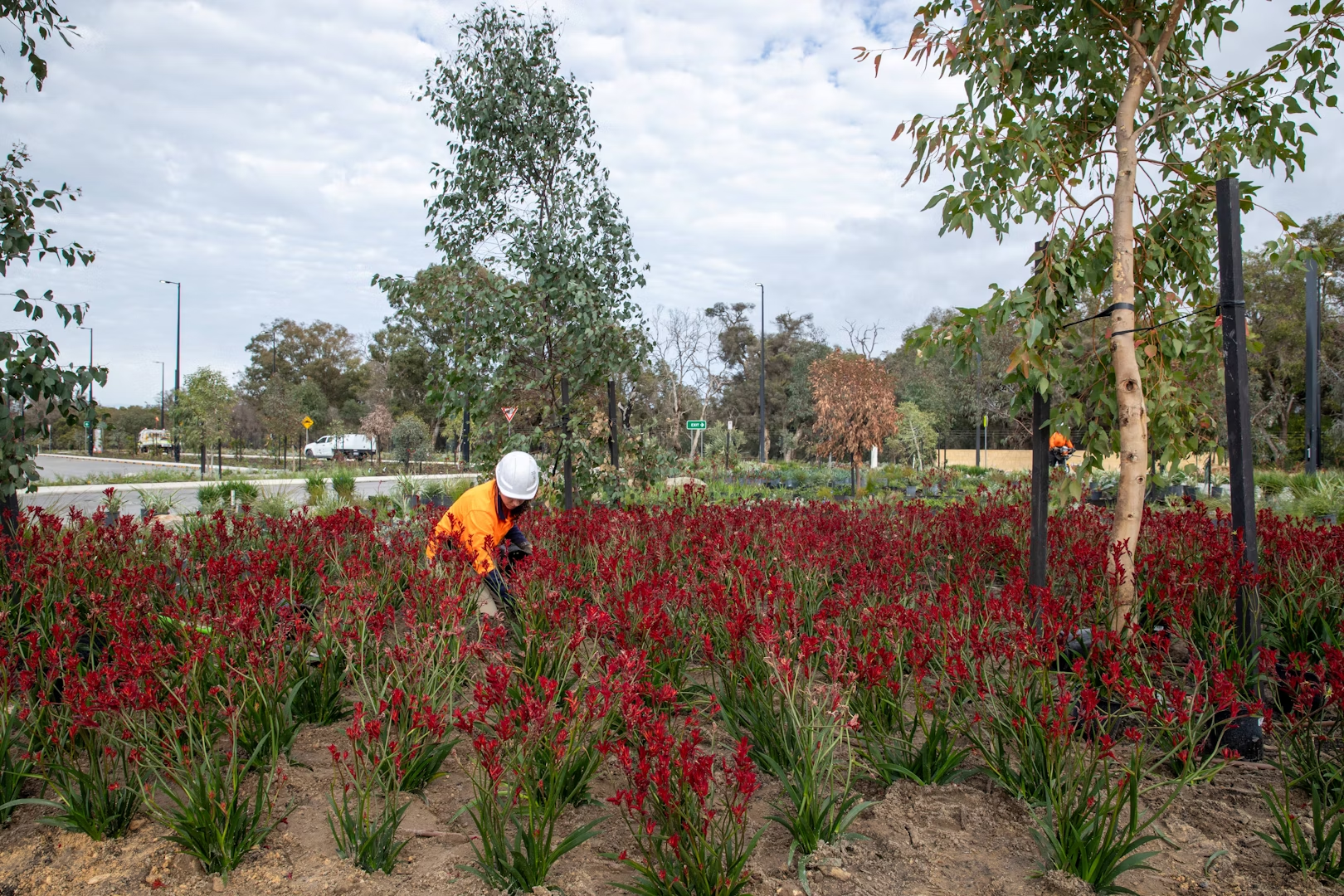
A Recycled-First Precinct – Keon Parade LXRP (Level Crossing Removal Project) – Economic Outcomes

The Recycled First Competition is an innovative initiative developed by the North Western Program Alliance (NWPA) aimed at promoting sustainability in infrastructure by driving significant economic value for the circular economy.

By addressing and solving key barriers to the use of recycled products, NWPA’s competition brought new, cost competitive recycled products to market, reducing both carbon emissions and waste, while supporting the creation of new jobs and local businesses.

The competition has fostered collaborative partnerships across the supply chain, opening up new procurement opportunities and driving industry wide cultural change. It has provided significant investment to facilitate the pathway to market for multiple recycled products and materials, while also removing perceived ‘green premiums’. The competition has created a ‘beacon’ for other industries, by generating a replicable model that demonstrates how to harness economic impact and shows the potential for long-term value creation using recycled products in infrastructure.

Describe WHAT you have done and HOW you have done it. Please provide a summary of your initiative, innovation, or approach.

The North Western Program Alliance (NWPA) is one of five Alliances delivering the Victorian Government’s landmark Level Crossing Removal Project (LXRP).

NWPA’s Recycled First Competition is a transformative sustainability initiative aimed at overcoming barriers to the use of recycled materials in infrastructure projects. It has been running since 2021 when LXRP challenged NWPA to develop an ongoing industry changing “beacon-project” to support and accelerate best practice sustainability.
The competition invited emerging recycled material suppliers to vie for funding, and Alliance support, to further develop their recycled product in a way that is economically sustainable and competitive in the construction market.

The NWPA ’Project Beacon’ solution was developed with competition partners Ecologiq, Metro Trains Melbourne (MTM), the state Urban Design Advisory Panel and Darebin City Council to:
• Engage with existing and prospective suppliers of recycled products
• Understand the challenges associated with using recycled materials in infrastructure projects
• Support investment to remove barriers to market to ease these challenges across LXRP and wider Victoria Infrastructure Delivery Authority (VIDA) projects
• Use the Keon Parade Project as a ’beacon’ to the industry to highlight NWPA and LXRP’s culture shift, from ’too hard’ to ’why not’?

When designing the approach to the project and its scope, the team identified two key goals:
• Overcome Barriers to Emerging Recycled Products – Throughout the industry suppliers are awarded start up or R&D funding to create their product, however they usually fail to fully commercialise products before seed funding runs out. This creates an almost insurmountable challenge of not being able to identify and solve barriers within construction timelines.
• Act as a Beacon to the industry – Signalling that recycled products are readily adoptable and provide a tangible and inspiring example of sustainability in action that people can look, see and touch.

NWPA chose to undertake a competition format to engage with, and challenge, emerging recycled materials suppliers to propose innovative solutions for use within urban realm projects. The initiative had three distinct phases:
Phase 1 – Competition
Suppliers were invited to submit proposals outlining their recycled materials solutions and the barriers they face. In total, 15 submissions were received. These were evaluated by a judging panel consisting of representatives from all the competition partners, against 22 judging and submission criteria spanning quadruple bottom line categories.

Phase 2 – Collaboration
Five successful suppliers and products were identified. They went on to work with NWPA’s key stakeholders to focus on overcoming a range of identified barriers including:
• Green premium costs and local manufacturing challenges
• Life cycle assessments and type approval issues
• Improving the connections between suppliers and buyers
• Addressing risk perceptions and overcoming change inertia
• Managing procurement and supply chain.

Phase 3 – Legacy
Working with successful suppliers on knowledge capture and lessons learned, the team promoted the competition process across LXRP and the industry while creating ongoing momentum to overcome barriers and incorporate recycled products to create a business-as-usual approach.
As part of engagement, 40 in-depth stakeholder interviews were undertaken with 135 stakeholders involved throughout the three-year process.

What were the OUTCOMES and how were those outcomes shared?

Project Beacon – Recycled First Competition enhanced the local recycled business economy, boosted the circular economy and achieved a range of sustainable outcomes. With Keon Parade LXRP only reaching practical completion in July 2024, its success is already paying dividends across several sectors, including growing the customer base for recycled product manufacturers.

Quantifiable Outcomes
• Successful additional $800,000 investment in the circular economy, resulting in the creation of a ‘Recycled First Precinct’ at Keon Parade LXRP.
• Approval of five new recycled products for ongoing use across the entire MTM network.
• Developing strategic partnerships to implement:
o Recycled Plastic Viaduct Screen (designed for Melton LXRP) – 100t carbon emissions saved compared to a BAU aluminum screen, with an equivalent 120,000 plastic bottles diverted once installed in 2025.
o Recycled Plastic Concrete Void Formers – 1200 recycled plastic void cones used resulting in a 38% reduction in concrete used in the bike parking slab. More than 7kg of recycled plastic per sqm of construction diverted from landfill.
o Geopolymer Bench Seats – 90% carbon emissions reduction compared to standard station concrete seats.
o Recycled Plastic Aggregate in concrete pavements – More than 5000m2 of recycled plastic aggregate concrete with 50,000 plastic bottles diverted from landfill.
o Salvaged and Recycled Timber – Furniture grade timber was milled into seating and logs were salvaged for landscaping, reusing 40% of project timber at its highest and best use.

Investment and Commercial Viability
The $800,000 investment finalised product designs, trialed implementations and gained type approvals. Specialist SMEs provided their time, addressing and solving barriers to enable recycled products and materials to be applied within the construction design, removing perceived ‘Green Premiums’ to create supply chain opportunities.
Through our upfront investments as with the reusable moulds, suppliers are now suggesting recycled products as a viable alternative to virgin materials. With the support of NWPA’s Design and Engineering teams to overcome initial barriers and optimise installation, recycled products are becoming cost competitive or cheaper than traditional products, as shown with the recycled plastic viaduct screens achieving cost parity with aluminium.

Local Business Economy and circular economy
With the Recycled First policy targeting a circular economy within Victoria, the competition outcomes significantly enhanced the local business economy. Examples include:
• New partnerships in the supply chain opened procurement opportunities to implement void formers, strategic recycled timber, recycled plastic aggregates in concrete mixes, and geopolymer. Additionally, an entirely new product stream was developed in the design and procurement of recycled plastic viaduct screens.
• Investment into the production and approvals stages has lessened assessment timeframes with new clients.
• All strategic recycled suppliers selected for Keon Parade are located within 50 km of the project site, enhancing local spend and jobs.
• Victoria’s circular economy relies on infrastructure as a bulk purchaser of recycled products. Thus, facilitating these products boosts the scale of the entire circular economic cycle.
• Supplier Robovoid estimate that with the increased interest and forecast pipeline of work, they could employ an additional 20 people within 2-3 years.

Industry culture shift
• A change in perceptions of green premium thanks to the success of the competition bringing products and materials to market as cost competitive.
• New demonstrated and adoptable pathway for other projects to overcome these unique challenges. Collaboration is key to forming a deep understanding of the challenges faced by the supply-chain and in proposing new products to contractors.
• Recycled First, along with initiatives like the ISC’s iSupply program, create important new opportunities for sustainable procurement and product adoption in the infrastructure sector which deliver economic benefits for communities, companies and industries.

Sharing outcomes
The competition was designed as a showcase project to motivate and inspire the industry. Since completion in August 2024, NWPA has undertaken a significant number of industry engagements to share outcomes, with more to come, including:
• EcologiQ Lunch and Learn – ‘Driving sustainable outcomes through innovation’

  • MTIA ‘Community of Practice’ – ‘Lessons for emerging career professionals from the Recycled First Competition’
  • ARA Rail Sustainability Leaders’ Summit 2024 – Site Walk at Keon Parade – showcasing recycled products in the field
  • Center for Regenerative Design & Collaboration (CRDC Global) launch in Melbourne – panel on strategic partnership between Keon Parade and Resin8
  • 2024 International Public Works Conference – critical partnerships with Councils for achieving recycled first and circular economy outcomes.

Describe WHO benefited from your initiative, innovation, or approach?

Project Beacon – Recycled First Competition set a collective mindset to effectively bring the competition finalists’ products to fruition while ensuring they were incorporated into NWPA’s long term design and the procurement strategy. The multiple beneficiaries include:

Direct Beneficiaries:
Recycled suppliers and emerging technologies
The successful suppliers were supported by $800,000 in development and implementation investment for R&D, design and the type approvals process, ensuring products were suitable for application.
ROBOVOID has seen increased interest, with their enquiries doubling since working on Keon Parade.
Curvecrete has received increased orders for their seating products and are in discussion for large-scale partnerships using their robotic mould technology.
RESIN8 reports that inclusion of their products at Keon Parade has resulted in improved confidence within the construction industry for further utilisation of this product in upcoming projects.
“Since the successful application of ROBOVOID at Keon Parade, ROBOVOID has been included in the design / specified on other infrastructure projects in Victoria, including in road, rail and water sectors. There is increasing interest from interstate and international clients on the back of the publicity received from the Keon Parade project.”
Scott Olding, Director, Robovoid

Indirect Beneficiaries:
The Government’s ‘Recycling Victoria – A New Economy Report’ identified that transitioning to a circular economy could potentially boost Victoria’s economy by up to $6.7 billion by improving material efficiency and recycling, helping create more than 3,900 new jobs and by helping businesses grow in new ways and create new sectors in the Victorian economy. As such, indirect beneficiaries include:

Local communities and businesses
Communities benefit from the circular economy through savings as the use of recycled products become increasingly cost-effective, driving re-use and conserving natural resources. Initiatives like the Recycled First Competition drive innovation within the supply chain, support local jobs, reduce waste and carbon emissions.

Sustainability Professionals and Organisations
The competition provides a roadmap for sustainability professionals and organisations to adopt a similar approach in the engagement, investment and application of new and emerging sustainable projects. The work already undertaken, and the lessons learned, saves on upfront costs and addresses barriers to implementation.

Government bodies and project owners
Project Beacon provides a commercial and governance model which government and other project proponents can use to support their circular economy goals and implementation within the supply chain.

What LEGACY and UN SDG CONTRIBUTION was achieved?

The competition challenged both suppliers and projects looking to use new and emerging recycled products and materials. While the competition has implemented products on the Keon Parade Project, the NWPA team has also embedded the successful products into their next two projects, with plans to continue to work with suppliers to become business-as-usual inclusions in the procurement process.

Local Industry Advancement
Facilitating [initiatives] like this supports knowledge sharing between other states and jurisdictions, and showcases the quality finish that recycled materials can provide. It helps build demand for the Victorian supplier chain and supports new partnerships and opportunities for their businesses.
Polly Gourlay-Phillip, Acting Implementation Manager, Ecologiq
The application of recycled products has accelerated market opportunities for local industries, as is the case with ROBOVOID in Tottenham, Victoria and RESIN8 in West Footscray, Victoria. The expansion of these products supports further economic opportunities and job creation in the circular economy.

Roadmap for Others
The competition provides a framework for other industries to use to engage with suppliers and develop their own process to enable the procurement and application of recycled products and materials. NWPA is currently developing clear documentation such as an Infrastructure Tree Reuse Guide and a Recycled Plastic Viaduct Screens Engineering Report to ensure a written legacy of the project is shared widely.
The ISC WhitePaper “Challenges and Opportunities in the Procurement of Sustainable Products and Services in Infrastructure” outlines five proposed procurement solutions. NWPA has provided the industry with an exemplar case study of how all five solutions can be delivered on a project, through education, alignment, incentivisation, early inclusion and knowledge sharing.

Breaking Down Barriers
The competition format addressed and solved a number of market and adoption barriers, identified by the ISC, including:
• Cost-based, short-term decision-making – The competition demonstrated opportunities can be realised through effective supplier engagement, confirmed investment and a strategic pathway to market.
• Lack of awareness – The competition mechanism brought recycled products suppliers and the construction industry together, with outcomes shared across a range of industries.
• Risk management – The agreed process was carefully managed with the support of all stakeholders.
• Budget constraints – Investment supported development hours which enabled product acceptance, type approvals and application into design.
• Logistical complexities – The governance approach directly considered and addressed challenges in sourcing, transporting, and implementing sustainable products.
• Lack of visibility – The competition and subsequent application of products at Keon Parade promoted the range of products in situ, providing showcase opportunities for suppliers.

This Project advanced the following SDGs:
SDG 8: Decent Work and Economic Growth
New and emerging recycled products create new industry and job opportunities, contributing to economic growth. In turn, the construction industry can promote sustainable outcomes, demonstrating economic gains and benefits.

SDG 9: Industry, Innovation and Infrastructure
Promotes sustainable infrastructure by encouraging recycled materials in construction. It uses the competition model to drive collaboration between stakeholders and overcome barriers to develop and use recycled material solutions.

SDG 11: Sustainable Cities and Communities
Accelerates sustainability practices by focusing on the use of recycled materials, transforming the approach of how these products were considered and used in public infrastructure. The process can be applied across other industries to incorporate recycled materials in urban infrastructure.

SDG 12: Responsible Consumption and Production
Promotes responsible production, aiming to reduce waste generation through recycling and reuse.

SDG 15: Life on Land
The reuse of site salvaged timber, through the partnership with CERES Fair Wood, contributes to the sustainable management of forests.

SDG 17: Partnerships for the Goals
Collaboration with suppliers to achieve sustainable goals, share knowledge and skills and create positive outcomes for infrastructure projects.

Western Plains Correctional Centre – Environmental Outcomes

Western Plains Correctional Centre is a 1,248 bed state-of-the-art maximum-security male prison. Which embodies a commitment to sustainability and safety focusing on rehabilitation and reintegration for people in
custody. It is the first new-build custodial facility in Australia to be awarded an IS Certification for outstanding sustainability outcomes.

The project team has achieved an IS v2.0 ‘Silver’ Design and As Built Certification. This is underpinned innovative rainwater harvesting and treatment systems for non-potable water supply, surpassing benchmarks and achieving an 46% reduction in whole of life water demand. This translates to an annual supply of 28ML of harvested rainwater. Our approach incorporates stormwater drainage, retention basins, tank farm, water treatment and advanced water management solution, ensuring efficient water use for non-potable water applications within the facility. This project showcases our dedication to environmental stewardship and community impact. Together, we are shaping a sustainable future.

Describe WHAT you have done and HOW you have done it. Please provide a summary of your initiative, innovation, or approach.

Western Plains Correctional Centre is a new maximum-security male prison with 1,248 beds, dedicated to sustainability and safety while emphasising rehabilitation and reintegration for people in custody. It is the first new-build custodial facility in Australia to receive an Infrastructure Sustainability (IS) Certification for exceptional sustainability outcomes, including innovations in sustainable suppliers, water benchmark exceedance, as well as installation of a large solar farm. This submission focuses specifically on water outcomes, contributing over 20 out of 45 points in the IS rating.

The project team achieved an IS v2.0 ‘Silver’ Design and As Built Certification, aiming to establish a leading correctional facility for Victoria. Led by the Department of Justice and Community Safety (DJCS), the team chose to pursue IS rating certification to assess sustainable outcomes. In a demonstration of sustainability leadership, the project was an early adopter of the IS v2.0 Design and As Built Rating, setting an ambitious target of ‘Silver’ for a new asset class and new proponent under the new IS v2.0 framework.

The project set and achieved a number of objectives to significantly reduce potable water demand
• 40% reduction in operational potable water demand
• 20% water supply for operations from rainwater harvesting
• 30% water supply for construction
• ISC Wat-1 Level 3 (30% whole of life WoL water demand reduction)

Through a comprehensive approach, the project exceeded expectations by achieving a remarkable WoL water demand reduction of 46% from the base case, verified in the IS rating.

An advanced technical solution was developed to provide an annual supply of 28 ML of harvested and treated rainwater for 100% of non-potable water supply within the facility (1,400 ML over the asset’s useful life.)

The solution integrates stormwater drainage, gross pollutant traps (GPTS), retention basins, a tank farm, water treatment systems and advanced water management system.

The stormwater drainage system collects runoff from roofs, the car park and within the facility perimeter. GPTs filter debris and pollutants before water enters the SE retention basin. Overland flows from outside the facility perimeter follow natural drainage lines to reduce sediment. The SE retention basin has a capacity of 33,503 m³, sized for local rainfall and non-potable water demands (28ML annually).

Rainwater collected in the SE Retention Basin is pumped to the tank farm, which contains tanks for untreated rainwater, fire water and treated water, and is serviced by a dedicated rainwater treatment train. This facility processes harvested rainwater to meet reuse standards within the facility.

The benefits were extended by early implementation of the SE retention basin during construction allowed early access to stormwater collection and reuse for approximately 56% (33.5 ML) of construction water needs.

The treated rainwater is distributed for non-potable uses including toilets, urinals, laundries and landscape irrigation, managed by an advanced water management system that allows real-time monitoring of water retention, treatment. The project manages excess stormwater, via a specialised paddock sprinkler system to disperse excess water and allowing access to excess water by accessed neighbouring properties.

What were the OUTCOMES and how were those outcomes shared?

In support of the overarching project targets listed above, the project identified the following objectives for the Green Infrastructure Plan on the project:
• Element 1 WSUD Stormwater Treatment: Treat site runoff water to CSIRO best practice guidelines
• Element 2 Rainwater harvesting: Reduce water demand by 20%

Both the WSUD Stormwater Treatment and rainwater harvesting systems have been installed and tested, with defects rectified during the 12-month defects and liability period post-construction.

The Ecoceptor and Stormceptor systems have been installed and successfully commissioned, feeding the SE water retention basin for effective harvesting and infiltration.

Water quality testing confirms compliance with CSIRO guidelines, with final tests conducted on 12 May 2023 validating preparedness for handover to the Department of Justice and Community Safety and facilitating water accessibility for neighbouring farmers.

The volume of stormwater harvesting capacity has far exceeded the target of 20%, by being designed, specified and installed to meet over 40% of the operational water demand.

The outcomes are as follows:

Outcome 1: Water Demand Reduction
• 46% of operational water demand is met through efficient water fixtures and rainwater harvesting
• This equates to 28 ML supply of harvested rainwater annually and 1,400 ML over the useful life of the asset.
• Irrigation only to external landscaping. Internal landscaping relies on rainfall only.

Outcome 2: Improved stormwater management
• 100% stormwater capture and treatment prior to legal point of discharge (SE Retention Basin)
• Overland flows directed to the SE retention basin via natural drainage lines with natural sediment controls implemented
• Can support 1 in 100 year rainfall events
• Excess collected stormwater is dispersed via specialised paddock sprinkler system onsite to avoid damage from overtopping SE retention basin

Outcome 3: Improved resilience
• Provides facility with water security during droughts or other major disruptions to water supply
• Reduces impact of the facilities water demand on the local community water supply, improving community water resilience
• Water supply could potentially be used in fire emergencies to improve resilience for both the prison and local community
• Excess harvested water available to neighbouring properties further improving community water resilience

Outcome 4: Construction Non-Potable Water Supply
• 56% of construction water harvested from the SE retention basin, according to water monitoring data
• This equates to 33.5 ML supply of harvested water during the construction period.

Outcome 5: Improved Water Chiller Water Demand
• Improved thermal performance of the buildings design reduced the cooling demand on the central chillers
• Highly efficient chiller selection

IS Rating Verified Outcomes
• Con-2 – Level 1 (0.8 points)
• Res-2 – Level 2 (1.75 points)
• Gre-1 – Level 3 (3.5 points)
• Env-1 – Level 1 (0.47 points)
• Wat-1 – Level 3 (4.2 points)
• Wat-2 – Level 2 (2.1 points)
• Inn-1 – 1 point for exceeding the benchmark in Wa1-1

The highly successful water outcomes of the project have been shared internally through DJCS, Corrections Victoria, John Holland and NDY as a case study for stormwater management and rainwater harvesting for non-potable water use in operations and construction.

The DJCS Climate Action, Planning and Environment (CAPE) team have presented to the Facility Operations (Corrections Victoria) regarding the ISC process applied to the project and the key outcomes. The team have also captured project lessons and outcomes in the CRPP Project Closure Report and Lessons Learnt Activities, to be made available for future projects.

John Holland has utilised the insights gained from delivering the Western Plains Correctional Centre to support the development of sustainability strategies for similar projects, including the Queensland Train Manufacturing Project. Specifically, benchmarking fuel and water usage during construction has been instrumental in identifying opportunities for water reduction and establishing benchmark targets.

NDY have shared the project success internally to inspire sustainability and engineering solutions for future projects. The ISAP for the project has shared insights into measuring sustainability initiative outcomes in multiple IS credits to build up a successful IS rating submission in the IS Design and As Built Technical Working Group. The lesson emphasised that well designed and implemented initiatives can have many benefits including green infrastructure, resilience, reducing environmental impacts, using non-potable water sources and improving operational water efficiency.

Describe WHO benefited from your initiative, innovation, or approach?

The rainwater harvesting initiative has provided significant benefits to various stakeholders, including Corrections Victoria, local communities, the environment and Barwon Water. Overall, the initiative contributes to regional water security, operational resilience, technology demonstration and environmental sustainability, benefiting adjacent properties, groundwater reservoirs and potentially emergency firefighting efforts, all while supporting a strategic water management approach in response to growing water demand in the region.

For Corrections Victoria, the initiative is expected to result in reduced operating costs and increased resilience for the prison, with valuable lessons applicable to other prisons for evaluating the feasibility of implementing similar scale green infrastructure for rainwater harvesting.

Properties adjacent to the facility may request access to excess water resources which will reduce their overall water demand and contribute to enhanced community water resilience during times of drought or water supply disruptions.

From an environmental perspective, the initiative has achieved no stormwater runoff to the environment without capture and treatment prior to infiltration and discharge offsite. The water is infiltrated through the basin and a dedicated paddock sprinkler infiltration system which facilitates groundwater recharge.

For context, Barwon Water, the local water corporation is facing increasing strain due to population growth. Adding a prison population of over1200 people in custody into the area has potential to cause further strain on the regions’ water supply. The prison’s stormwater management and rainwater harvesting strategy aligns to Barwon Waters’ Water Adaptation Strategy for securing future water supplies through technological solutions aimed at water security, fit for purpose water and water for environmental and cultural values. As an example Barwon Water’s Water Adaptation Strategy identifies that it needs to find or save 53ML of water every year to meet community needs under a worst case scenario. The prison was forecast to add another 67ML of water demand into the region annually, so the rainwater harvesting contributing 27ML to the prison operations annually makes a significant contribution to the water resilience of the region serviced by Barwon Water.

The overall effort to reduce the prisons’ water demand from Barwon Water, share excess treated stormwater with neighbours and community stakeholders, which in turn reduces their water demand from Barwon Water, assists with reducing water extraction from Victorian Rivers. This supports Barwon Water to leave water in the riverine systems for environmental flows and cultural values.

What LEGACY and UN SDG CONTRIBUTION was achieved?

The rainwater harvesting initiative directly contributes to the United Nations Sustainable Development Goal 6, particularly Target 6.4, which aims to substantially increase water-use efficiency across all sectors while ensuring sustainable withdrawals and supply of freshwater to address water scarcity.

By implementing a comprehensive rainwater harvesting system, we have significantly improved water-use efficiency within the prison by achieving a 46% reduction in operational water demand. This reduction not only alleviates pressure on local freshwater resources but also supports sustainable withdrawals through effective water management techniques. The initiative employs strategic stormwater drainage and treatment systems, ensuring that captured rainwater is used efficiently for non-potable applications, promoting the responsible use of available water resources.

Furthermore, the project aligns with sustainable practices by facilitating groundwater recharge and maintaining riverine environmental flows, which is essential for ecosystem health. With the potential benefits extending to neighbouring communities, access to treated excess rainwater can alleviate water scarcity, particularly during periods of drought or supply disruptions.

The project showcases the feasibility and benefits of sustainable water management practices. The initiative serves as a model for other sectors and facilities to adopt similar strategies, thereby contributing to the broader goal of reducing the number of people suffering from water scarcity.

In summary, this initiative exemplifies how innovative water management solutions can enhance water-use efficiency, promote sustainable freshwater supplies and ultimately reduce the number of individuals affected by water scarcity in the region.