6 - 2026 - ISCouncil

ISC Partners with Waste Expo Australia 2026

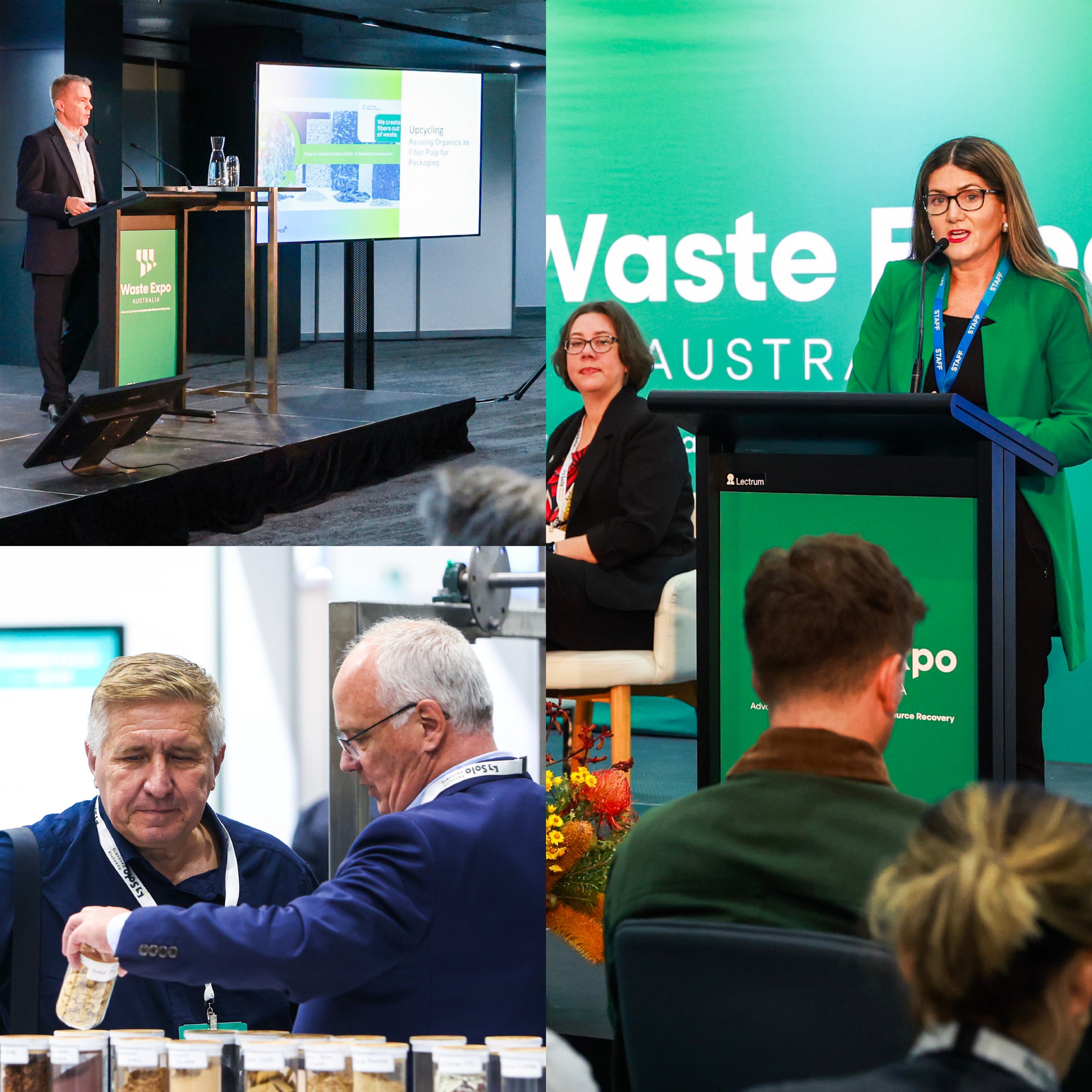
The Infrastructure Sustainability Council is proud to be a supporting partner of Waste Expo Australia 2026, Australia’s premier event for waste management, recycling and resource recovery.

Taking place at the Melbourne Convention and Exhibition Centre on 28–29 October 2026, Waste Expo Australia brings together government, infrastructure leaders, engineers, innovators, sustainability professionals and solution providers to explore the policies, technologies and partnerships shaping Australia’s transition to a cleaner, more circular future.

Featuring more than 100 exhibitors, the event offers a comprehensive program of free expert-led presentations, panel discussions and networking opportunities focused on circular economy, resource recovery, procurement, sustainable infrastructure and emerging technologies. Attendees will also have the opportunity to connect with key government agencies through the Government Lounge, explore practical sustainability initiatives showcased throughout the event, and engage with organisations leading innovation across the waste and recycling sectors.

Adding to its significance, the Greener Infrastructure Conference will be co-located or alongside the Waste Expo

creating one of the largest gatherings of professionals across renewable energy, energy management, sustainable infrastructure, waste and resource recovery. Together, the events provide a unique opportunity for cross-sector collaboration and knowledge sharing as Australia works towards a more sustainable and resilient future.

As the peak body for sustainable infrastructure across Australia and New Zealand, the ISC is committed to fostering collaboration across the sectors that influence the way we plan, design, deliver and operate infrastructure. Waste, resource recovery and circular economy principles are increasingly central to sustainable infrastructure outcomes, making this partnership a natural alignment with ISC’s purpose of enabling more sustainable communities.

As an exclusive benefit of ISC membership, members are eligible to receive a 5%-member rate on exhibition stands and sponsorship opportunities at Waste Expo Australia 2026.

ISC members are also encouraged to help shape the event program by submitting an expression of interest to become a speaker. If you have a project, innovation, case study or lesson learned that could benefit the broader industry, we encourage you to share your expertise with delegates from across Australia and New Zealand.

Organisations interested in exhibiting or sponsoring the event can view the prospectus here:
https://www.linkedin.com/smart-links/AQFJmQKHOcR1Fg

We look forward to collaborating with Waste Expo Australia, our members and the broader industry to advance conversations around circular economy, resource recovery and the sustainable infrastructure solutions that will help shape the cities and communities of tomorrow.

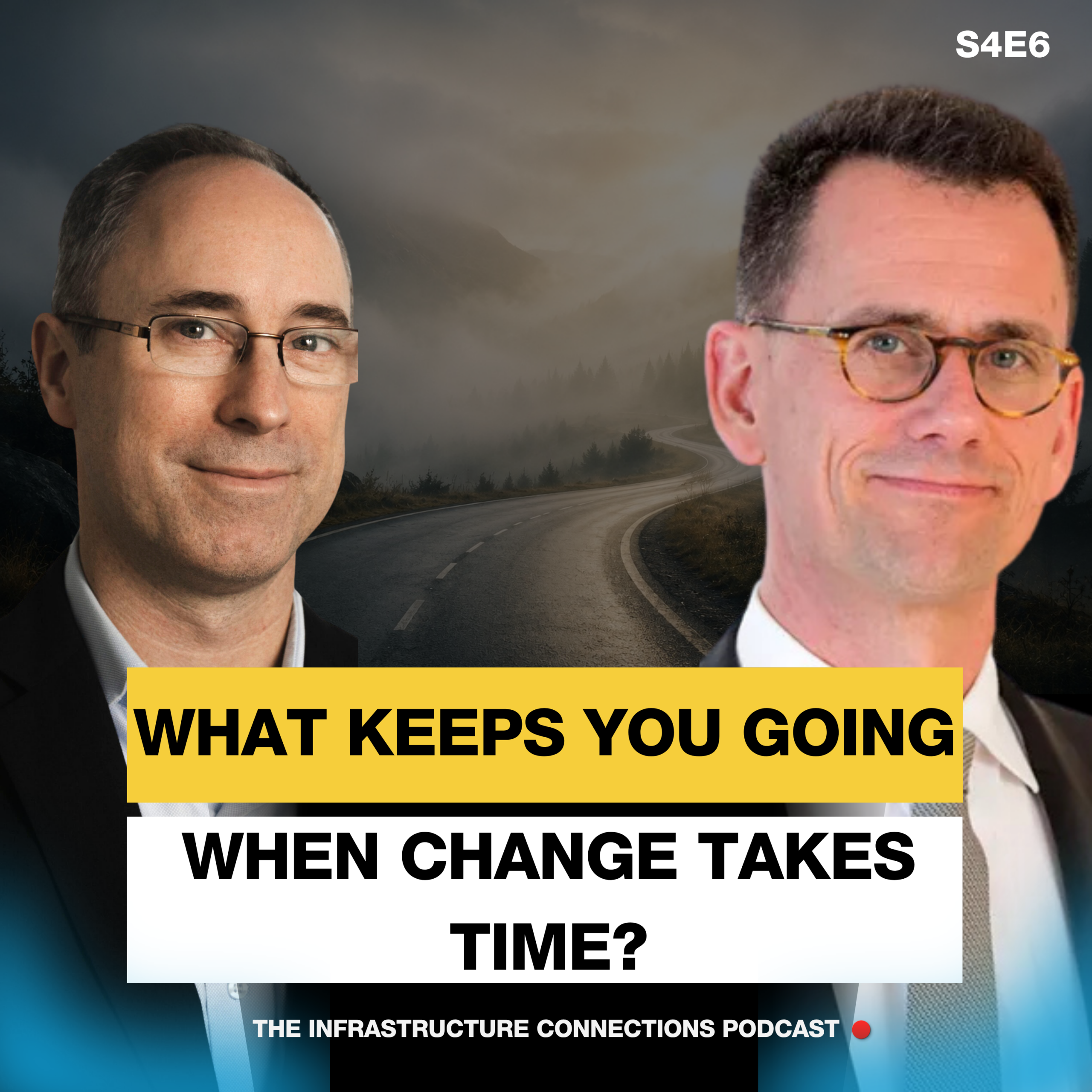
S4E6 – The Power of Purpose w/ Richard Boele

Description:

What keeps people motivated when progress is slow, outcomes are uncertain, and challenges keep evolving?

In this episode, Richard Boele, Chief Purpose Officer at KPMG, explores the powerful role of purpose in sustaining energy, resilience, and long-term commitment to change. He explains the difference between purpose—your unique contribution and who you can’t help being—and impact, the outcomes you’re striving to achieve.

The conversation explores how reconnecting with personal purpose can help individuals stay motivated through uncertainty, while aligning personal, team and organisational purpose can unlock collaboration, engagement and a greater sense of meaning at work.

Whether you work in sustainability, leadership, organisational change, or simply want to find greater meaning in your work, this episode offers valuable insights into how purpose can help people navigate complexity, maintain momentum, and drive lasting impact.

Update from our CEO, Toby Kent: Focus on Policy & Budget Actions  

Focus on Policy & Budget Actions  

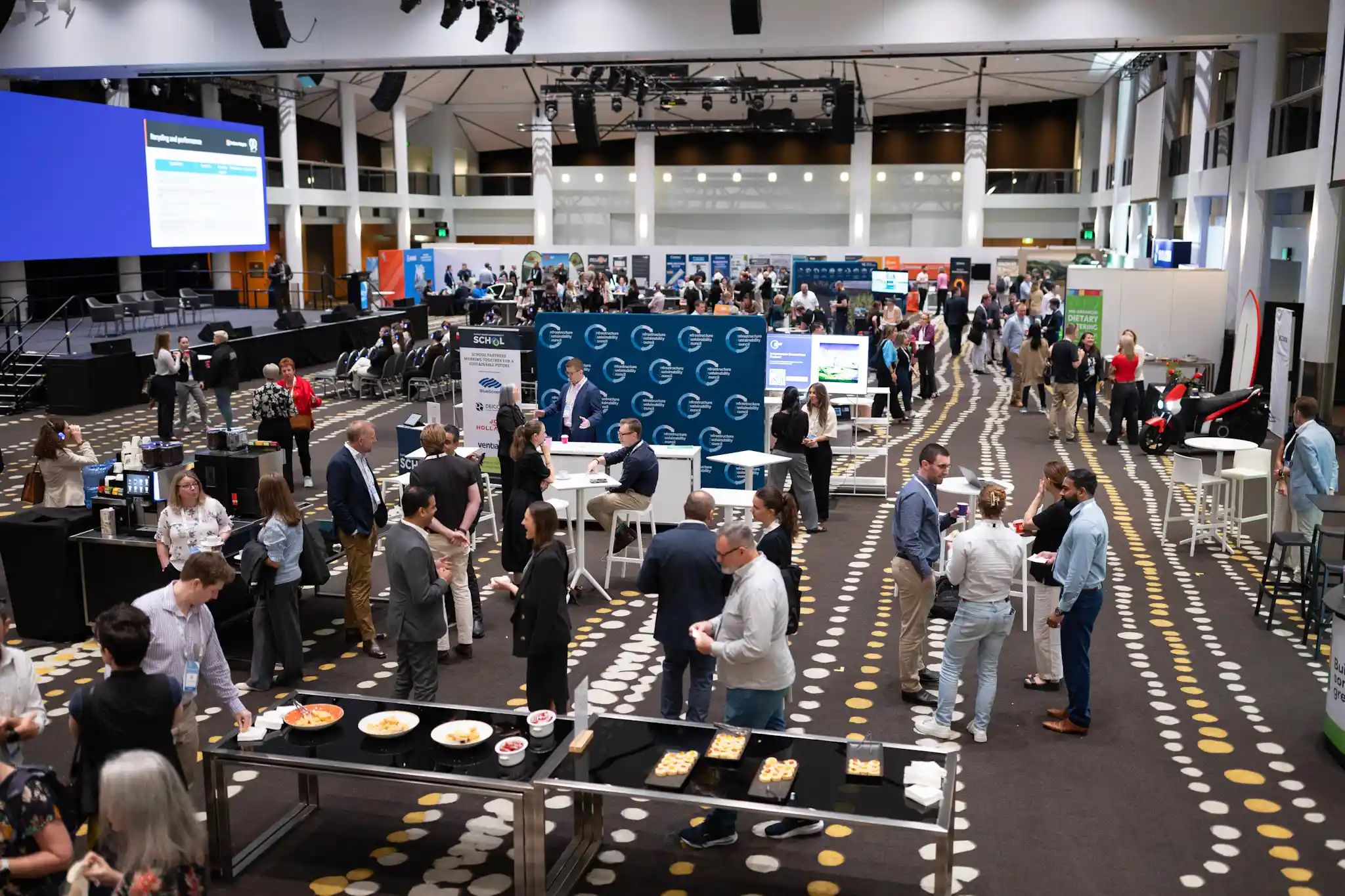
Fresh from ISC Connect 2026, it is clear that much of Australia and New Zealand’s infrastructure has moved decisively from ambition to delivery – but it is equally clear that the task ahead remains substantial. This year’s record number of award submissions and the calibre of those recognised, reflects a sector that is increasingly embedding sustainability and resilience into how infrastructure is planned, delivered and operated. From major transport programs to communityfocused upgrades, the projects recognised this year demonstrate how infrastructure is being designed and delivered to endure, adapt and create longterm value.  

The projects and organisations recognised – from the Suburban Rail Loop East, Te Ara Tupua to the Fitzroy to Gladstone Pipeline – demonstrate what is possible when policy, investment and delivery align around clear outcomes. They show that infrastructure can deliver economic, environmental and social value together, and that resilience is becoming a core design principle rather than an afterthought. 

But these examples also highlight the scale of the opportunity – and the gap that still exists across the broader market. While leading projects are setting new benchmarks, consistent, system-wide adoption of outcomes-focused, sustainable approaches is still uneven. Closing that gap will be critical if infrastructure is to fully support productivity, decarbonisation and the growing demands of our communities.  

As ISC has a positive close to the financial year, recent Federal and State budgets reinforce that infrastructure is increasingly positioned as a central lever for economic performance, energy transition and housing delivery. Investment is becoming more targeted and more accountable — with a stronger focus on system performance, coordination and longterm value. The challenge is now to ensure that this investment consistently translates into measurable outcomes on the ground.  

This is where ISC’s role continues to evolve. We are seeing strong growth in engagement across our ratings, training, events and thought leadership work as governments and industry look to lift capability and embed more consistent approaches. The direction of travel is clear, but progress at scale will require deeper collaboration across the sector.  

The opportunity ahead is significant. The pace of reform and investment gives the sector a unique window to lift performance, strengthen resilience and deliver lasting value – but only if we move together, with shared frameworks, clear metrics and a continued focus on outcomes.  

I look forward to working ever more closely together as we move into the new financial year. 

Australia 

Federal Budget 2026 to 2027: Sustained Infrastructure Investment 

The final quarter of FY2026 has delivered a strong suite of federal and state announcements, reinforcing infrastructure as central to economic resilience, the energy transition and housing delivery. It is increasingly positioned as a driver of productivity, decarbonisation and community outcomes. 

The 2026 to 2027 Federal Budget includes $12.1 billion in new infrastructure investment, including $10.3 billion for transport projects, $976 million for initiatives and $803 million for community infrastructure. This sits within a broader pipeline, with $8.6 billion over 11 years for nationally significant road and rail projects and $13.5 billion in Commonwealth funding to states and territories in 2026 to 2027. 

Key commitments include $3.8 billion for Suburban Rail Loop East, $1.75 billion for freight rail, $812.5 million for the Bruce Highway, $522 million for Anketell Road and $50 million for early works on the Sydney to Canberra corridor. A $2 billion Local Infrastructure Fund aims to support up to 65,000 homes. 

The shift is toward outcomes. Investment is increasingly linked to housing, emissions and system performance, requiring stronger focus on whole-of-life value, resilience and social outcomes. 

Freight, Rail and National Connectivity 

An additional $1.75 billion for freight rail brings the Australian Rail Track Corporation program to around $2.8 billion. Works include track renewal, signaling, passing loops and resilience upgrades. A $55 million program supports modal shift from road to rail and coastal shipping. 

Inland Rail is now focused on Beveridge to Parkes by 2027, enabling double stacked freight between Melbourne and Perth. The full corridor is estimated to exceed $45 billion.  

A $100 million Sydney to Canberra rail investment includes $50 million from the Commonwealth and $25 million each from New South Wales and the Australian Capital Territory. Works will target crossings, track, stations and future planning. The focus is on targeted upgrades, reliability, and network performance. 

Energy Security, Fuel and Gas Reform 

The Federal Government has introduced a $14.8 billion fuel resilience package, including $7.5 billion for a Fuel and Fertiliser Security Facility and $3.2 billion for a national reserve of around one billion litres. Fuel storage capacity will increase to about 50 days, with excise relief extended past the initial cut off date of 30 June 2026 until 2 August 2026 (but at a smaller discount of 25% from 30 June onwards).   

A domestic gas reservation scheme will begin on 1 July 2027, requiring exporters to supply 20 percent of volumes to the Australian market. Existing contracts remain protected. The policy supports supply stability during the transition to a system targeting 82 percent renewables. 

In New South Wales, planning reform will fast track priority renewable projects. Renewables currently supply around 36 percent of electricity and have exceeded 80 percent at peak periods.  

ESG, Environment and System Reform 

At the Federal level, reforms to environmental governance include the establishment of a National Environmental Protection Agency and efforts to streamline approvals processes, alongside $2.2 billion in reprioritised climate funding. These changes point to a dual objective of improving efficiency while maintaining regulatory oversight. The ISC considers this a critical moment to advance nationally consistent, outcome-focused ESG metrics across infrastructure. As governments seek to accelerate delivery, there is a growing need for transparent, auditable sustainability frameworks that can demonstrate real performance outcomes, and ISC’s tools and rating systems are well positioned to support this transition.   

New Zealand 

Auckland City Deal 

The New Zealand Government and Auckland Council have signed the country’s first Auckland City Deal establishing a long-term partnership to better coordinate investment and unlock the city’s economic potential. The agreement focuses on boosting growth, productivity, and living standards by aligning planning across transport, housing, infrastructure, and innovation. Key commitments include a 30-year transport strategy, support for major infrastructure and precinct development, and targeted initiatives to grow tourism, events and global investment.  

State Spotlight: Western Australia Budget 2026 to 2027 

The Western Australian Government’s 2026-27 State Budget, handed down in May 2026, confirms a continued focus on housing, infrastructure and economic resilience, underpinned by a projected $2.4 billion operating surplus and WA’s ongoing triple-A credit rating. Western Australia has committed to a $44.3 billion four-year asset pipeline, supported by a $2.4 billion surplus. 

A $4.7 billion housing package will deliver more than 34,000 homes, including $1.3 billion for enabling infrastructure. A $1.4 billion Clean Energy Fund will support transmission and network upgrades ahead of coal closures by 2030. Major investment continues across transport and METRONET. 

These investments are aimed at lifting system capacity, supporting population growth, enabling decarbonisation and maintaining a strong pipeline of construction and infrastructure activity across metropolitan and regional Western Australia. 

From an ISC perspective, WA exemplifies the convergence of housing, infrastructure, and energy transition, highlighting the need for integrated systems planning. The scale of investment presents a significant opportunity to embed sustainable precinct development and decarbonised infrastructure networks at scale. 

State Spotlight: Victoria Budget 2026 to 2027 

Victoria’s Budget prioritises maintenance and affordability. It includes  $1.041 billion for road maintenance, $673.6 million for trains, $481 million for regional transport and $432.5 million in fare relief. Additional funding supports bus and ferry upgrades, water infrastructure and manufacturing electrification. As of 1 November 2025, VicGrid took over responsibility from the Australian Energy Market Operator for planning Victoria’s transmission network and is now tasked with delivery of a $7.9 billion pipeline of projects under the Victorian Transmission Plan. The focus on maintenance reinforces lifecycle asset management and integrated planning.  
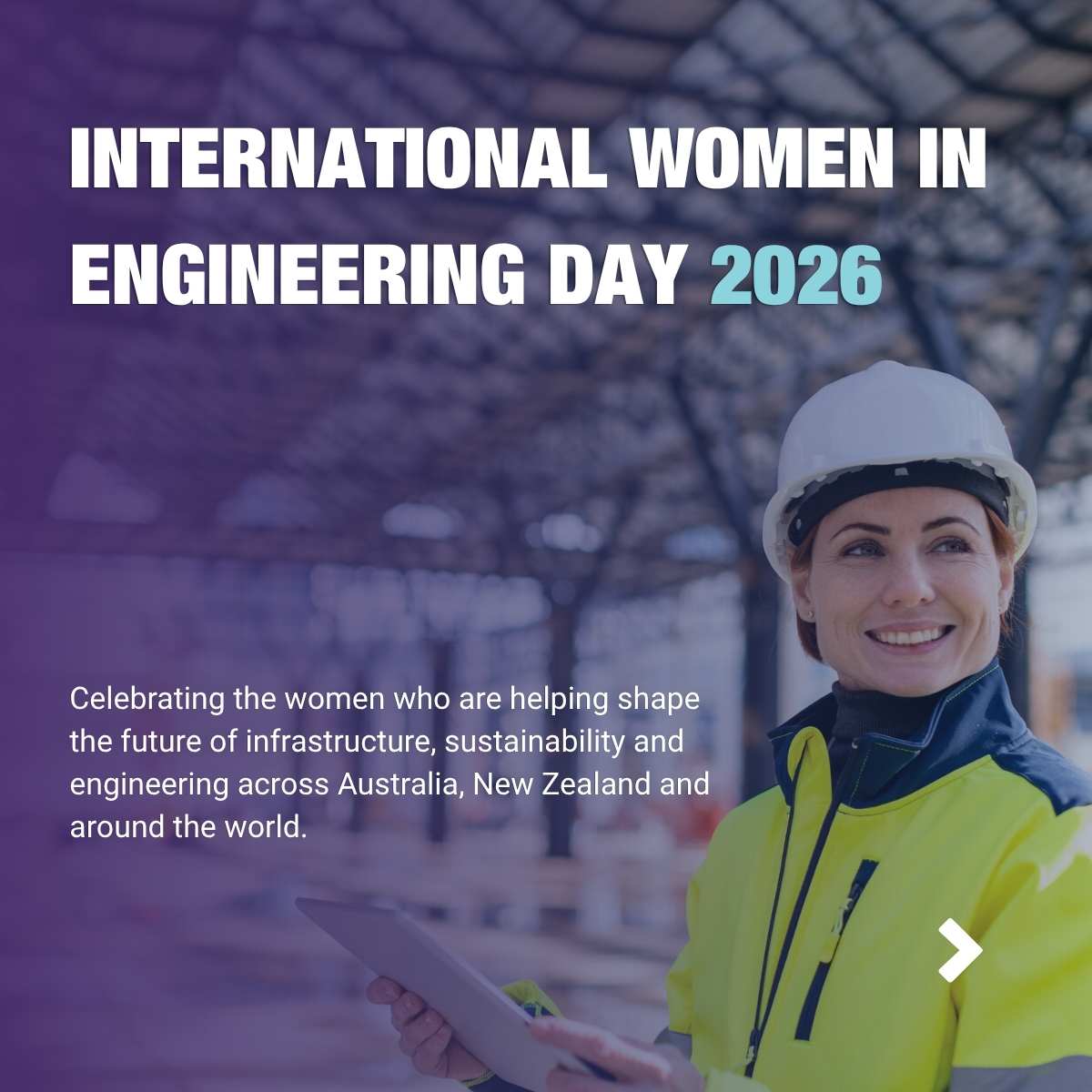
International Women in Engineering Day 2026

Today, on International Women in Engineering Day, we celebrate the women who are helping shape the future of infrastructure, sustainability and engineering across Australia, New Zealand and around the world.
Established in 2014 by the Women’s Engineering Society in the UK, International Women in Engineering Day shines a spotlight on the achievements of women in engineering while encouraging the next generation to see themselves in a profession that has the power to transform communities and improve lives.
As our sector tackles increasingly complex challenges, from climate resilience and decarbonisation to resource management, circular economy initiatives and the delivery of sustainable infrastructure, we need diverse perspectives at the table. Innovation thrives when different experiences, backgrounds and voices come together to solve problems and create better outcomes.
At ISC, we recognise the critical role women play across every stage of the infrastructure lifecycle. From planning and design through to construction, operations and sustainability leadership, women are helping drive the ideas, solutions and collaboration needed to create more resilient, inclusive and sustainable communities.
Today is an opportunity to celebrate the achievements of women across engineering and infrastructure, while also recognising the importance of continuing to build pathways that attract, support and empower future generations of female engineers.
To all the women making a difference across our sector, thank you for your leadership, expertise and contribution to building a better future for people and the planet.
Click here to hear from our stakeholders what this day means to them

Infrastructure Sustainability Council welcomes Te Waihanga’s report on New Zealand’s energy infrastructure transition

Infrastructure Sustainability Council welcomes Te Waihanga’s report on New Zealand’s energy infrastructure transition

The Infrastructure Sustainability Council (ISC) has welcomed the release of Shifting Currents: Energy Infrastructure in Transition’, a new report from the New Zealand Infrastructure Commission, Te Waihanga, as an important contribution to the national conversation on how New Zealand’s energy system must evolve to support a low-carbon (net zero) future.

The report explores how New Zealand can balance three critical objectives as its energy infrastructure undergoes significant transformation: affordability, reliability and low emissions. Driven by electrification, the growth of renewable energy, and the decline of fossil fuels, it outlines practical steps toward net zero and the coordinated action required from governments, regulators, and industry to achieve it.

ISC Chief Executive Officer Toby Kent welcomed the report and highlighted its relevance for sustainable infrastructure and resilience.

‘Energy infrastructure is the foundation our communities are built on. When we plan and invest in it with sustainability and resilience in mind from the outset, we deliver stronger financial returns and build assets that perform over the long term.

‘At a time when New Zealand is making critical decisions about its energy future, this report underscores the importance of taking a long-term, integrated approach. By aligning policy, investment and industry action, New Zealand has a clear opportunity to build an energy system that is not only low emissions, but more affordable, resilient and fit for generations to come.’

The report identifies four key takeaways for New Zealand’s energy transition:

  1. Building low-cost electricity infrastructure will keep prices low in the long term: Renewable energy is becoming more affordable to construct. Falling construction costs for wind and solar energy present a significant opportunity for New Zealand to invest now in efficient generation infrastructure that will lower wholesale electricity prices and reduce long-term system costs.
  2. Policy certainty and coherence are critical in both the short and long term: Uncertain or inconsistent policy settings – particularly around gas and regulation – can delay investment. Clear, stable signals on climate targets and market rules reduce risk, encourage project development and ultimately put downward pressure on prices.
  3. An adaptable and flexible system will help keep energy affordable and reliable: Expanding renewable energy requires complementary investments in system flexibility, including batteries, hydro storage and demand response, to maintain reliability and avoid unnecessary infrastructure costs.
  4. Players in the energy system will need to adapt and coordinate: Stronger alignment between government, regulators and industry will help avoid duplication, reduce inefficiencies and ensure investments are targeted where they deliver the greatest value.

The report’s emphasis on policy coherence and system-wide coordination reinforces what is needed to unlock investment, reduce cost, and deliver reliable, future-ready energy infrastructure.

ISC-rated projects have been shown to reduce costs by around 10% of total CAPEX through improved energy and water efficiency, reduced material use, lower waste, and fewer emissions*. For project proponents, the report offers compelling evidence to support more sustainable investment decisions and to demonstrate value to clients, investors, and regulators. It also highlights how embedding resilience and sustainability from the earliest stages leads to stronger financial outcomes over the asset lifecycle.

‘Shifting Currents: Energy Infrastructure in Transition’ is available here

*ISC Impact Report (2025) available here Continue reading “Infrastructure Sustainability Council welcomes Te Waihanga’s report on New Zealand’s energy infrastructure transition”

New Infrastructure Sustainability Council report highlights the critical role of digital infrastructure in delivering sustainable, resilient and future-ready assets 

The Infrastructure Sustainability Council (ISC) has released a new thought leadership report, examining the growing importance of digital infrastructure in shaping the planning, delivery and operation of infrastructure assets across Australia and Aotearoa New Zealand.  

The report – Digital Infrastructure Futures – Phase 1: Emerging Insights Report (June 2026)- is the initial report in a thought leadership series exploring a simple yet critical question: what does the digital enablement of infrastructure mean for sustainability outcomes in Australia and Aotearoa New Zealand?  

The report, sponsored by Jacobs, Honeywell and Sydney Water, highlights that digital infrastructure is a core component sitting alongside and within traditional physical assets, fundamentally reshaping how infrastructure delivers economic, environmental and social value.   

ISC Chief Executive Officer Toby Kent said the report underscores the need for a more intentional and coordinated approach to digital infrastructure as part of the broader sustainability agenda. 

‘Digital infrastructure is rapidly becoming a core part of how infrastructure systems function,’ Mr Kent said.  

‘Our digital backbone is in itself, critical infrastructure. Connectivity, data and intelligent systems are further reshaping how we plan, build and operate the assets our communities depend on. If we get this right, digital infrastructure can significantly enhance performance, resilience and sustainability outcomes.’ 

Adam Beck, Managing Director, NEON.URBAN, who contributed to the report, said the pace of digital transformation presents a significant opportunity for the infrastructure sector.  

‘We are entering a new era where digital and physical infrastructure are converging,’ Mr Beck said.  

‘This report highlights the opportunity to harness data, connectivity and emerging technologies to unlock smarter, more adaptive and more resilient infrastructure systems that can better respond to the needs of communities and the challenges ahead.’ 

The report identifies an initial ‘Action Framework’ for the infrastructure sector, outlining three approaches which reflect the uncertainties of planning for change in a rapidly evolving environment: 

  • Adaptive planning: Rather than locking in a single forecast and designing to it, adaptive planning frames decisions as a sequence of staged choices with built in review points. Initial commitments are sized to what is reasonably known. Trigger conditions, such as a demand threshold, a regulatory change, or a cost shift in a key input, prompt the next decision.  
  • Scenario-based infrastructure design: Project teams develop multiple plausible futures for digital demand, energy availability, water access, workforce capacity, and regulatory settings, and test design and procurement decisions against each. The aim is not to predict which scenario will occur, but to identify decisions that perform reasonably well across all of them, and to flag decisions that depend heavily on a single assumption.  
  • Flexibility and upgradeability: Digital infrastructure assets benefit from modular design, oversized passive elements such as conduits and power feeds, and clear separation between long-lived physical components and shorter-lived digital ones. Designing in this way trades a modest uplift in upfront cost for substantially reduced stranded asset risk and waste over the asset lifecycle 

By bringing together insights from industry leaders and emerging best practice, the report aims to support practitioners, asset owners and policymakers to better understand the role of digital systems and embed them effectively within sustainable infrastructure strategies. 

This initial report is the first step towards production of a final thought leadership piece offering deeper guidance for the infrastructure sector on how to act on the opportunities presented by digital infrastructure, while ensuring sustainability travels along with this. 

The full report is available to download here.
  

Media enquiries 

Annie Manson
Policy & Advocacy Manager
Infrastructure Sustainability Council
+61 422 131 741 

annie.manson@iscouncil.org 

ISC appoints Emma Drummond as its Executive Director of Stakeholder Services

The Infrastructure Sustainability Council (ISC) is pleased to announce the appointment of Emma Drummond as Executive Director, Stakeholder Services.

Emma is an experienced executive leader with a particular focus on membership, stakeholder engagement and advisory portfolios in complex and highly regulated environments. Throughout her career, she has built trusted relationships with members, industry leaders, government, technical specialists and commercial partners, helping organisations translate complexity into value, strengthen reputation and achieve sustainable growth.

Known for her collaborative approach, strategic insight and ability to lead through change, Emma has successfully led large cross-functional teams, enterprise-scale programs and diverse association portfolios. She is passionate about building high-performing teams, creating meaningful member experiences and fostering partnerships that deliver lasting impact.

CEO of the ISC, Toby Kent, says, “Emma joins ISC at a critical and exciting time in our organisation’s development. It has been rewarding to hear the positive response of members to this news. Emma is the right person for the role at just the right time. We are delighted to have her on board“.

Emma says “I am excited to immerse myself in the infrastructure sustainability sector, working alongside ISC’s dedicated team and engaging with our members to support their sustainability journeys. We have an amazing opportunity to further amplify the collective impact of the ISC community.”

Please join us in welcoming Emma to the ISC team.

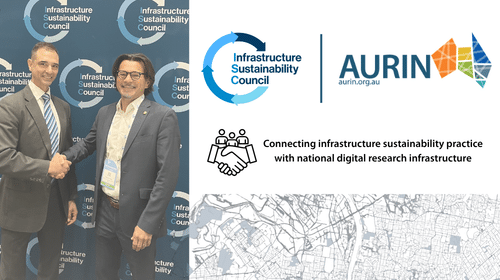
AURIN and Infrastructure Sustainability Council partner to strengthen sustainable infrastructure research impact

We are proud to announce our new partnership with AURIN – to strengthen the connection between sustainable infrastructure practice, academic research and real-world impact. 

The collaboration brings together two organisations working at the intersection of evidence, infrastructure and public value. The ISC works across industry and government to accelerate sustainability outcomes in infrastructure as it is planned, designed, built, and operated, while AURIN provides national research infrastructure that helps researchers and decision-makers access the data, tools and capability needed to address complex urban and regional challenges. 

Through this partnership, AURIN and the ISC are creating new pathways for research to inform better infrastructure planning, investment, delivery and policy. The collaboration supports a shared ambition to ensure that insights from sustainable infrastructure practice contribute to the evidence base needed to respond to national priorities, including climate adaptation, net zero transition, transport, housing, resilience, liveability and social value. 

ISC CEO Toby Kent said the partnership reflects the importance of connecting industry practice with research that supports better outcomes. 

 “Delivering more sustainable infrastructure requires strong collaboration across industry, government and research. By working with AURIN, we are helping create new pathways for sustainability insights to inform research, policy and practice in ways that support better outcomes for people, places and the environment,” Mr Kent said.

AURIN Director Professor Pascal Perez said the partnership strengthens AURIN’s role in enabling research that responds to real-world national challenges. 

“AURIN is focused on connecting researchers with the evidence and capability needed to address complex urban and regional challenges. This partnership with the ISC strengthens the bridge between infrastructure sustainability practice and research impact, supporting better-informed decisions for industry, government and communities,” Professor Perez said. 

The partnership will support academic and applied research that is more closely connected to the needs of industry, government and communities. By linking infrastructure sustainability expertise with research infrastructure capability, the collaboration will help generate insights that support more informed decisions and stronger outcomes for people, places and the environment. 

This announcement marks the beginning of a broader collaboration between AURIN and the ISC. We will now work together to shape the research access pathway and identify opportunities for future insights, research and impact. 

We look forward to sharing more as the partnership develops. 

S4E5 – Great Leaders Care w/ Graeme Cowan

Description:

How do great leaders show care, encourage teams struggling through tough times, and boost performance?

We invited Graeme Cowan to speak at our IS Connect 26 Brisbane Leadership Breakfast. Graeme is the Founding Director of R U OK? and host of The Caring CEO podcast. He is also the author of the book Great Leaders Care.

Graeme shared his knowledge gained from 20 years helping leaders build resilient teams where care and high performance thrive together.

He shared the Great Leaders Care mindset: “Self-care isn’t selfish, it’s the foundation. Fill your own tank first, and you become far better at spotting and supporting the people around you who are struggling. Crew care is about building psychologically safe and resilient teams. And red zone care is having the confidence to identify and support someone who is struggling.”

“Construction carries some of the highest rates of psychological injury and suicide in Australia. Not soft care. Strong care.”

Digital Infrastructure Futures – Phase 1 Emerging Insights Report

The way we plan, build, and operate the assets that underpin our communities, economy, and environment is being reshaped by digital technologies at a pace few could have anticipated just a few years ago. Connectivity, data, sensing, and artificial intelligence are no longer emerging concepts, but common enablers transforming how infrastructure delivers value today.

For the Infrastructure Sustainability Council (ISC), this moment calls for clarity and leadership. Our 2030 strategy reaffirms our purpose: enabling connected infrastructure that supports people to thrive on a healthy planet. That word ‘connected’ matters. It speaks to the role digital infrastructure plays in making our built environment more intelligent, more responsive, and more sustainable. It is a challenge we must meet head-on.

This interim report represents the first step in that effort. This is a working document shaped by the insights of ISC members, industry leaders, and practitioners who have engaged generously with this process. Their perspectives are at the heart of what follows, and their continued input will inform our recommendations to the sector, and ISC’s own actions in the exciting world of digital infrastructure.

We are grateful to the sponsors that have made this initial work possible: Honeywell, Jacobs, and Sydney Water. Their support reflects a shared commitment to getting digital infrastructure right for our industry, and the communities and ecosystems we all serve.

Click here to read the report

Award Winners – 2026 Annual Gala Awards

Winners announced for the 2026 Infrastructure Sustainability Council Awards

The Infrastructure Sustainability Council (ISC) is proud to announce the winners of the 2026 ISC Awards, revealed at the gala dinner during IS Connect 2026, the industry’s premier event celebrating leadership, innovation and excellence in sustainable infrastructure.

The ISC Awards recognise outstanding contributions from across the infrastructure lifecycle – from policy and investment leadership to delivery, innovation and individual impact – highlighting the breadth of commitment to sustainability across the sector. ISC Chief Executive Officer Toby Kent said the calibre and scale of this year’s entries reflects the rapid evolution of sustainability and resilience across the infrastructure sector. ‘This year’s record number of submissions demonstrates that sustainability – and critically,resilience – are no longer aspirational concepts. They are embedded in how infrastructure is planned, delivered and operated across Australia and New Zealand.’

‘Our award winners are not only delivering outstanding projects and initiatives, they are setting new benchmarks for resilient infrastructure – assets that can withstand shocks, adapt to change, and continue to deliver lasting value for communities, the environment and the economy.’

INDUSTRY IMPACT

Proponents, Policy & Investors
Winner: Victorian Infrastructure Delivery Authority (ecologiQ)

Delivery Partners
Winner: Puma Energy (Bitumen)
Highly Commended: United Civil Construction & Meridian Energy

Supply Solutions
Winner: Infrabuild
Highly Commended: Holcim

Knowledge & Network
Winner: Sustainable Built Environment National Research Centre (SBEnrc), Australia

INDIVIDUAL CONTRIBUTION TO A SUSTAINABLE FUTURE

Emerging Leader
Winner: Devduni Chandraratne, Sustainability Engineer, Webuild
Highly Commended:
• Michael O’Grady – Project Environmental Manager, BMD Group
• Julia Rogerson, Senior Sustainability Advisor, Antithesis

Enduring Impact
Winner: Ken Lunty, Technical Director – Sustainability, Arcadis
Highly Commended: Walentina Gonzalez, Sustainability Lead, ACCIONA

PROJECT EXCELLENCE AWARDS

Excellence in Economic Outcomes
Winner: Fitzroy to Gladstone Pipeline (Gladstone Area Water Board and McConnell
Dowell BMD Joint Venture)

Excellence in Governance Outcomes
Joint Winners:
• Suburban Rail Loop East – Tunnels South (Suburban Connect – CPB Contractors,
ACCIONA and Ghella)
• Metro Trains Melbourne (Leveraging Governance for Innovation and Continuous
Environmental Improvement in Rail Operations)

Excellence in Social Outcomes
Winner: Canterbury Hospital Child and Family Waiting Room Update / BAC & SWM3 –
Sydney Metro City and South West (John Holland & Laing O’Rourke JV)
Highly Commended: Fitzroy to Gladstone Pipeline (Gladstone Area Water Board and
McConnell Dowell BMD JV)

Excellence in Environmental Outcomes
Winner: Te Ara Tupua (Te Ara Tupua Alliance – NZTA (Waka Kotahi), Tonkin + Taylor,
Downer NZ, HEB Construction, Taranaki Whānui ki Te Upoko o Te Ika and Ngāti Toa
Rangatira)

OUTSTANDING ACHIEVEMENT – IS RATING SCHEME

Winner: METRONET Morley-Ellenbrook Line Project
MELconnx Alliance, a partnership between Laing O’Rourke and the Public Transport
Authority of Western Australia

With more than 100 submissions received – the highest in ISC Award history – the 2026 ISC Awards reflect a growing commitment across the infrastructure sector to deliver measurable sustainability outcomes.

‘What stands out this year is the depth of innovation – particularly in how organisations are embedding resilience alongside sustainability,’ CEO Toby Kent said.

‘From climate adaptation and circular economy solutions to stronger social outcomes, these projects show how infrastructure can be designed to endure, evolve and support communities through future challenges.’

The ISC congratulates all finalists and winners for their leadership and dedication to
advancing sustainability practices across planning, design, construction and operations.

The ISC extends its sincere thanks to:
• Ventia, the ISC Connect Gala Dinner and Awards Event Partner, for their valued support
• Awards Chair, Marko Misko (HWL Ebsworth Lawyers), for ensuring a fair, rigorous and transparent judging process
• The panel of independent judges, for their expertise and careful consideration
• All applicants, whose record number of entries reflects the strength and maturity of the sector
• All finalists, for their outstanding contributions
• The ISC Board and members, for their ongoing leadership and commitment
• The ISC team, whose dedication and professionalism made ISC Connect 2026 and the Awards program a success.