6 - 2025 - ISCouncil

S2E1 – Material Circularity Indicators w/ Steve Porter

Description:

Welcome back to Infrastructure Connections, the podcast where we explore what makes sustainable infrastructure work, brought to you by the Infrastructure Sustainability Council. I’m your host, Seth Scott. And hooray! We made it into Season 2.

This season we’re exploring Circularity and the role it plays in infrastructure. What better way to start off than by looking at the circularity metrics of steel, a product that is virtually 100% recyclable. Nearly half of all steel is used in the infrastructure and construction industry, things like bridge beams and reinforcing bars and mesh, and much of the rest is used on what uses infrastructure, the planes, trains and automobiles. So today we’ll be talking about steel with Steve Porter of Infrabuild.

Steve is Head of Sustainability, Innovation & Trade at InfraBuild Australia, Australia’s largest integrated manufacturer and supplier of steel long products. He’s spent most of his career as a General Manager in the steel industry, and he is committed to shaping a sustainable, low-carbon future in energy intensive environments. We discuss circularity initiatives in the steel industry, initiatives like the Electric Arc Furnace which allows phenomenal recycling of scrap metal using renewable energy. We also look at how Material Circularity Indicators (MCI) can enhance EPDs for customers.

For even more information, InfraBuild collaborated on the ISC Impact Notes on the Circular Economy, which you can find here: https://www.iscouncil.org/wp-content/uploads/2024/02/Circular-Economy-Impact-Note_Final-for-Publication.pdf

ISC Member Update from the CEO – June 2025

Industry Insights and Reflections from Australia, New Zealand and Beyond 

Earlier this year, S&P Global published their report on how organisations can advance their sustainability strategies while navigating an increasingly fragmented world – highlighting the need to focus on measurable impact, cross sector collaboration and innovation solutions. The ten megatrends identified reflect very much our mid-year context: 

  1. A challenging new policy landscape and continued geopolitical uncertainty. 
  2. The clean energy transition struggling between policy and market forces. 
  3. Worsening climate hazards alongside more stringent disclosure standards shining a light on adaptation. 
  4. A recognised large climate finance gap – alongside practical solutions which may drive private mobilisation. 
  5. Global carbon markets gaining momentum. 
  6. Companies, policymakers and other stakeholders taking more concrete measures to tackle nature in tandem with climate. 
  7. An increased pressure on sustainable supply chain management practices. 
  8. Tension over what constitutes a just and equitable energy transition and who pays. 
  9. The need to balance AI’s energy use against its utility as a climate tool. 
  10. Push for consistent and comparable sustainability reporting alongside concerns about heavier reporting burdens for companies. 

Focus on Workforce 

Workforce is a core element of the Social Agenda in the infrastructure and sustainability sectors. One which the ISC has increased focus on in our rating tools, our capability building work and our external programs.  

The recent WEF Future of Jobs Report (2025) highlights how the above global megatrends – individually and in combination – are among the major drivers expected to shape and transform the labour market by 2030.  Report themes relevant to infrastructure sustainability include: 

  • Green infrastructure is a top priority, driven by climate change mitigation efforts and the push toward net-zero emissions. The report signals significant job growth in areas such as renewable energy, energy efficiency, and sustainable construction practices. 
  • Smart and sustainable energy systems—including renewable energy, energy storage, and grid modernisation—are reshaping infrastructure development and job demand. 
  • Digital infrastructure expansion (e.g., broadband, data centres, smart cities) is essential for enabling sustainable practices and remote work, reducing urban congestion and emissions, whilst also presenting related sustainability challenges, e.g energy water use. 
  • Environmental stewardship and green skills are among the fastest-growing competencies, reflecting the integration of sustainability into infrastructure planning and operations. 
  • Public and private investment is increasingly directed toward sustainable infrastructure projects, such as green buildings, clean transport, and circular economy systems. Goals in infrastructure sustainability will likely require strategic collaboration and partnerships between governments, private sector stakeholders, and communities.  
  • Workforce reskilling is critical, as demand for roles like sustainability specialists, environmental engineers, and green construction experts outpaces supply. ‘Over 39% of workers’ core skills are expected to change’ – with analytical thinking, creativity, and technological literacy becoming critical. The need for leadership in managing interdisciplinary, cross-functional teams will grow as sustainability becomes integral to project delivery. 
  • AI and automation are being leveraged to optimise infrastructure efficiency, reduce waste, and support predictive maintenance in sustainable systems. Increased adoption of AI and ‘Big Data’ will influence how projects are planned, executed and operated. 
  • Social Equity & workforce inclusion – potential for workforce displacement with increasing adoption of automation & technological changes. Raising the question for sustainability leaders, what are the social impacts to an equitable transition. 

City Rail Link (CRL) Social Outcomes 

City Rail Link, a major Auckland IS rated metro project, has made positive social impacts through training, employment, social innovation and supporting the future workforce. As the project nears completion, CRL has released the City Rail Link Social Procurement Case Study which shares their approach to social procurement, and highlights positive impacts experienced by Māori and Pasifika businesses, the reality of the challenges, insights for future tenders and stories from six of the 83 Māori and Pasifika businesses contracted. 

Some of ISC’s workforce initiatives:  

Other recent insights – finance, nature, circularity and AI 

The Australian Sustainable Finance Action Plan 2025-2027 sets out 26 priority actions for the next three years to support reduced emissions, climate resilience, protecting and restoring nature, First Nations economic self-determination and financial inclusion and community resilience. Listen here to Kristy Graham on our Infrastructure Connections podcast to learn more. 

A recent BCG report, Landing the Economic Case for Climate Action with Decision Makers, sets out the economic case for climate action—and how we can make it influence decisions today. 

The Growing Resilience report from WRI and the World Bank developed in collaboration with the African Development Bank, demonstrates how projects rooted in nature-based solutions are gaining momentum in sub-Saharan Africa. 

BSI has released a new standard for nature inclusive marine structures. PAS 1401:2025 covers how to plan, design, install, monitor and decommission marine structures to include nature-inclusive design, thus promoting biodiversity and resilient ecosystems. 

Resource use and waste generation in Aotearoa New Zealand: filling (some) gaps has been published by the Parliamentary Commissioner for the Environment, including challenges and opportunities for the infrastructure sector. It highlights that food, housing, infrastructure and mobility account for 72% of overall natural resource use. Around 60% of the resources consumed in New Zealand were extracted overseas and imported, and data suggests this trend has increased over recent decades. 

ABC News article (May 20), AI is driving data centre growth — and it’s bringing environmental challenges, highlights the projected growth of data centres driven by AI, and the associated challenges relates to energy and water use. More action needed here. 
Perth Airport: Championing Sustainability in Aviation Infrastructure

Overview

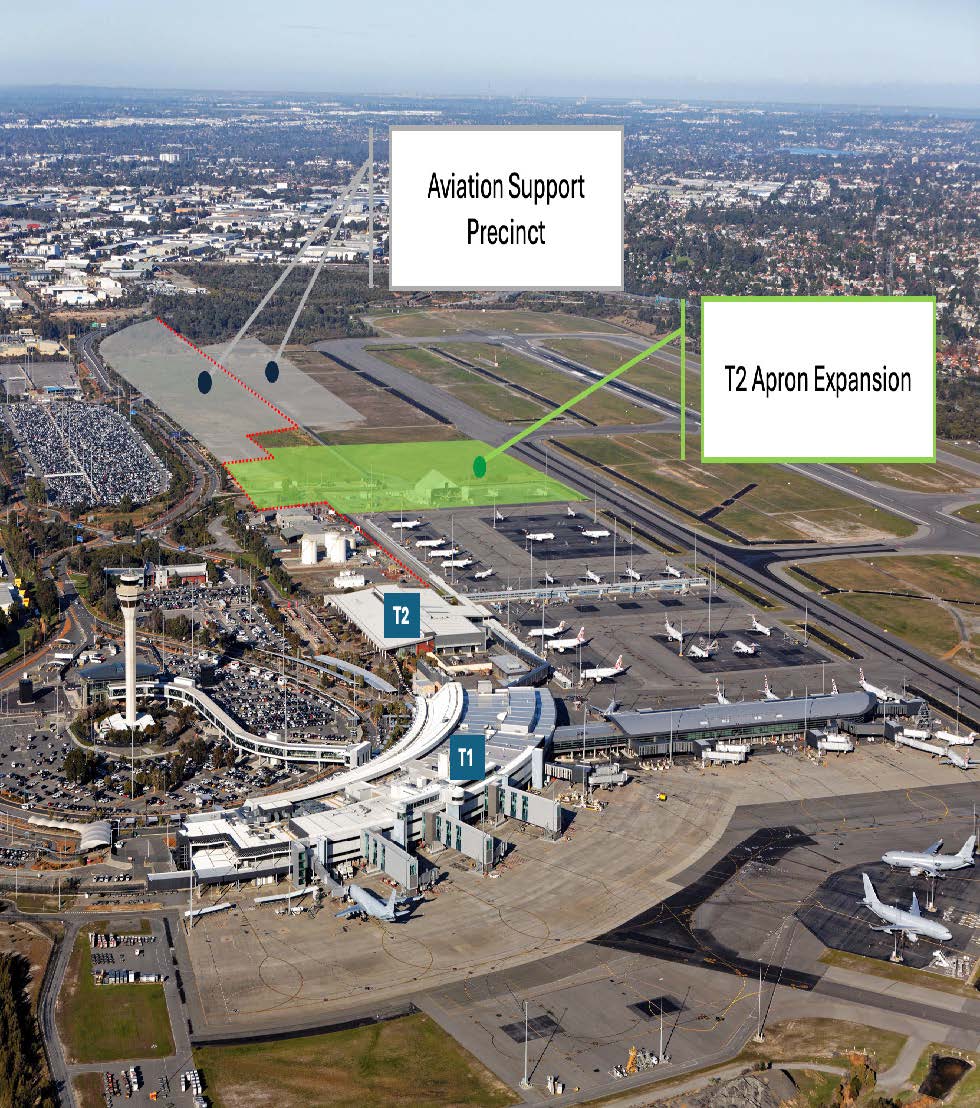
Perth Airport’s Terminal 2 Apron Expansion and Aviation Support Precinct (ASP) project had a focus on delivering sustainable aviation infrastructure. This notable initiative marks a significant milestone as the first Australian airport project to earn an Infrastructure Sustainability (IS) Essentials Design Rating. This achievement highlights Perth Airport’s commitment to sustainability and resource efficiency, and the standards of its property development business, Skyfields by Perth Airport.

Project at a Glance

  • Name: Perth Airport Aviation Support Precinct and Terminal 2 Apron Expansion
  • Owner: Perth Airport Pty Ltd
  • Delivery partners: GHD Pty Ltd, West Coast Civil
  • Scope: Expansion of Terminal 2 apron for increased aircraft parking, new gatehouse, associated roads, and Aviation Support Precinct
  • Timeline: Commenced May 2023, completion expected May 2025
  • IS Rating: IS Essentials Design Rating (IS v2.1): Bronze

Enhancing the Airport’s Capacity and Efficiency

Perth Airport is undergoing a major transformation, consolidating all commercial air services into a unified Central Airport Precinct, enhancing efficiency, reducing costs, and improving the passenger experience. The new Aviation Support Precinct delivered by Skyfields will house essential services like in-flight catering, aircraft and equipment maintenance, and freight facilities. The Terminal 2 apron expansion will also boost aircraft parking capacity to meet growing demand from regional and resource-based charter operations.


To view the full case study, click here.

ISC appoints Kris Fumberger as its Executive Director of Product Solutions

ISC is delighted to announce the appointment of Kris Fumberger as its new Executive Director of Product Solutions. This new role for the ISC has been created to elevate ISC’s infrastructure ratings and associated offerings and to lead the digital transformation of the business.

Commencing 1 July 2025, Kris joins ISC from the advisory firm, Ricardo. He brings over 20 years of leadership across sustainability, ESG advisory, and digital product innovation. Kris has a strong track record of delivering measurable environmental impact, influencing strategy at senior levels, and scaling sustainability initiatives that shape industries.

At RightShip, Kris led the transformation of the organisation from a safety-first model to an ESG-centric digital platform, building award-winning climate tools such as the GHG Rating and Maritime Emissions Portal. The GHG Rating portal, used by over 180 entities globally, was developed to provide a sustainability rating for as-built ships in a similar way to the IS Rating Scheme.

More recently, at Ricardo and ANZ Bank, Kris developed sectoral decarbonisation pathways, managed climate disclosures in line with TCFD and ISSB, and advised on ESG risks and opportunities for infrastructure, water, and energy clients across Australasia.

Toby Kent, CEO of ISC, says: “This is a critical appointment for the ISC at a pivotal moment in our organisation’s evolution. I am delighted that we have secured someone with Kris’s experience and pedigree to drive the enhancements to our offerings that we need to bring to market. Kris is both commercially minded and personable and I think our members and team will respond really well to his leadership.”

Jeremy Stone, Deputy Chair of ISC, says: “ISC has much to be proud of and a terrific legacy to build on. The appointment of Kris, in particular, and other changes at ISC are setting us up for a really strong future.”

Kris Fumberger says: “What excites me most about this opportunity is ISC’s influence in shaping infrastructure outcomes that align with global sustainability goals. I see immense potential in further digitising and scaling the IS Rating Scheme, drawing on my experience in product leadership and stakeholder engagement to unlock new insights from data, develop complementary offerings, and enhance member value.”


Djarindjin–Lombadina Water Treatment Plant  Upgrade: Sustainable Infrastructure for Healthy Country

The Djarindjin and Lombadina communities on Western Australia’s Dampier Peninsula have long faced challenges in accessing safe, reliable drinking water. Previously reliant on a diesel-powered system, both communities will benefit from a planned upgrade that combines essential infrastructure with cultural respect, community development, and environmental responsibility.

As the first pilot of the IS Essentials rating on a remote water asset, the Djarindjin–Lombadina Water Treatment Plant Upgrade has demonstrated that sustainability is achievable at any scale. Led by Water Corporation WA, this project demonstrates how small-scale regional infrastructure can deliver lasting outcomes for people and Country.

Project at a Glance

  • Name: Djarindjin–Lombadina Water Treatment Upgrade
  • Owner: Water Corporation WA
  • Delivery Partners: GHD (Design), Kimberley Regional Service Providers (Operations)
  • Scope: 3 new bores, raw water transfer main, solar-powered water treatment plant,  1.26 ML storage tank and gravity main to existing town infrastructure
  • Timeline: Start 2022, est. completion 2026
  • IS Rating: IS Essentials Design – Bronze
  • Population Served: ≈ 390 residents

Why an IS Essential Rating Was Pursued 

Water Corporation chose the IS Essentials Design & As Built pathway to:

  • Drive and be able to quantify sustainability benefits often overlooked in smaller remote projects.
  • Build in-house capability for delivery of IS Ratings using a hybrid delivery model: Water Corporation led delivery of the governance, economic and legacy IS Rating credits while GHD focused on the water use, resource efficiency and energy credits.
  • Contribute  feedback to help refine and shape the final version of the IS Essentials Rating Scheme from a water industry perspective


To view the full case study, click here.

Water Case Study Webinar

This information session explores how the IS Rating Scheme supports sustainable outcomes in water infrastructure projects. It features two leading case studies that highlight innovation, resilience, and community impact.

1. Malabar Biomethane Project
Presented by Jarad McInnes, this pioneering initiative by Zinfra and Sydney Water is Australia’s first project to inject biomethane into the gas network. By converting biogas from wastewater into a renewable energy source, it exemplifies circular economy principles and sustainability embedded from design through to operation.

2. Djarindjin-Lombadina Water Treatment Upgrade
Presented by Anita Kilibarda, this project modernizes critical water infrastructure for remote Aboriginal communities in Western Australia. It ensures long-term water security, improves service reliability, and demonstrates how culturally sensitive, sustainable infrastructure can support community wellbeing.

Case Study

The session also includes a brief insight into Nature Positive solutions, emphasizing the importance of enhancing biodiversity and natural ecosystems through water infrastructure planning.

Access the presentation slides here

Click the link below to watch the full recording:

https://youtu.be/K6JP7mLxXFc

IS for Future Executives

The sustainability challenges we face today demand leaders who can do more than advise — they must influence. Whether you’re aiming for the C-suite or already there, strategic leadership requires more than technical expertise. In this webinar, we explored three key mindset shifts needed to succeed in executive roles — watch the recording below to discover how to make sustainability central to business leadership.
Presentation here
Webinar recording – here