11 - 2021 - ISCouncil

New chair for Infrastructure Sustainability Council

The Board of Directors of the Infrastructure Sustainability Council has announced the appointment of Deborah Spring as the Chair Elect. Ms Spring will succeed Alison Rowe who has held the position since November 2018, after serving two terms.

Deeply familiar with driving systemic industry change, Ms Spring is an independent director and the Chief Executive Officer of the Rail Industry Safety and Standards Board and chaired its Board for six years.

A mechanical engineer with an MBA from Harvard Business School, Ms Spring has 15-plus years’ experience as a professional director. Her extensive governance experience extends to unlisted companies, government businesses and start-ups, with expertise across the infrastructure, transport, logistics and e-commerce sectors. Her passionate is seated in business transformation underpinned by disruptive technologies.

Ms Spring has held senior executive positions with TasRail, National Rail and Australia Post. As Chair of the Rail Industry Safety and Standards Board, Ms Spring elevated the organisation’s brand recognition and industry profile. She was chair of the prestigious Banksia Foundation for three years through a period of double-digit growth.

“Deborah’s extensive board experience, strong track record in business transformation and deep connections across infrastructure made her a perfect fit for the role of Chair as we accelerate toward a resilient, inclusive and net-zero future.,” said outgoing ISC Chair, Alison Rowe.

As director and chair of the governance committee of the largest tertiary education provider in northern Victoria – the Goulburn Ovens Institute of TAFE – Ms Spring understands the importance of strategic investment in capacity and capability to deliver sectoral advancement.

“The ISC has a strong reputation for driving best practice and enabling significant intergenerational change. I am delighted to be joining an organisation set to soar, with an expanding and loyal membership. I look forward to industry continuing to be energised, skilled and connected. And importantly, standing proudly together backing our position as global leaders in sustainable infrastructure,” said Deborah Spring

Chief Executive Officer, Ainsley Simpson paid tribute to outgoing Chair Alison Rowe.

“Alison has been a fierce champion of sustainability and has driven the Council’s strategy development and governance transformation over the last three years. She led with an inclusive transparent approach through a period of great uncertainty, into a period of positive growth and acceleration of collaborative outcomes.

Ms Spring will commence the role on 1 January 2022.


Media contact:

Karen Jamal karen@kjcommunications.com or 0412 179 135


About Infrastructure Sustainability Council

The Infrastructure Sustainability Council is Australia and New Zealand’s authority on sustainable infrastructure projects and assets. The IS Council’s purpose is to ensure all infrastructure delivers cultural, social, environmental and economic benefits. The Council works with more than 20 federal, state and local government departments in Australia and New Zealand. The Infrastructure Sustainability (IS) rating scheme is mandated by delivery agencies and asset operators across Australia and New Zealand with more than $200 billion infrastructure projects undertaking ratings. The Council represents 200-plus individual companies, departments and associations with a combined annual turnover of more than $50 billion. For more information, contact the IS Council on  info@iscouncil.org or visit www.iscouncil.org
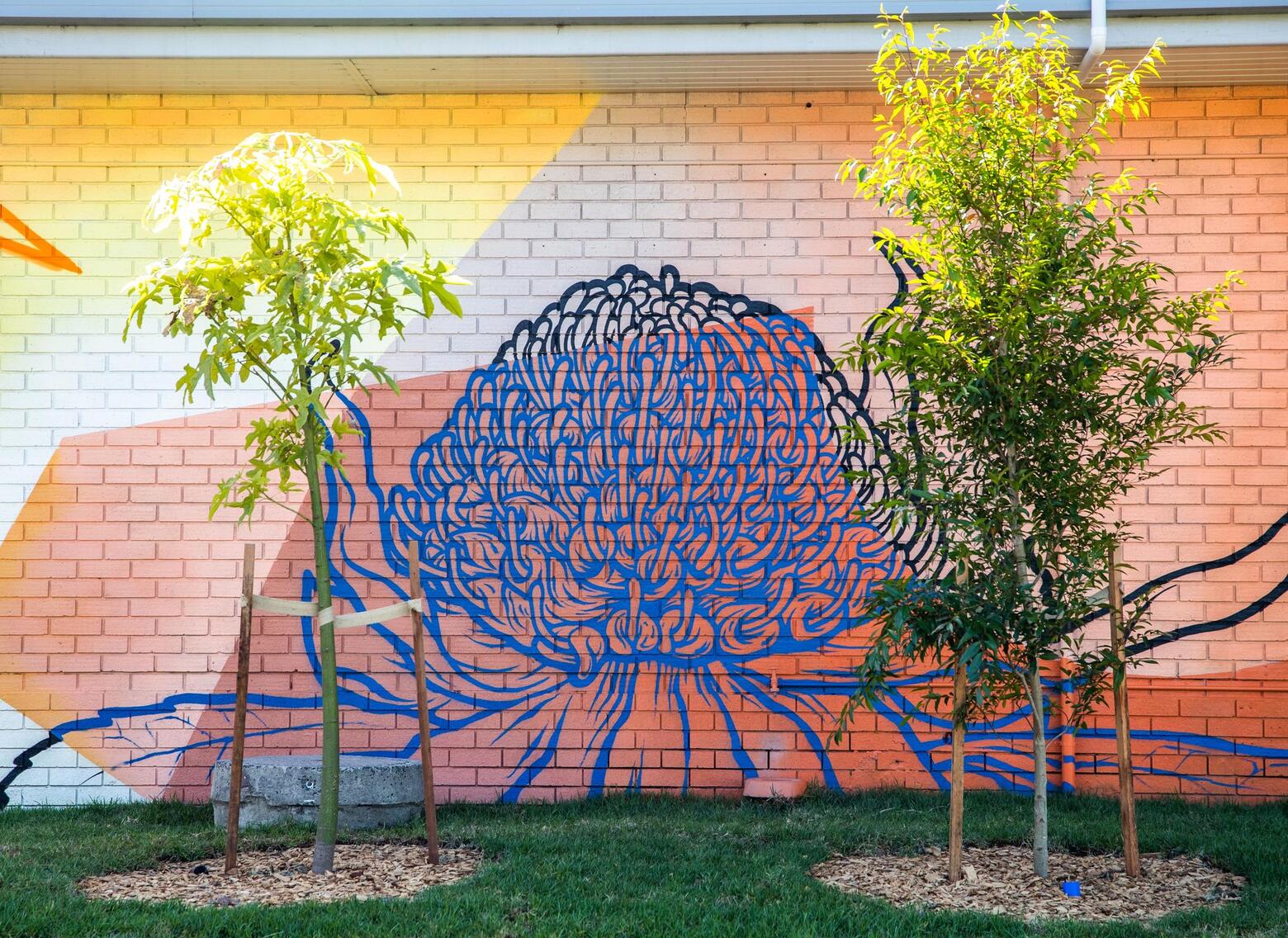
Jacobs: Waratah and Wyee stations upgrade

 BUILDING PATHWAYS TO A SUSTAINABLE, DECARBONISED WORLD 

Our biggest opportunity to reduce carbon emission, affect climate change and leave both the planet and society better than they are today, is through the work we perform for our clients. 

In 2021, the world’s attention remains focused on climate change, with the United Nations describing it as a ‘make or break year’ for action. To deliver the carbon emissions reductions required to keep global temperature rise below the 1.5C threshold, we must reduce carbon emissions and embed sustainable outcomes across industry and society on a global and local scale. 

At Jacobs, we know that our biggest opportunity to reduce carbon emission, affect climate change and leave both the planet and society better than they are today, is through the work we perform for our clients. We are embracing this responsibility and tackling the challenge head on through the major infrastructure projects we are delivering for our clients and the communities they serve. Every project we work on, no matter what size, presents an opportunity to reduce carbon emissions generated from its design and construction and from ongoing operations over the lifetime of the asset. We are actively working with clients to help them achieve their decarbonization goals, manage risk and improve climate resilience. 

Delivered in partnership with Gartner Rose for the NSW Government as part of the Transport Access Program (TAP), the Waratah and Wyee Stations Upgrade projects were great examples of how even small projects can deliver significant sustainability outcomes and contribute to a more climate positive future. The projects were awarded the first ‘Leading’ As Built rating under TAP, achieving numerous positive outcomes for the local environment and community. The project reduced the ongoing energy needs of the two stations by up to 31% and reduced its carbon emissions by 32% (4,367 tCO2e). This was driven by design initiatives including reconfiguring the cooling systems and undertaking cost benefit assessments and market analysis to specify high efficiency cooling systems for station equipment and service rooms. They also achieved a 9% reduction in materials footprint through material saving initiatives and implemented an increase of more than 50% in biodiversity offset requirements across both sites, providing enhanced ecological benefits. Planting was concentrated in the under-utilised space at the front of the stations and, in time, will contribute to cooling the surrounding urban environment. The use of drought-resilient native planting was one of a number of choices made throughout the design process to reduce the future water needs of the stations and deliver a 43% reduction in water use over the lifetime of the asset. 

For many organisations, decarbonising their assets and operations can seem like a daunting and complex task. To help clients navigate the challenge, we recently launched our Net Zero Lab, a collaborative and interactive program where we work with clients to understand their carbon footprint, set emission reduction targets, develop and operationalise decarbonisation strategies and manage performance to bring about lasting change. 


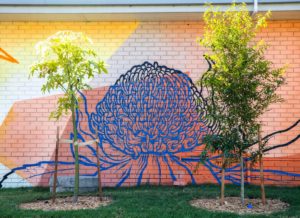
Transport for NSW, with students from nearby Callaghan College and two local artists (Nick Stuart and Bronte Naylor), completed a new artwork at Waratah Station inspired by local flora and fauna. (Image: Waratah Station Upgrade, Transport for NSW, 2021)