The Infrastructure Sustainability Council (ISC) has been supporting the infrastructure industry to drive best practice through the Infrastructure Sustainability Rating Scheme (IS Rating Scheme) since 2012. In this time, the scheme has actively contributed to capacity building and transparently measuring the social, environmental, governance and cultural outcomes delivered by more than $160 billion worth of infrastructure under rating. To help quantify the future benefits the scheme can deliver, ISC engaged RPS to assess the net benefits that IS Ratings provide to Australians. The study used a cost benefit analysis (CBA) or ‘welfare economics’ framework supported by stakeholder engagement. A CBA framework assessed the costs and benefits to all impacted parties within Australia including not only the project proponents, but also the environment, community members and government. Targeted stakeholder engagement added to the robustness and richness of the findings because, consistent with the principles of Social Return on Investment (SROI), this reveals how stakeholders that are actually engaged by the program are affected.
Author: loren.blundell@iscouncil.org
Awards showcase sustainability in infrastructure projects
The infrastructure industry continues to set new benchmarks in sustainability, shown by the exceptional achievements recognised at the Infrastructure Sustainability Council Gala Awards 2022.
Held last night in Sydney, the awards celebrated sustainability best practices across Australia and New Zealand.
Infrastructure Sustainability Council (ISC) is the peak body for infrastructure sustainability, advocating for the delivery of cultural, social, economic and environmental benefits in all infrastructure projects.
Infrastructure Sustainability Council Chief Executive Officer Ainsley Simpson said many organisations recognise this as a crucial time to prioritise sustainable development.
“We’re embarking on a decade of rapid transformation, and our members know that sustainable development is both a responsibility and an opportunity. They are taking action to address challenges and move forward sustainably.”
Infrastructure Sustainability Council Chief Delivery Officer Patrick Hastings congratulated the winners for their outstanding work and the positive outcomes achieved in their communities.
“The projects nominated for this year’s awards demonstrate the industry’s commitment to attracting and retaining a skilled workforce, strengthening communities and managing waste, energy and carbon emissions,” Mr Hastings said.
“The Council received submissions across the 10 categories of awards, each demonstrating innovation and ingenuity to contribute to sustainable development goals.
“These awards show others in the infrastructure industry what is possible.”
The award categories for 2022 recognise organisational and individual achievements across a range of categories, including excellence in social, governance, economic and environmental outcomes, as well as outstanding individual contribution to the sector.
A full list of the award winners and their projects is included overlead.
For further information and images please contact:
Karen Jamal
KJ Communications
0412 179 135
karen@kjcommunications.com
About Infrastructure Sustainability Council
The Infrastructure Sustainability Council is Australia and New Zealand’s authority on sustainable infrastructure projects and assets. The Council’s purpose is to ensure all infrastructure delivers cultural, social, environmental and economic benefits. The Council works with more than 20 federal, state and local government departments in Australia and New Zealand. The Infrastructure Sustainability (IS) rating scheme is mandated by delivery agencies and asset operators across Australia and New Zealand, with more than $200 billion infrastructure projects undertaking ratings. The Council represents 200-plus individual companies, departments and associations with a combined annual turnover of more than $50 billion. For more information, contact the Infrastructure Sustainability Council on info@iscouncil.org or visit www.iscouncil.org
Award summaries
- Excellence in governance outcomes
Victoria’s Major Transport Infrastructure Authority (MTIA) North Western Program Alliance (NWPA) won the Excellence in Governance Outcomes Award for its governance framework, Power of the Program.
The framework provides a foundation for leveraging a rolling program of works to drive sustainability.
It ensures that initiatives viewed as best practices then become standard business practice on subsequent projects. This encourages teams to build on past success with new, step-change advances on every project.
NWPA is committed to reducing greenhouse gas emissions across the lifecycle of projects. Power of the Program is driving outcomes in sustainability metrics, as well as the use of innovative practices. NWPA has saved a total of 76,000 tonnes of emissions across projects completed to date.
Judges were impressed by NWPA’s ambition for best practice governance and embedding lessons in real-time. “This program of work demonstrates the importance of carefully designed governance frameworks to achieve tangible positive outcomes, such as increased efficiencies, innovation and sustainability.”
- Excellence in social outcomes
A joint venture between CPB, BAM Ghella and UGL Joint Venture won the Excellence in Social Outcomes Award. The Tunnel, Station and Development (TSD) package of works for Cross River Rail is Queensland’s largest infrastructure project, requiring scarce specialist underground and civil rail skills.
To support project delivery, the joint venture delivered three training initiatives to address the unique challenges faced by entry-level workers. The initiatives established pathways to employment for disadvantaged and underrepresented groups, upskilled school-based apprentices and provided trainee placements with partnering charities.
Specialist underground training and formal recognition of Certificate III in Rail Infrastructure filled a specialist training gap, helping actively address the national skills shortage.
Judges noted the approach provides multifaceted training to access and engage different workforce sectors. “Building practical workforce skills is a key initiative to fulfilling employment areas with large position vacancies. This initiative taps into a target sector of young people to assist with the national road to recovery.”
- Excellence in environmental outcomes
McConnell Dowell Decmil Join Venture (MCDDJV) with MTIA’s Major Roads Project Victoria won the Excellence in Environmental Outcomes Award for their joint project, the Mordialloc Freeway Project.
The MFP is a 9 km freeway link in Victoria, incorporating interchanges, bridges over wetlands and a shared user path. The project implemented a range of world-first sustainability initiatives in response to Victoria’s waste crisis and shortage of quarry materials, creating ‘Australia’s greenest freeway’.
Thousands of tonnes of otherwise waste material were used to construct noise walls, asphalt pavements, concrete reinforcing mesh and stormwater drainage pipes. This shift to sustainable consumption of materials achieved a 27% reduction in embodied energy.
The judges acknowledged the significant effort in innovating new technologies to divert waste away from landfill. “The focus on reduced truck trips, local sourcing and recycling is a powerful way to improve industry practices. The MFP demonstrates the potential cost benefits of improvised sustainability practices while supporting development and scale-up of local industry.”
- Excellence in economic outcomes
Global energy and infrastructure company, Acciona, won the Excellence in Economic Outcomes Award for its work on Department of Infrastructure and Transport’s NorthHub.
NorthHub is an integrated employment, skills and training centre for northern Adelaide jobseekers and South Australian businesses, including Indigenous businesses. The centre was created in response to job losses and significant economic impact following the closure of the Holden manufacturing plant in Adelaide.
Through training and upskilling at NorthHub, Acciona provided workers with sustainable, long-term employment and transferable construction skills.
Judges noted the demonstrated investment in Indigenous businesses and the targeted opportunities for disadvantaged and displaced automotive workers. “This project is leading the way in local workforce participation. Ninety-one per cent of NorthHub’s project spend went to South Australian businesses and 96.6% of onsite hours were performed by South Australian residents. This creates substantial local industry benefit.”
NorthHub sets a new benchmark in the construction industry for engaging local businesses and employees. This innovative approach has since been adopted by other projects across the country.
- Emerging leader
Rosie Dutton, Sustainability Manager at Acciona, won the Emerging Leader award, recognising her influence and contribution to sustainability outcomes.
Just four years into her infrastructure career, Ms Dutton brings a practical, collaborative approach to her work.
She demonstrates the value of sustainability to others in the industry, helping embed sustainability priorities into projects. This has led to a number of outstanding outcomes, including the successful completion of Infrastructure Sustainability ratings for the Sydney Light Rail project, achieving a score significantly higher than expected due to the challenging nature of the project.
Ms Dutton has a continuous drive to learn and share knowledge with her peers and colleagues. This allows her to influence more experienced colleagues and increase support for new initiatives.
Judges commented on Ms Dutton’s industry experience, noting her practical application of sustainability principles into real actions. “Her legacy ensures sustainability is front of mind in all aspects of the project.”
- Sustainability Champion
Pamela Simpson received the Sustainability Champion Award for fostering a strong sustainability culture and integrating sustainability into infrastructure projects.
As Sustainability Team Lead for the planning phase of the Manuwarra Red Dog Highway Stage 4 project, Ms Simpson was instrumental in driving sustainability across multiple teams and consultancies. The focus of this project was to deliver a new highway that was sustainable, met the needs of the local community and was resilient to extreme weather events.
During the project, Ms Simpson harnessed innovative sustainability solutions, such as mapping the Sustainability Management System against the v2.0 Planning scheme. She also designed the ‘Sustainability Roadmap’, a first-of-its-kind system to manage ISC rating submission.
Judges praised Ms Simpson for actively challenging ‘business as usual’ in the infrastructure sector.
“Through engaging her project team and stakeholders, Ms Simpson changed the mindset around sustainability and leaving a positive legacy.”
Ms Simpson’s project work has raised the profile within Main Roads Western Australia (MRWA) of ‘making sustainability happen’. She is currently working with MRWA to inspire a similar commitment to sustainability in other projects.
- Outstanding individual contribution to the sector
Liz Root won the Outstanding Individual Contribution to the Sector Award for enhancing sustainability and championing social outcomes in the New Zealand construction sector.
Known for her role as Principal Sustainability Advisor on the Auckland City Rail Link (CRL), Liz was an early adopter of the ISC framework and realising social outcomes on a major project.
Ms Root has played an integral role in supporting numerous clients in their sustainability journey, generously sharing her learnings and knowledge with peers and stakeholders.
Ms Root has left an enduring legacy within the CRL team by creating employment and economic outcomes for Māori and Pacific people, youths and disadvantaged workforce groups. She also led a world-first initiative at CRL by partnering with mana whenua to embed te ao Māori into the ISC framework.
Judges commended Ms Root for her lasting contribution to the community, CRL and the broader industry. “The two-fold focus on cultural inclusion and the development of junior colleagues creates a strong sense of legacy.”
- Outstanding achievement – IS operations
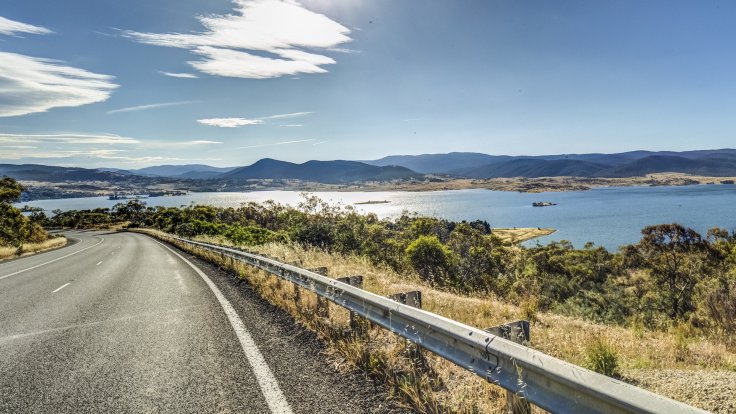
Downer EDI Works won the Outstanding Achievement for Infrastructure Sustainability Operations Award for its North West Tasmania Road Maintenance Contract.
This project delivered base services, minor works and periodic works to maintain the North West State road network in North West Tasmania, including pavement, signage, verge and drainage services.
As part of the project, Downer EDI Works monitored, recorded and modelled fuel and energy use from variable activities, including direct, indirect and value-chain greenhouse gas emissions. This data has been extrapolated to forecast usage across the useful life of the road network.
The project also monitored water consumption, implementing strategies to use non-potable where possible.
Key initiatives to reduce materials included implementing periodic works programs, improving line marking programs and using recycled material within the asphalt.
Downer EDI Works also collaborated with Latrobe Council for works involving a main street and car parking bays, working to minimise impacts to the community and save costs.
- Outstanding achievement – IS design
Arenco (NSW) Pty Ltd won the Outstanding Achievement for Infrastructure Sustainability Design Award for the Rooty Hill Station upgrade and multi-storey car park (NSW).
This project improved accessibility and commuter parking at Rooty Hill Station by installing four new lifts, accessible pedestrian links and car spaces, upgraded family accessible toilets and a new six-storey car park.
Using GreenPower, biofuels and renewable energy technologies, the project achieved a 38.4% energy substitution. An 1140-panel rooftop solar system supplements the power requirement for the car park. Five electric vehicle charging spaces provide EV charging for up to 10 cars, the first system of its kind for Transport for New South Wales.
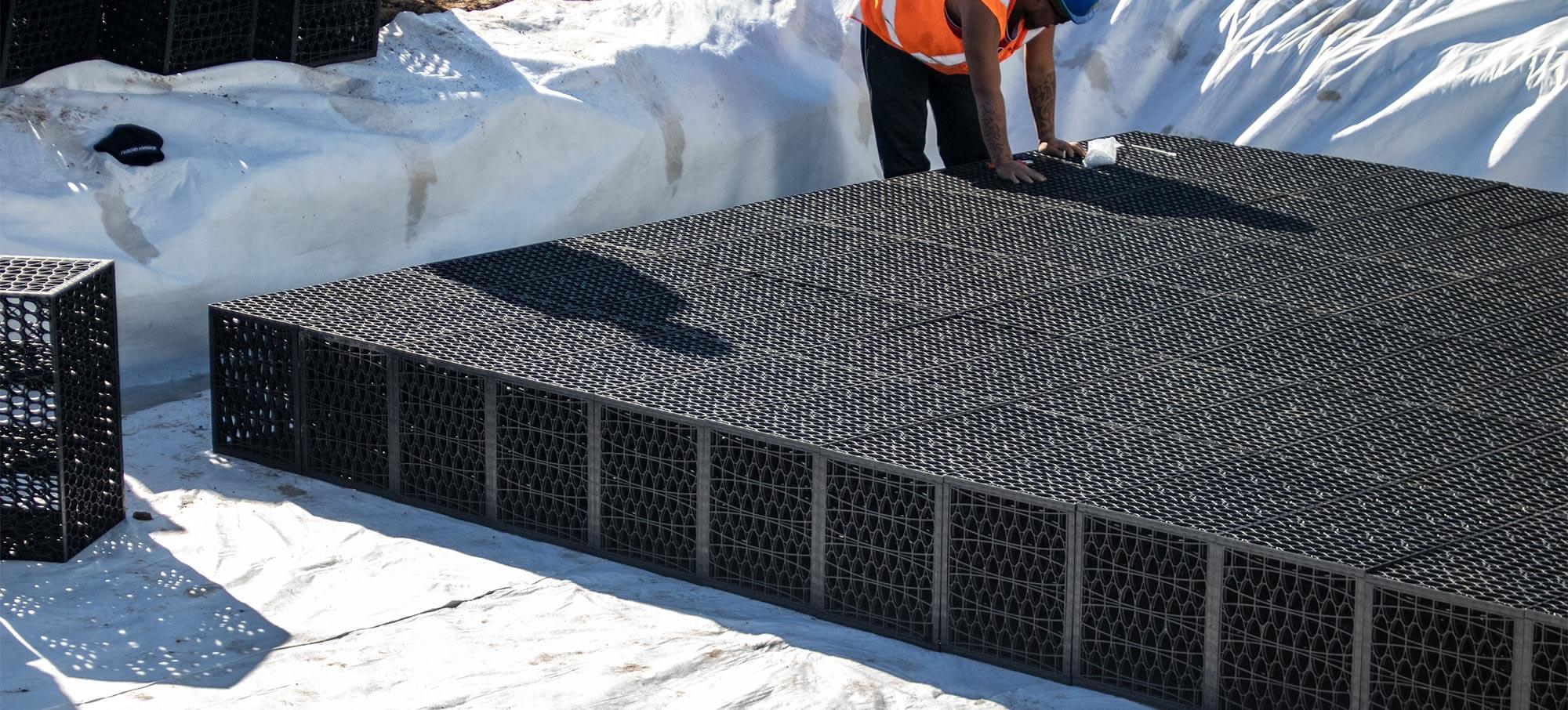
A key innovation for Areco (NSW) Pty Ltd was the customised OSD Filtration System to manage stormwater in the car park. The system simultaneously captures and filters stormwater, allowing it to be reused for landscaping.
- Outstanding achievement – IS As-built
The CTD Alliance (Acciona, CPB, Aurecon, WSP, MTM, LXRP) won the Outstanding Achievement for Infrastructure Sustainability As-Built Award for their work on MTIA’s Caulfield to Dandenong Level Crossing Removal Project.
The project saw Melbourne’s busiest rail line transformed with the construction of an elevated rail solution—a verified Australian first.
To deliver the project, the CTD Alliance removed nine level crossings, rebuilt five stations, upgraded 72 km of rail systems, power and signalling, and extended platforms to support 63 new trains, boosting passenger capacity by 42%.
Key energy reduction initiatives included solar-powered LED markers and ECO mode escalators, reducing overall lifecycle emissions by 55%.
The ecological value of the site was improved by 70% through offset planting of native vegetation, the installation of fauna ladders and the creation of open green spaces. Several innovations were used to reuse and significantly lower the volume of contaminated material taken to landfill.
New Approach needed for infrastructure to lift its weight in the race to reach net-zero
Despite the best of intentions, current approaches to achieving net-zero in the infrastructure sector will only get us so far. A new approach is required if we want to limit global warming to 1.5 degrees.
These are the findings that have come out of the Place-based approach to net-zero report released Thursday by Infrastructure Sustainability Council and Mott MacDonald at the ISC ReConnect Conference.
Infrastructure has a leading role to play in delivering climate action. Infrastructure enables up to 70 per cent of emissions through the way we plan, design, build and use infrastructure assets.
The report calls for a systemic, networked approach to accelerating decarbonization focused on towns, cities and regions rather than just assets, sectors and materials.
‘’The cities and regions in which we live, work and play are as unique and diverse as we are as individuals – no one is the same. The journey to net-zero looks completely different for inner city Melbourne to the Hunter Valley to the South Island of New Zealand,’’ said Ainsley Simpson, CEO of the Infrastructure Sustainability Council.
‘’While we are all working towards a common global goal of positive climate action, how that is delivered from place-to-place needs to be responsive to the specific context, strengths and vulnerabilities of those communities – particularly if we want to leave a lasting positive legacy,’’ she said.
‘’Climate change is a complex crisis that will require a systems-solution. We will only succeed through challenging ourselves to reach beyond the constructs, and silos, of asset class and life cycle stages and work closely with stakeholders and communities to deliver the solutions they need and that they know will work.’’
‘’This is a call-to-action for the infrastructure sector to lead by example, thinking globally, acting locally in the cities and regions which we live, work and play.’’
”Place-based approaches have started to infiltrate our development and infrastructure approaches in Australia and New Zealand, but there is much to learn from international examples that demonstrate successful outcomes towards achieving net zero mandates” said Amanda Sturgeon, Climate Change Practice Lead at Mott MacDonald.
“The true power of a placed based approach is that it unlocks innovation and new potential that would not be evident from a typical top-down approach, such as local business investment and community engagement in net zero solutions,” said Ms Sturgeon.
The report calls for collaborative change across a number of areas including:
- For sustainability and climate action to be a core objective of the infrastructure reform and business case.
- Embedding of quadruple bottom line outcomes in infrastructure planning from earliest possible opportunity.
- Accelerating our transition to more collaborative ways of working through both contracts and culture and commit to putting people and places at the heart of what we do.
- Investing in capability, resources and systems to enable an accelerated transition to net-zero
- Leading with good governance that enables collaborative planning, delivery and decision-making across every town, city and region.
One of the first actions undertaken by the ISC will be to convene an ISC Member Coalition of committed infrastructure leaders to drive this approach forward, with a view to pilot placed-based practices across Australia and New Zealand.
Please find a full version of the report by clicking here.
For further information please contact:
Infrastructure Sustainability Council
Laura Harkins-Small
Head of Advocacy
Mott MacDonald
Amanda Sturgeon,
Regenerative Design Lead
ISC report calls for industry shake up to deliver infrastructure for people, by people
Industry fragmentation, subjective decision-making, risk aversion and sectoral capacity are all key barriers to realising world-class infrastructure performance in a report joint launched by the Infrastructure Sustainability council and Urbis on Wednesday.
Advance our nations, fair – world-class infrastructure for thriving nations explores the relationship between world-class infrastructure and thriving nations, with new opportunities identified that deliver investment returns for all beneficiaries, ecosystems and economies.
‘’Infrastructure is instrumental in building resilience and helping us drive and reinforce positive change,’’ said ISC CEO Ainsley Simpson.
“The infrastructure sector is key to addressing some of the major challenges of our time whether it is climate change, addressing inequality or riding the wave of the technology disruption,’’ said Ms Simpson.
“We will only be able to do this with a new order of leadership – purpose needs to be at the core; with our new drivers being progress, partnership and people,’’
“In this coming decade, competition does not take the form of organisations; but the ticking clock of climate change and rising inequality – we just need to recognise we do have a shared vision and that we are all on the same team,’’
“Competitive advantage will not be defined by IP, rather by the speed at which innovations are shared to reduce the learning curve for others,” she said.
Urbis Future State Director Kate Meyrick says we’ve lost sight of infrastructure’s purpose – to rightfully serve the people it exists for.
“Infrastructure is all about hope – it’s about solving problems and enabling opportunities. If we want to be a better ancestor for future generations then we need to take a more restorative approach and make far bolder decisions today.” said Ms Meyrick.
“A critical factor in making progress and achieving any success will be working together. We need to start joining the dots and engage a place-based collaborative approach,”
“First, we must understand that infrastructure is the essential platform for realising long-term accomplishment. With collective input, we will make real progress by sharing local and global learnings, systems, and achievements. Only then will we truly achieve infrastructure’s purpose of driving social progress, quality of life, resilience and productivity in our communities, cities, regions and nations,” said Ms Meyrick
The report calls for collaborative reform across eight key areas including:
- AN INDUSTRY UNITED BY ITS DECLARED PURPOSE – Driving change from within underpinned by a cultural shift from monopolistic to a common-good approach.
- KNOWLEDGE AND CAPACITY BUILDING – To build the expertise of the sector, accelerate the sharing of new ideas that drive service level innovation.
- CODIFYING EXCELLENCE – Setting out the standards of world-class infrastructure to clarify expectations; ensuring alignment with relevant international rating
- A ROBUST DATA PLATFORM – Combining the longitudinal and real-time information required to drive evidence-based decision-making. Underpinning transparent prioritisation and business case development.
- A FULLY INTEGRATED INFRASTRUCTURE MODEL – Driving change from within underpinned by a cultural shift from a monopolistic to a common good approach.
- PLACE-BASED, CREATING INTERGENERATIONAL VALUE – Clearly solving for a defined problem and generating new opportunity through more enlightened delivery models grounded in conversations with the end user.
- PROCUREMENT BASED ON MULTI-DIMENSIONAL VALUE – Capturing all positive externalities and addressing negative impacts. Embedding resilience and demonstrating the highest and best use of funds.
- FUNDING SECURITY – Depoliticising funding and increasing certainty, connecting funding to outcomes overtime. Leveraging new forms of finance instrument to meet the burgeoning cost of transformational infrastructure.
The Infrastructure Sustainability Council will be assembling a Coalition of their members to review the report and collaborate across industry to drive this agenda forward.
Please find a full version of the report by clicking here
For further information please contact:
Infrastructure Sustainability Council
Laura Harkins-Small
Head of Advocacy
Urbis
Kate Meyrick
Director Future State
Industry set to step up to the challenge of decarbonisation of transport in Australia
A month after the COP26, three key transport peak bodies, the Infrastructure Sustainability Council (ISC), Roads Australia (RA) and the Australasian Railway Association (ARA) have reconfirmed their commitment to work in partnership to help industry lead decarbonisation of the transport sector.
The commitment will be supported by a research report to be released early next year which will provide recommendations government and industry can adopt to accelerate decarbonisation in the transport sector based on local and global leading practice.
The three peak bodies have been working together on the joint research project, which is nearing its final stages and will be key to providing a road map to for the transport sector to lead efforts reduce emissions across the sector to support the achievement of net zero by 2050.
The study, being undertaken by KPMG, is expected to recommend a series of actions to support a focus on place, drive emissions reduction, support investment in renewables and EV infrastructure, and promote engagement and collaboration across the transport asset lifecycle.
The recommendations have been informed by engagement with industry to identify the challenges and opportunities facing the transport sector.
It will build on November’s COP26 commitments to transition to zero emissions vehicles around the world and support the Breakthrough Agenda to promote collaboration on clean and sustainable solutions before the end of the decade.
RA Chief Executive Officer Michael Kilgariff said, “COP26 has unquestionably built further momentum for decarbonisation across the transport sector. This study will highlight opportunities for our industry to coalesce around the type of practical actions that will deliver meaningful and sustained change.”
ARA Chief Executive Officer Caroline Wilkie said, “There is a huge opportunity for the transport sector to be a driving force in achieving our net zero future. This report will help set the agenda for industry to work together to deliver tangible and positive change for the long term.”
ISC Chief Executive Officer Ainsley Simpson said, “Climate action is a shared responsibility that no one organisation or stakeholder group can solve alone – it is going to require a truly collaborative approach focussed on impact for people, planet and the economy. We are excited by this pioneering partnership with ARA, RA and ISC bringing together a network of shared members to lead our industry to transition. We welcome and encourage others to join us on this journey,’’
The joint research project was launched in September with the support of report sponsor Arup, a firm committed to accelerating reduction in carbon emissions and creating effective sustainability outcomes for their clients.
The report, which will feature a range of local and international case studies highlighting the opportunity for more sustainable approaches across the transport sector.
The report is expected to be released early next year and will be followed by a Spotlight on Sustainability event that will expand on the themes and opportunities identified.
ANZ infrastructure industry well-positioned to meet 2030 benchmarks and achieve net zero by 2050
In a first-time collaboration Autodesk (NASDAQ: ADSK), Australian Constructors Association, Consult Australia and the Infrastructure Sustainability Council have released a joint report to support industry in accelerating a net zero future through the design and construction of the infrastructure pipeline.
The report, A net-zero future delivered through our infrastructure pipeline, signals that a whole-of-business, systems-based approach across asset lifecycles is required to accelerate the journey to net zero. This includes pulling key levers such as procurement, materials, methodologies, technology and people capability.
Jon Davies, Chief Executive Officer, Australian Constructors Association said, “The record investment in infrastructure creates opportunities for the construction industry to be part of the solution to net zero.
“We all have a role to play, and it must be performed in partnership. The report sets out the options and enablers for government and industry to use in mapping the path to low-carbon, climate-resilient infrastructure,” said Mr Davies.
Although the industry has a significant footprint it has already started to demonstrate the influence it can have on the reduction of emissions said Ainsley Simpson, CEO, Infrastructure Sustainability Council.
“The 24 As-Built Projects certified over the last four years by the Infrastructure Sustainability Rating Scheme reduced their whole of lifecyle emissions by 26.5 million tonnes of CO2e, which is equivalent to the 26 CO2e saved by the whole Australian economy in 2020,” said Ms Simpson.
There are many tools identified in the report which also map key enabling levers against asset lifecycle phase, as well as a net-zero delivery model to prompt and guide decision-making – from rethinking and redefining problems and solutions through to reducing carbon intensive materials and ensuring regenerative approaches are integrated in asset design and construction.
The report also presents real-world case studies to inspire project teams to utilise, adapt, scale and accelerate further innovation. Technology is also identified as a key enabler of decarbonisation.
Andy Cunningham, ANZ Regional Director, Autodesk, said technology supports the infrastructure industry with the tools they need to unlock insights, make better decisions, and achieve superior outcomes.
“Software helps automate complex processes and transform data into actionable insights that empower innovators to improve the impact of everything they design, make, own, and operate. Cloud solutions and connected data environments fuel innovation—across technology, processes, supply chains, and industries. This opportunity is only accelerating,” said Mr Cunningham.
The release of the framework follows the COP26 climate talks which called for accelerated decarbonisation before 2030 to keep global temperature within 2-degree limits, and preferably to 1.5 degrees.
“Strong leadership and collaboration across the industry is going to be required to achieve accelerated net zero and keep our sector globally competitive,’’ said Nicola Grayson, CEO of Consult Australia.
“Net zero is a shared responsibility. Through the collective members of the Australian Constructors Association, Consult Australia and the Infrastructure Sustainability Council, in collaboration with Autodesk, we are committed to working with industry and government stakeholders to drive the continuous improvement required to achieve this shared outcome. We look forward to working together to take action at scale and at pace,’’ concluded Ms Grayson.
Transdev John Holland Joint Venture Sets Pathway to Greener Connections in Sydney’s Eastern Suburbs
Commuters in Sydney’s CBD and Eastern Suburbs can look forward to a greener, more reliable commute from next year.
A new fleet of 136 zero emission buses will service the region as part of a new contract awarded by the NSW Government to Transdev John Holland Buses (NSW) to operate Greater Sydney Bus Contract 9 (Region 9) until 2030.
The region includes some of the city’s busiest bus routes, with a patronage of 67 million customer journeys in a typical year.
Routes connect Sydney’s CBD to the Eastern Beaches, La Perouse to the south, the suburban centres of Darlinghurst, Kings Cross, Randwick, Redfern, Waverley, Bondi, Coogee and Mascot, and the harbourside suburbs of Elizabeth Bay, Double Bay and Vaucluse.
Transdev Australasia Chief Executive Officer, Luke Agati, said sustainability and keeping people and customers at the heart were critical to securing the contract.
“We are delighted to partner with John Holland to operate Region 9. We will bring our collective know-how to help Transport for NSW continue to set the pace in the transition to zero emissions fleets in Australia and deliver broad benefits to the community,” Mr Agati said.
John Holland Executive General Manager Rail and Transport Operations, Steve Butcher, said the team was excited to build on the region’s strong customer service record.
“We are proud to be joining Transdev and will bring our experience operating customer-focused networks like Sydney Metro, Canberra Metro and Metro Trains Melbourne to make sure customers are the biggest winners out of the transition,” Mr Butcher said.
Transdev John Holland Buses (NSW) Managing Director Rachel Spencer said key workers, including all operational employees, will be offered employment with the company on their current terms and conditions of employment with full recognition of service.
“We are looking forward to meeting the team in Region 9 and coming together to deliver customer focused, safe, reliable and sustainable journeys – carrying on State Transit’s legacy of connecting people and communities in Sydney’s eastern suburbs.
“As an Eastern Beaches local, I’d like to acknowledge State Transit for providing a safe and reliable bus network over many years and thank them for working with us over the next five months to ensure a smooth transition for employees and customers,” Ms Spencer said.
Transdev John Holland Buses (NSW) is an integrated joint venture partnership between Transdev Australasia and John Holland combining the know-how of one of the world’s leading mobility companies and one of the nation’s leading integrated infrastructure, transport and building companies.
The company will commence contracted services from Sunday 3 April 2022, following a period of transition with State Transit Authority.
Media contacts:
Transdev Australasia: Dom Costello | Dom.Costello@transdev.com.au |+61 428 957 214
John Holland: Matthew Vane-Tempest | Matthew.Vane-Tempest@jhg.com.au | +61 409 262 981

New chair for Infrastructure Sustainability Council
The Board of Directors of the Infrastructure Sustainability Council has announced the appointment of Deborah Spring as the Chair Elect. Ms Spring will succeed Alison Rowe who has held the position since November 2018, after serving two terms.
Deeply familiar with driving systemic industry change, Ms Spring is an independent director and the Chief Executive Officer of the Rail Industry Safety and Standards Board and chaired its Board for six years.
A mechanical engineer with an MBA from Harvard Business School, Ms Spring has 15-plus years’ experience as a professional director. Her extensive governance experience extends to unlisted companies, government businesses and start-ups, with expertise across the infrastructure, transport, logistics and e-commerce sectors. Her passionate is seated in business transformation underpinned by disruptive technologies.
Ms Spring has held senior executive positions with TasRail, National Rail and Australia Post. As Chair of the Rail Industry Safety and Standards Board, Ms Spring elevated the organisation’s brand recognition and industry profile. She was chair of the prestigious Banksia Foundation for three years through a period of double-digit growth.
“Deborah’s extensive board experience, strong track record in business transformation and deep connections across infrastructure made her a perfect fit for the role of Chair as we accelerate toward a resilient, inclusive and net-zero future.,” said outgoing ISC Chair, Alison Rowe.
As director and chair of the governance committee of the largest tertiary education provider in northern Victoria – the Goulburn Ovens Institute of TAFE – Ms Spring understands the importance of strategic investment in capacity and capability to deliver sectoral advancement.
“The ISC has a strong reputation for driving best practice and enabling significant intergenerational change. I am delighted to be joining an organisation set to soar, with an expanding and loyal membership. I look forward to industry continuing to be energised, skilled and connected. And importantly, standing proudly together backing our position as global leaders in sustainable infrastructure,” said Deborah Spring
Chief Executive Officer, Ainsley Simpson paid tribute to outgoing Chair Alison Rowe.
“Alison has been a fierce champion of sustainability and has driven the Council’s strategy development and governance transformation over the last three years. She led with an inclusive transparent approach through a period of great uncertainty, into a period of positive growth and acceleration of collaborative outcomes.
Ms Spring will commence the role on 1 January 2022.
Media contact:
Karen Jamal karen@kjcommunications.com or 0412 179 135
About Infrastructure Sustainability Council
The Infrastructure Sustainability Council is Australia and New Zealand’s authority on sustainable infrastructure projects and assets. The IS Council’s purpose is to ensure all infrastructure delivers cultural, social, environmental and economic benefits. The Council works with more than 20 federal, state and local government departments in Australia and New Zealand. The Infrastructure Sustainability (IS) rating scheme is mandated by delivery agencies and asset operators across Australia and New Zealand with more than $200 billion infrastructure projects undertaking ratings. The Council represents 200-plus individual companies, departments and associations with a combined annual turnover of more than $50 billion. For more information, contact the IS Council on info@iscouncil.org or visit www.iscouncil.org
Jacobs: Waratah and Wyee stations upgrade
BUILDING PATHWAYS TO A SUSTAINABLE, DECARBONISED WORLD
Our biggest opportunity to reduce carbon emission, affect climate change and leave both the planet and society better than they are today, is through the work we perform for our clients.
In 2021, the world’s attention remains focused on climate change, with the United Nations describing it as a ‘make or break year’ for action. To deliver the carbon emissions reductions required to keep global temperature rise below the 1.5C threshold, we must reduce carbon emissions and embed sustainable outcomes across industry and society on a global and local scale.
At Jacobs, we know that our biggest opportunity to reduce carbon emission, affect climate change and leave both the planet and society better than they are today, is through the work we perform for our clients. We are embracing this responsibility and tackling the challenge head on through the major infrastructure projects we are delivering for our clients and the communities they serve. Every project we work on, no matter what size, presents an opportunity to reduce carbon emissions generated from its design and construction and from ongoing operations over the lifetime of the asset. We are actively working with clients to help them achieve their decarbonization goals, manage risk and improve climate resilience.
Delivered in partnership with Gartner Rose for the NSW Government as part of the Transport Access Program (TAP), the Waratah and Wyee Stations Upgrade projects were great examples of how even small projects can deliver significant sustainability outcomes and contribute to a more climate positive future. The projects were awarded the first ‘Leading’ As Built rating under TAP, achieving numerous positive outcomes for the local environment and community. The project reduced the ongoing energy needs of the two stations by up to 31% and reduced its carbon emissions by 32% (4,367 tCO2e). This was driven by design initiatives including reconfiguring the cooling systems and undertaking cost benefit assessments and market analysis to specify high efficiency cooling systems for station equipment and service rooms. They also achieved a 9% reduction in materials footprint through material saving initiatives and implemented an increase of more than 50% in biodiversity offset requirements across both sites, providing enhanced ecological benefits. Planting was concentrated in the under-utilised space at the front of the stations and, in time, will contribute to cooling the surrounding urban environment. The use of drought-resilient native planting was one of a number of choices made throughout the design process to reduce the future water needs of the stations and deliver a 43% reduction in water use over the lifetime of the asset.
For many organisations, decarbonising their assets and operations can seem like a daunting and complex task. To help clients navigate the challenge, we recently launched our Net Zero Lab, a collaborative and interactive program where we work with clients to understand their carbon footprint, set emission reduction targets, develop and operationalise decarbonisation strategies and manage performance to bring about lasting change.

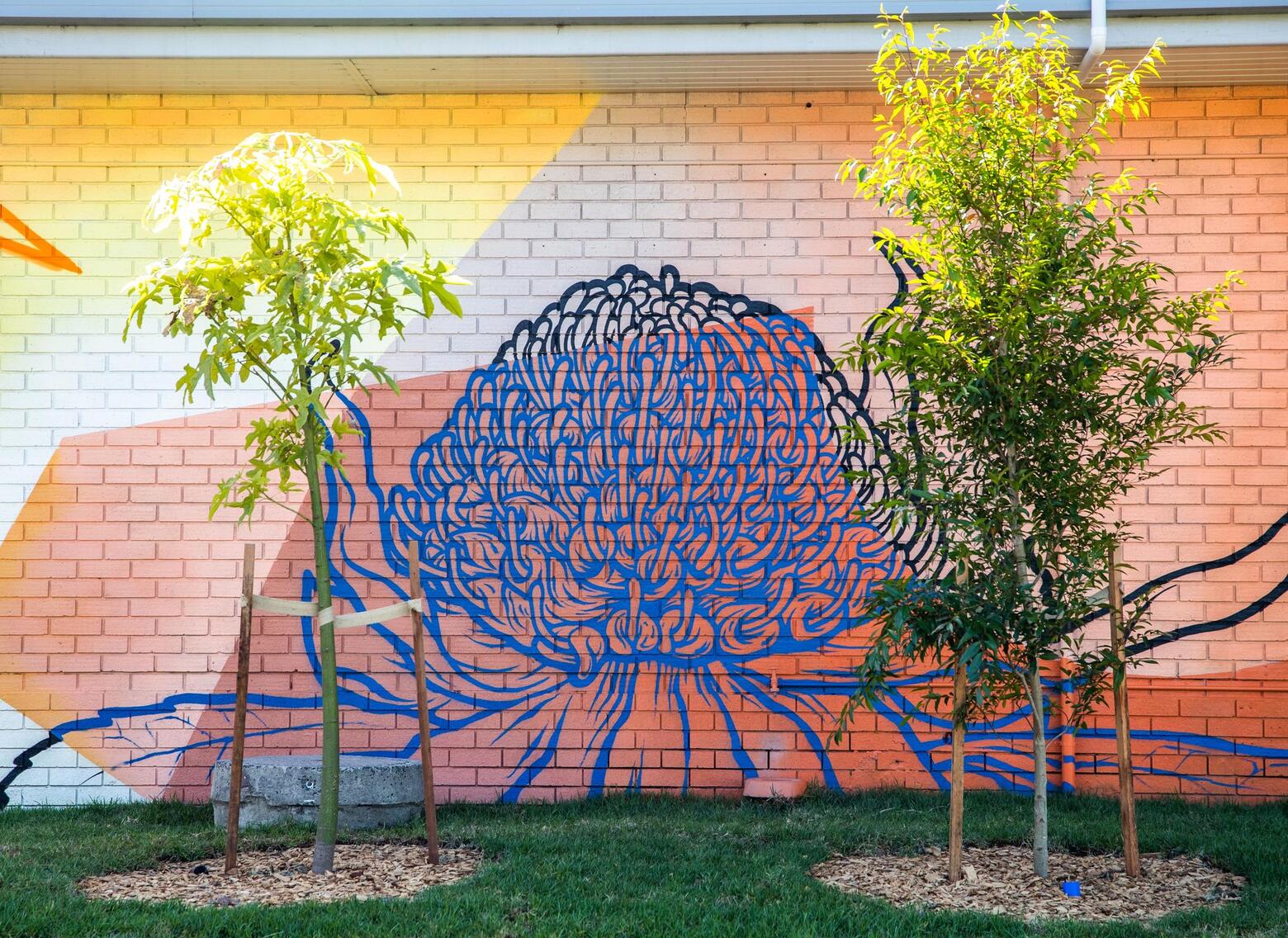
Transport for NSW, with students from nearby Callaghan College and two local artists (Nick Stuart and Bronte Naylor), completed a new artwork at Waratah Station inspired by local flora and fauna. (Image: Waratah Station Upgrade, Transport for NSW, 2021)
2021 Impacts Report
During the webinar we showcase case studies of leading edge practice from our community of members that demonstrate how the sector is forging pathways deeper into sustainability.
Infrastructure accelerates towards net zero
Projects certified by the Infrastructure Sustainability Council last financial year cut energy-related emissions by 43% and materials-related emissions by 56%, says the Infrastructure Sustainability Council.
The Infrastructure Sustainability Council’s 2021 Annual Impact Report, released today, confirms the sector has “crossed the chasm’’ towards net zero emissions and a future with more sustainable, resilient, inclusive infrastructure, says Chief Executive Officer, Ainsley Simpson.
“We have proven that embedding sustainability requirements in business cases, procurement and contracts we can halve our emissions – an extraordinary achievement given infrastructure has been considered one of the ‘hard to transition’ sectors of the economy. With a sustainable infrastructure-recovery, net zero emissions are well within our grasp,” Ms Simpson says.
Around 70% of Australia’s emissions are enabled by infrastructure, according to Reshaping Infrastructure, a paper published by the Infrastructure Sustainability Council, ClimateWorks Australia and the Australian Sustainable Built Environment Council in 2020.
Over the last four years the 34 As Built projects certified by the IS Rating Scheme, have avoided 26.5 million tonnes of carbon dioxide equivalent by meeting best practice benchmarks for sustainable infrastructure design, construction and asset management.
“This is roughly equivalent to the 26 million tonnes of emissions eliminated across Australia’s entire economy in 2020.”
The Infrastructure Sustainability Rating Scheme is a robust reporting standard that assures sustainability outcomes against credible benchmarks. The emissions, water, waste and energy reduction potential of each infrastructure project is determined against business-as-usual practice as part of the rating process. All outcomes are mapped to the UN Sustainable Development Goals.
The 2021 Impacts Report confirmed impressive social, cultural, environmental and social outcomes from infrastructure projects. Certified projects diverted 95% of waste from landfill, while water used in construction and operation of IS-rated projects was roughly half that of the base case.
The list of certified projects on the Infrastructure Sustainability Council’s books include the $1.2 billion CBD & South East Light Rail project in New South Wales, which replaced 33% of its emissions-intensive Portland cement with supplementary cementing materials like fly ash to reduce its environmental impact. Another project, part of Victoria’s Big Build, $1.4 billion Level Crossing Removal Program, diverted 100 per cent of its construction waste – a massive 61,817 tonnes – from landfill.
“Our message is clear. Government mandates of the IS Rating Scheme are working – we are driving down emissions at speed. Our challenge now is to remove the hand-brake with national policy that integrates sustainability into all stages of the project lifecycle for all asset classes,” Ms Simpson adds.
“We have seen the commitment to sustainable infrastructure through policy, planning and procurement double in just one year, with 55 new IS registrations for around $19.3 billion worth of infrastructure investment.
“Infrastructure has a huge contribution to make in the decade of decarbonisation. We have positive proof that a holistic and transparent approach to sustainability can drive emissions reduction, workforce capability and stimulate local and regional economies,” Ms Simpson concludes.
Download the 2021 Impact Report: https://www.iscouncil.org/2021-impact-report/
Note for editors:
Australia’s carbon emissions fell by 26 million tonnes or 5% in 2020 to 499 million tonnes of carbon dioxide equivalent from the previous year. See: https://www.reuters.com/business/environment/australias-carbon-emissions-drop-5-2020-2021-05-31/
Media contact:
Karen Jamal karen@kjcommunications.com or 0412 179 135
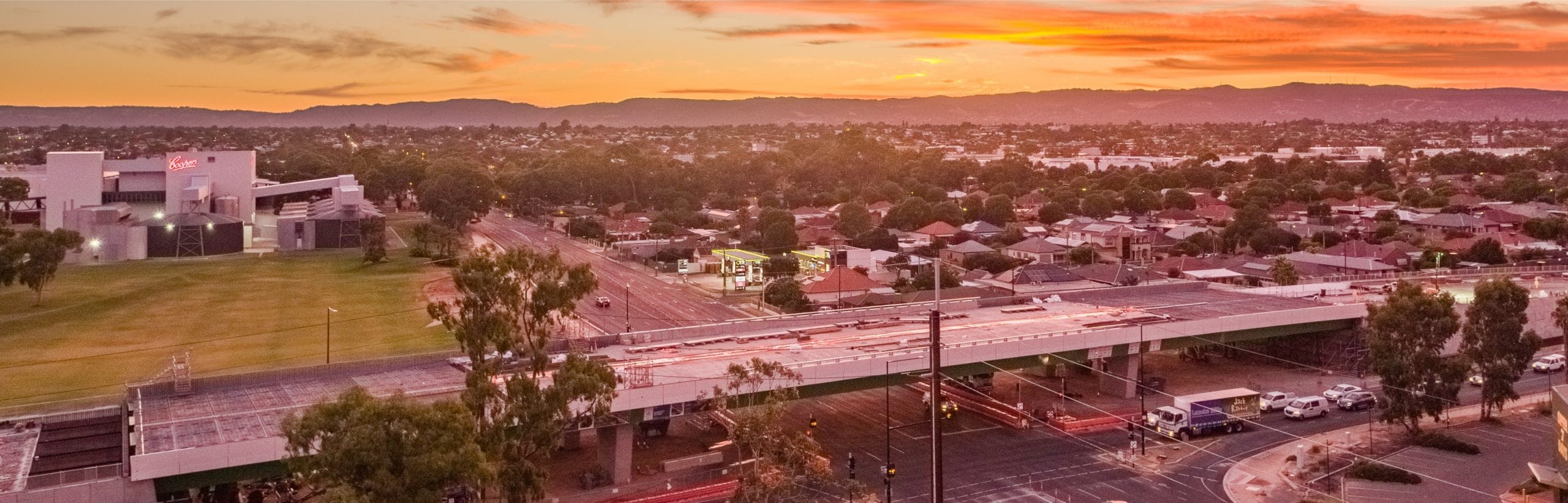
Regency Road to Pym Street Project (R2P Project, Adelaide, South Australia)
The IS rating scheme (IS v 2.0 Design & As-Built) has inspired the R2P Alliance to move beyond ‘business as usual’ and include sustainability criteria in all significant decisions. The result has been new ways of working that are bringing strong economic, environmental and social outcomes.
The Project:
At-grade multi-lane motorway, motorway overpass, transition to lowered motorway, pedestrian and cycle overpass
Alliance: Department for Infrastructure and Transport, McConnell Dowell, Mott MacDonald, Arup
Alliance contract signed: July 2019 | Practical completion: August 2021
IS rating: IS v2.0 (Design and As-Built) | Design rating: Gold | As-Built rating: pending
Desired Sustainability Objectives:
- Governance
- Economic
- Environmental
- Social
Overview:
“Pursuing an IS rating puts the focus on sustainability, particularly with management teams,” says Cathy Chesson, Technical Director, Mott MacDonald. “On the R2P Project, it pushed us to examine each part of the project for sustainability outcomes we might not traditionally have thought of.”
Some outcomes were the result of smart procurement. For example, when the Alliance chose construction materials, they opted for Downer’s Reconophalt, a ‘circular economy’ asphalt product which incorporates soft plastics, printer cartridges and recycled asphalt.
Then, encouraged by the IS rating scheme, the team sought an Environmental Product Declaration (EPD) to better understand the greenhouse gas emissions involved in using Reconophalt. This information is now available to the wider industry through ISCA’s materials calculator.
The R2P Alliance set targets for social outcomes too – and bettered them. Women fill more than 25% of the project’s management positions across 14 professional and technical roles; workforce targets for Aboriginal people have been exceeded; the project proudly employs South Australia’s first civil construction apprentices.
“If you don’t have something to aim for, how are you going to achieve these social sustainability outcomes?” asks Anna Kordahi, McConnell Dowell’s Environment and Sustainability Manager.
Anna believes the project benefitted from IS performance standards which required the R2P Alliance to collaborate across many disciplines, and with community stakeholders too. “That drove us to make sure we included everyone who needed to be involved.”
Cathy and Anna stress that it is important to get things right ‘from the start’. Practitioners should seek early buy-in from leadership teams, involve design and construction sustainability teams, suppliers and contractors upfront, and set up sustainability systems and plans in the tender phase. They also recommend focusing on big-ticket items to make the greatest sustainability gains.
Cathy has a word for proponent clients too: “Contract requirements really do drive outcomes!”
The Infrastructure Sustainability Council congratulates the R2P Alliance on their IS v2.0 Gold IS rating and the major sustainability gains they have achieved.
More Information:
R2P Alliance • Regency Road to Pym Street Alliance

Credit: R2P Project
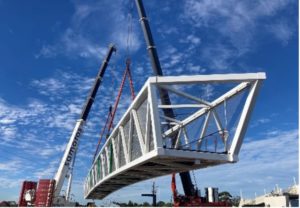
Caption: Installing the pedestrian and cycle overpass, near Pym Street